Vocabulary development Writing Worksheets for Ages 4-6
6 filtered results
-
From - To
Enhance your child's vocabulary with our engaging Writing Worksheets designed for ages 4-6! These resources promote early literacy skills while making learning fun. Featuring a variety of interactive activities, children will practice word formation, explore new terms, and develop essential writing abilities. Each worksheet focuses on building vocabulary through creative exercises, ensuring kids grasp the meanings of words in a playful context. Ideal for homeschoolers and educators alike, our worksheets cater to all levels of learners. Start your child's vocabulary journey today and see their confidence soar as they express themselves through writing! Explore our collection and empower your young learners!
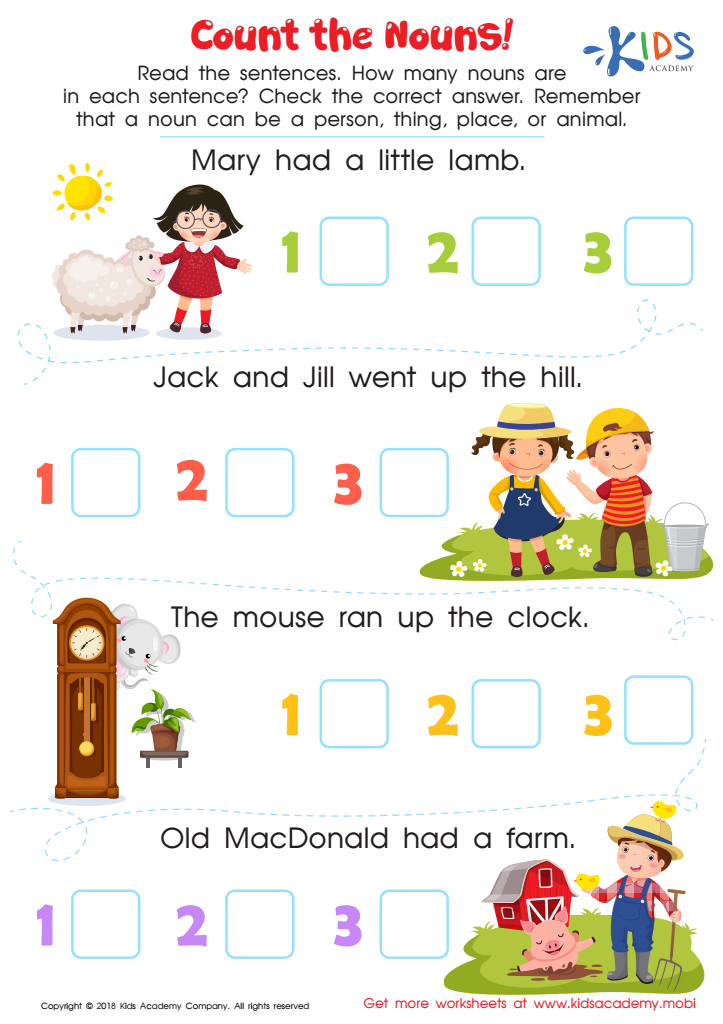
Count the Nouns Worksheet
 Assign to My Students
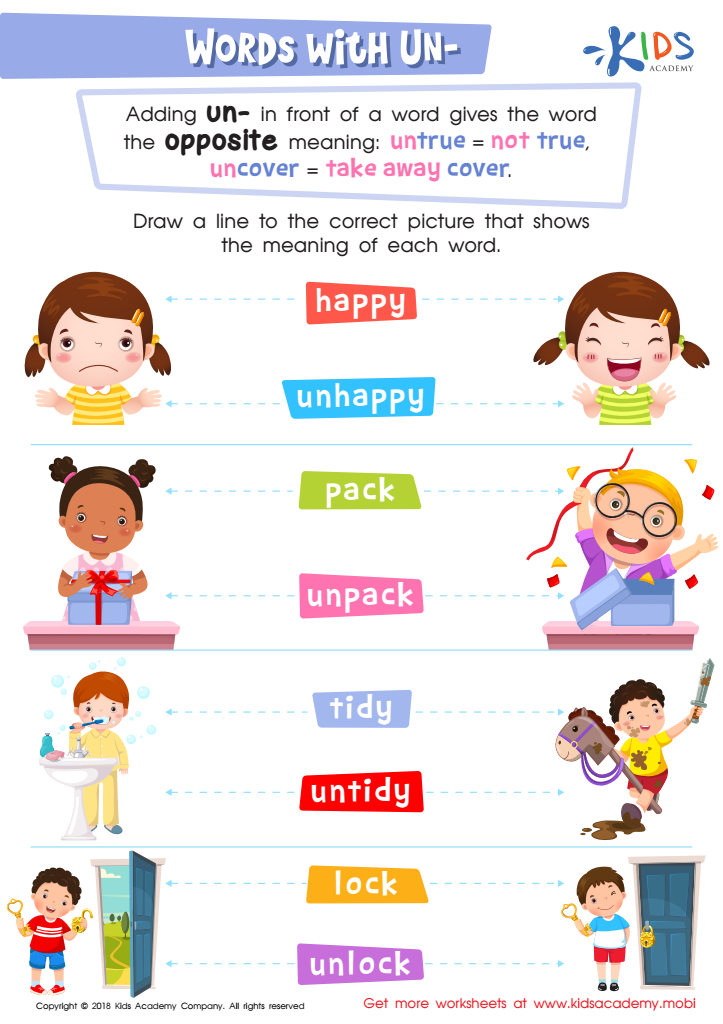
Words with Un– Worksheet
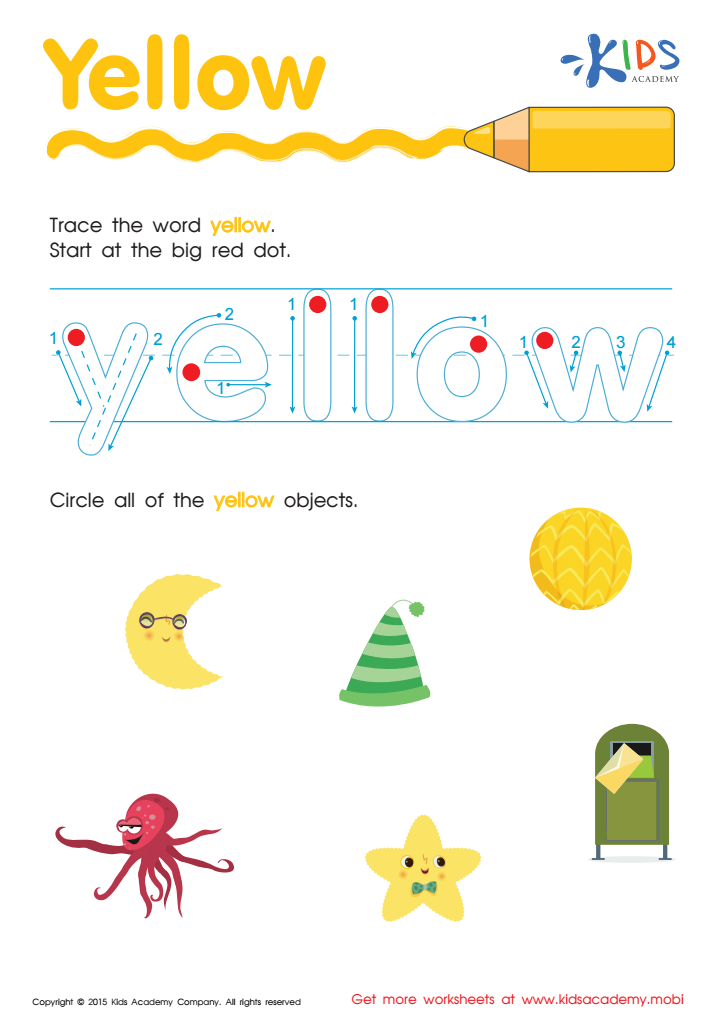
Yellow Tracing Color Words Worksheet
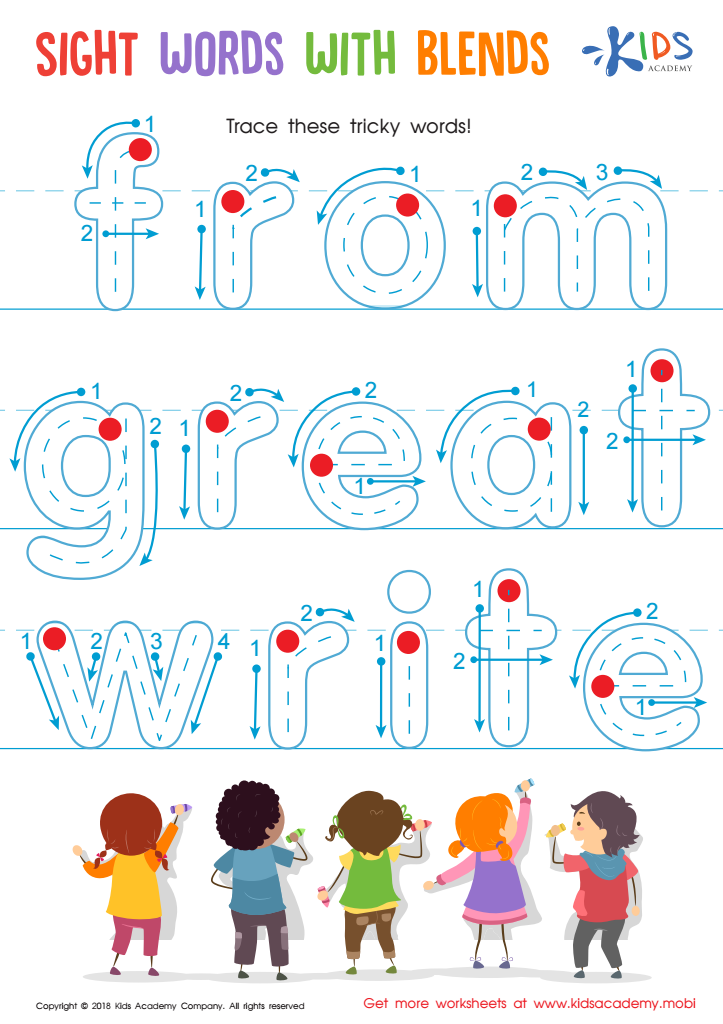
Sight Words with Blends Worksheet
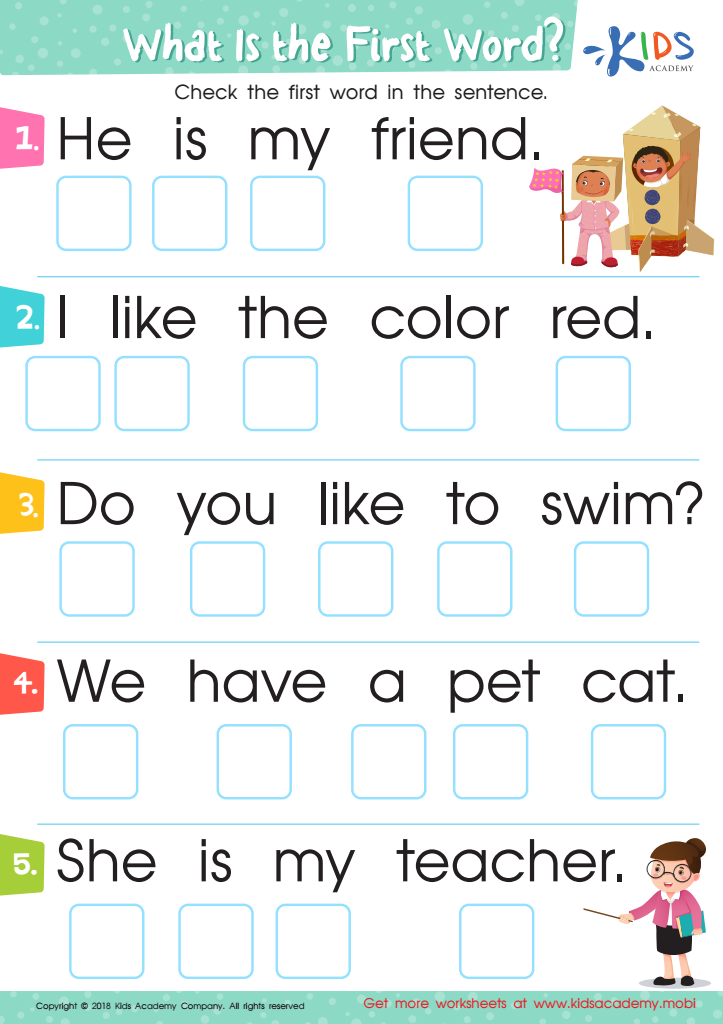
What is the First Word? Worksheet
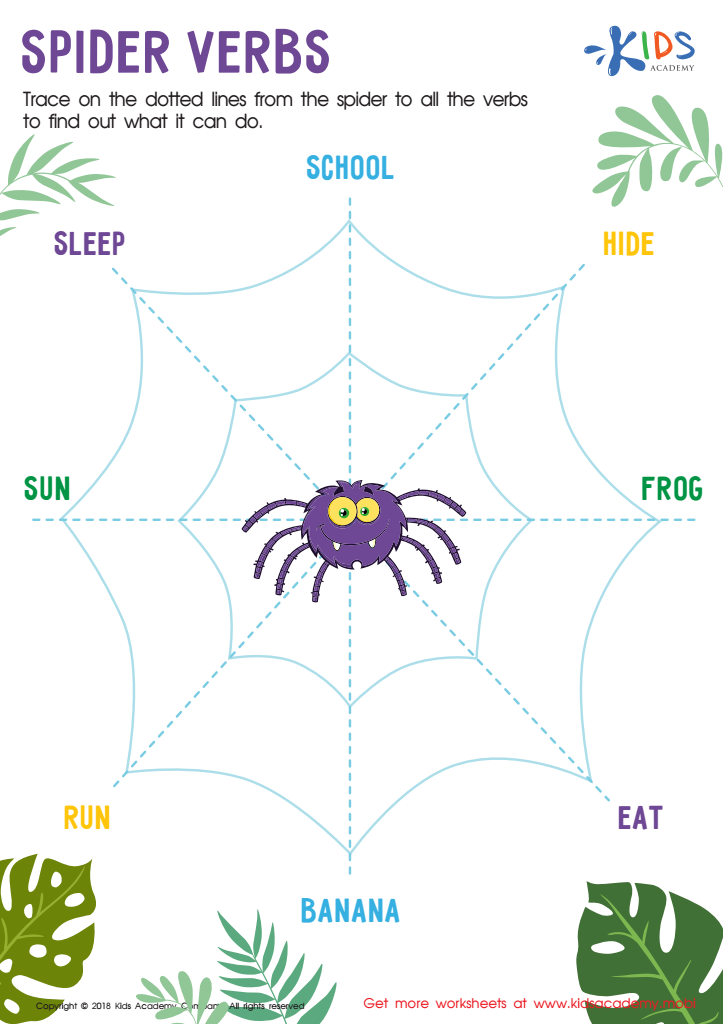
Spider Verbs Worksheet






Vocabulary development in young children, particularly for ages 4 to 6, is crucial for several reasons. First, it lays the foundation for language skills that are vital for effective communication. A rich vocabulary allows children to express their thoughts, emotions, and ideas clearly. This skill is not only essential for interpersonal interactions but also for academic success; as students progress in school, a strong vocabulary helps them comprehend and engage with increasingly complex texts.
Moreover, vocabulary development is closely linked to listening and reading skills. Children who encounter a variety of words build a better understanding of language structure and patterns. By nurturing their vocabulary early on, parents and teachers foster a love for reading, as children are more likely to enjoy stories and books when they understand the words used.
Additionally, vocabulary enhances critical thinking abilities. As children learn new words, they make connections between concepts, which develops cognitive skills like reasoning and problem-solving.
Ultimately, investing time in vocabulary development for early learners significantly contributes to their holistic growth, equipping them for future educational endeavors and enriching their communication and social skills. This is why parents and teachers should prioritize root vocabulary at this formative stage.








