Phonics practice Beginning Sounds Worksheets for Ages 4-7
5 filtered results
-
From - To
Discover fun and engaging Phonics Practice Beginning Sounds Worksheets for ages 4-7 at Kids Academy! Our educational resources are designed to help young learners master the fundamentals of reading by focusing on the initial sounds of words. These vibrant and interactive worksheets support the development of essential phonics skills, ensuring children grasp the basics of letter recognition and pronunciation. Ideal for preschool and kindergarten students, they turn learning into an enjoyable experience. Parents and teachers alike can trust our expertly crafted materials to build a strong literacy foundation. Start your child's reading journey today with Kids Academy!
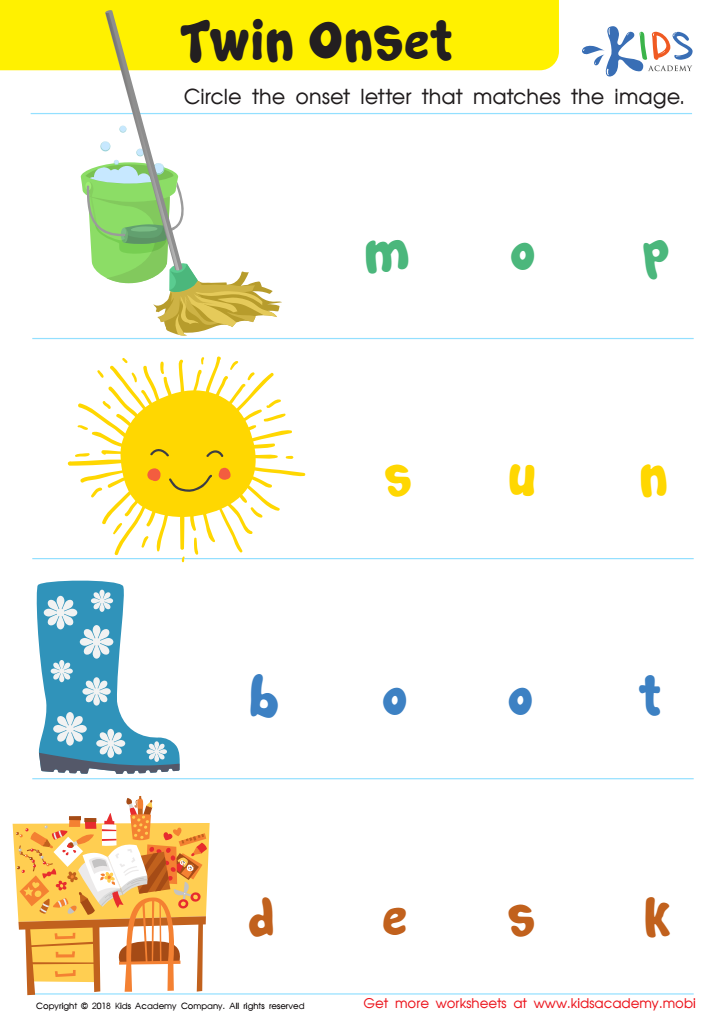
Twin Onset Worksheet
 Assign to My Students
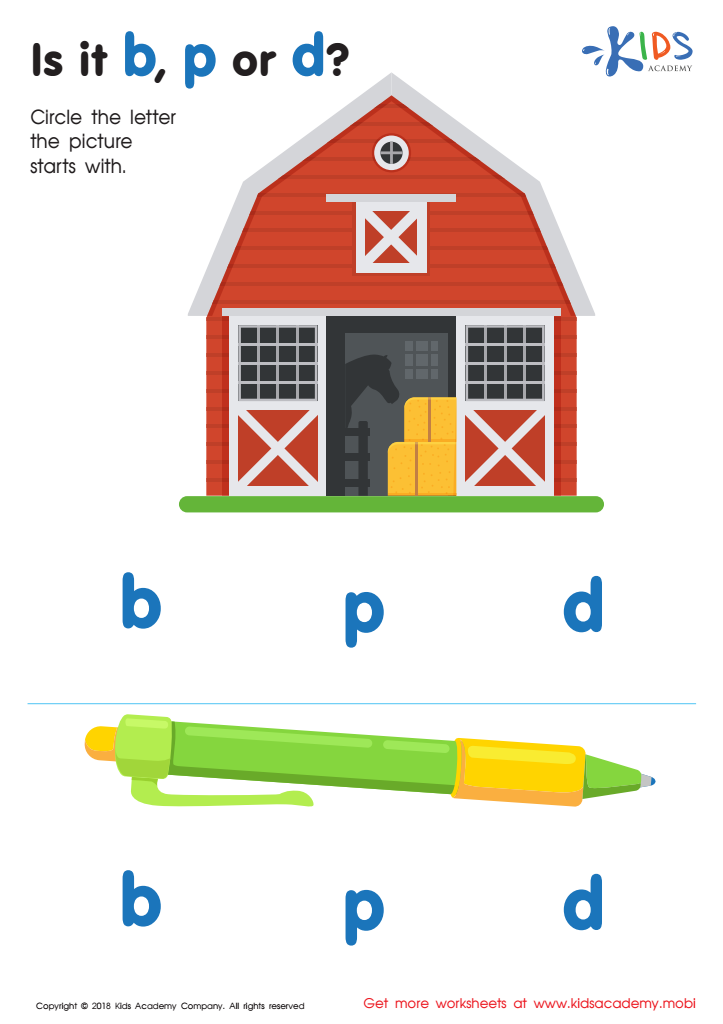
Is it b, p or d? Worksheet
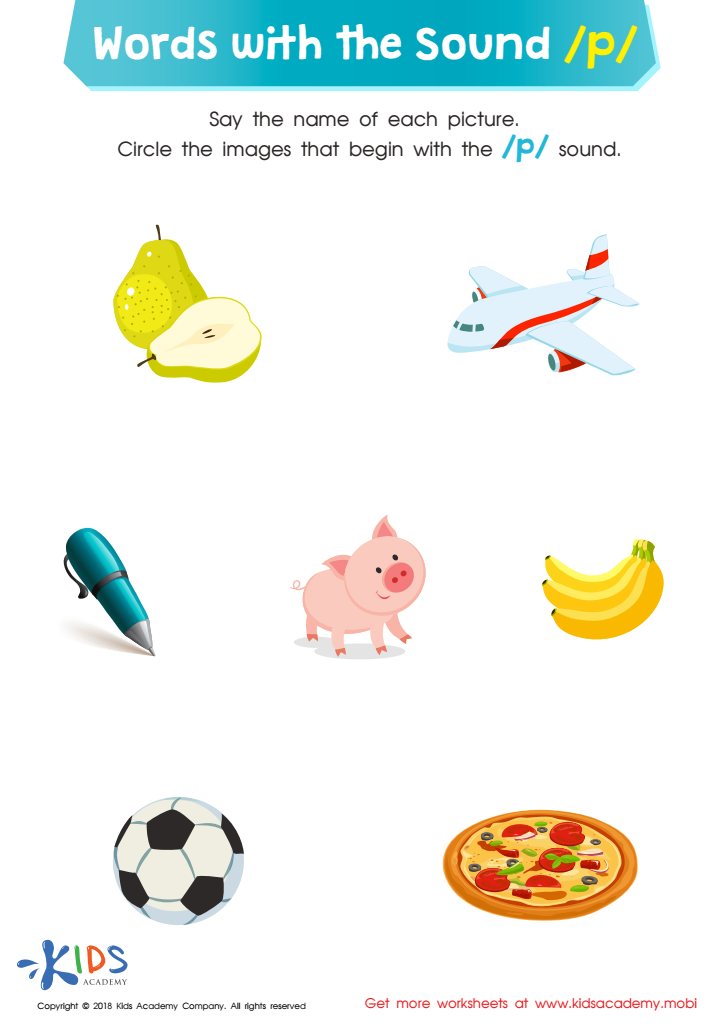
Words with sound p Reading Worksheet
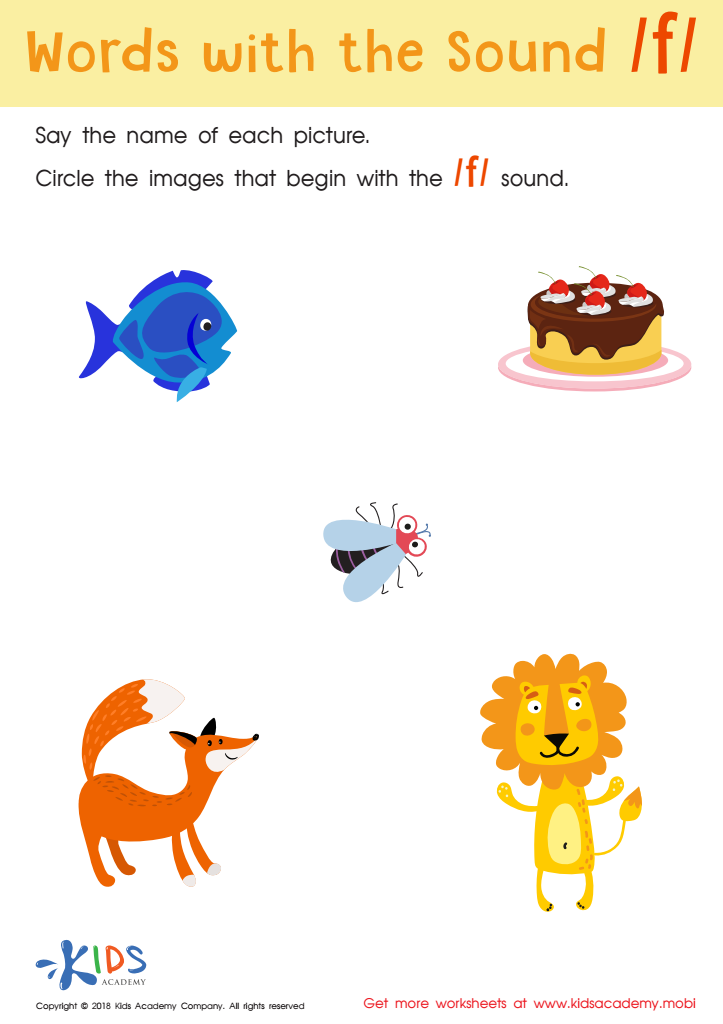
Words with sound f Reading Worksheet
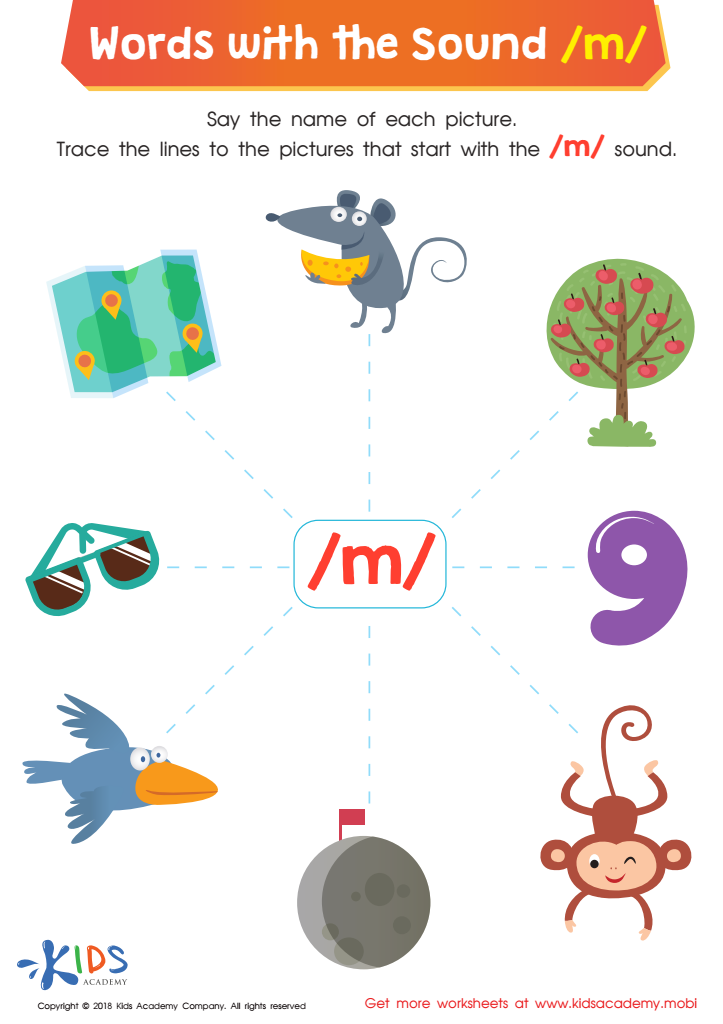
Words with Sound M Reading Worksheet








Phonics practice, particularly focusing on beginning sounds, is crucial for children aged 4-7 as it lays the foundational skills required for reading and literacy. At this formative stage, children are developing their understanding of the relationship between letters and sounds. By practicing beginning sounds, young learners familiarize themselves with phonemic awareness, which is the ability to hear, identify, and manipulate phonemes—the smallest units of sound.
Understanding beginning sounds helps children decode new words and improves their spelling abilities. For instance, if a child knows that the letter "b" sounds like /b/, they can apply this knowledge to read or spell words like "bat" or "ball". Phonics instruction enhances auditory discrimination and enables children to distinguish between different sounds, which is essential for effective communication.
Cultivating these skills boosts confidence and fosters a love for reading, setting the stage for academic success across all subjects. Teachers and parents should care about this practice because it empowers children with the tools they need to understand complex language structures. Furthermore, early mastery of phonics can lead to greater achievements in reading comprehension and writing, creating a solid foundation for lifelong learning and literacy.







