Vocabulary enhancement Ending Sounds Worksheets for Ages 4-7
3 filtered results
-
From - To
Boost young learners' language skills with our "Vocabulary Enhancement Ending Sounds Worksheets for Ages 4-7"! Designed specifically for early learners, these fun and engaging printables help kids identify and practice ending sounds. Each worksheet combines colorful illustrations with simple activities that make learning enjoyable. Perfectly tailored to support vocabulary growth, phonetic awareness, and reading readiness, these worksheets are ideal for home or classroom use. Suitable for ages 4-7, they provide a solid foundation for mastering ending sounds while enhancing overall linguistic competence. Make phonics fun and effective with Kids Academy's top-quality educational resources!
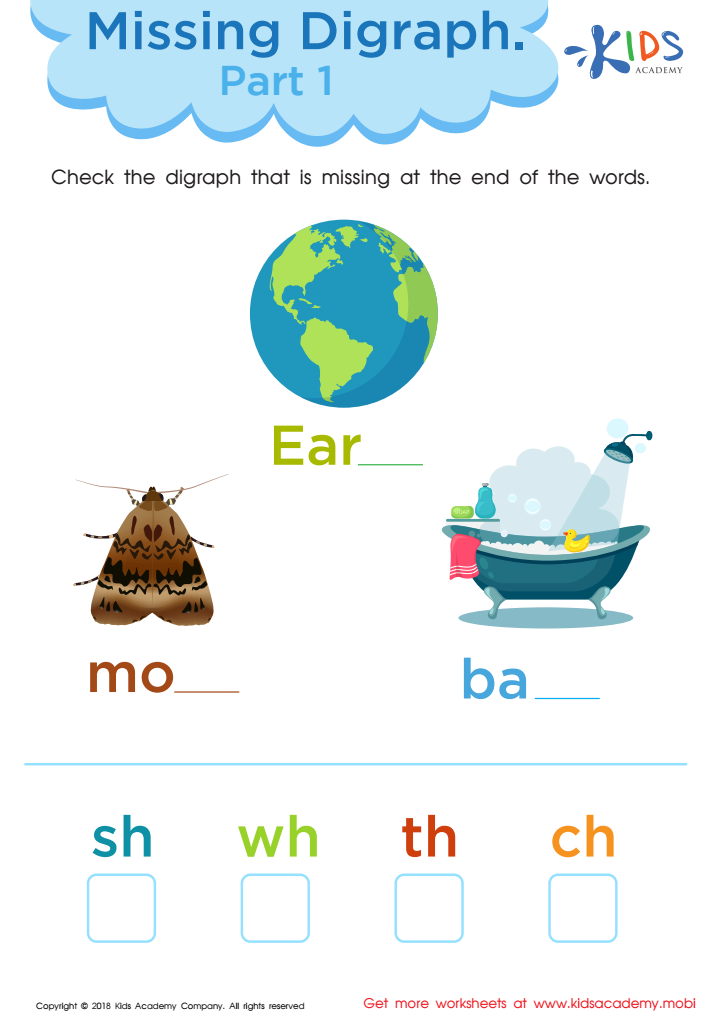
Missing Digraph: Part 1 Worksheet
 Assign to My Students
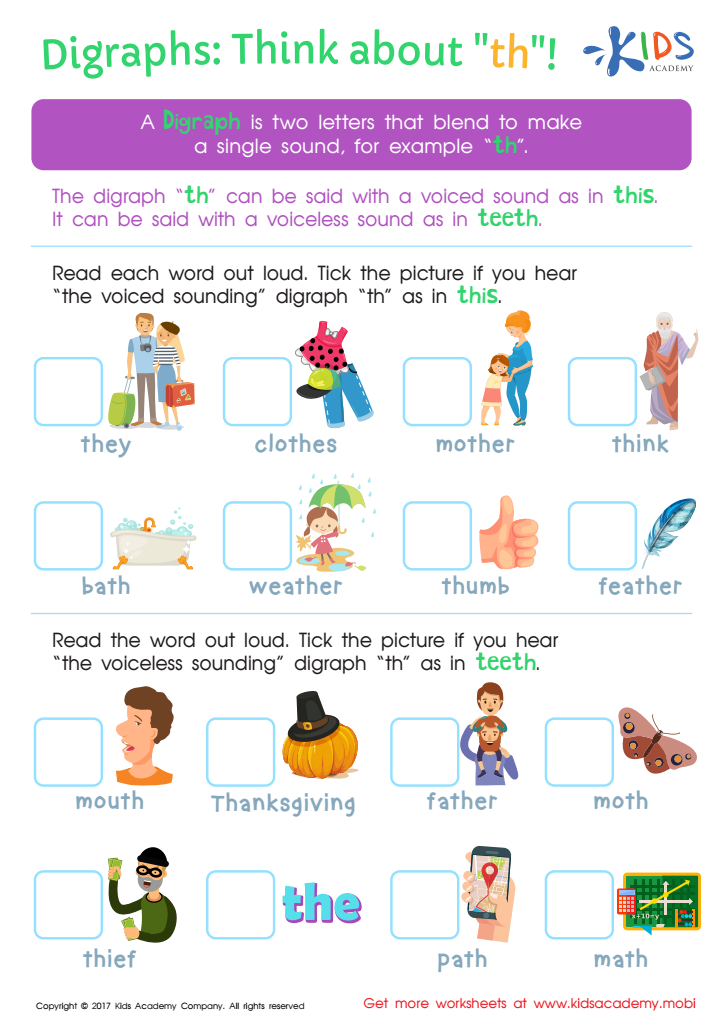
Digraphs: Think About "th" Worksheet
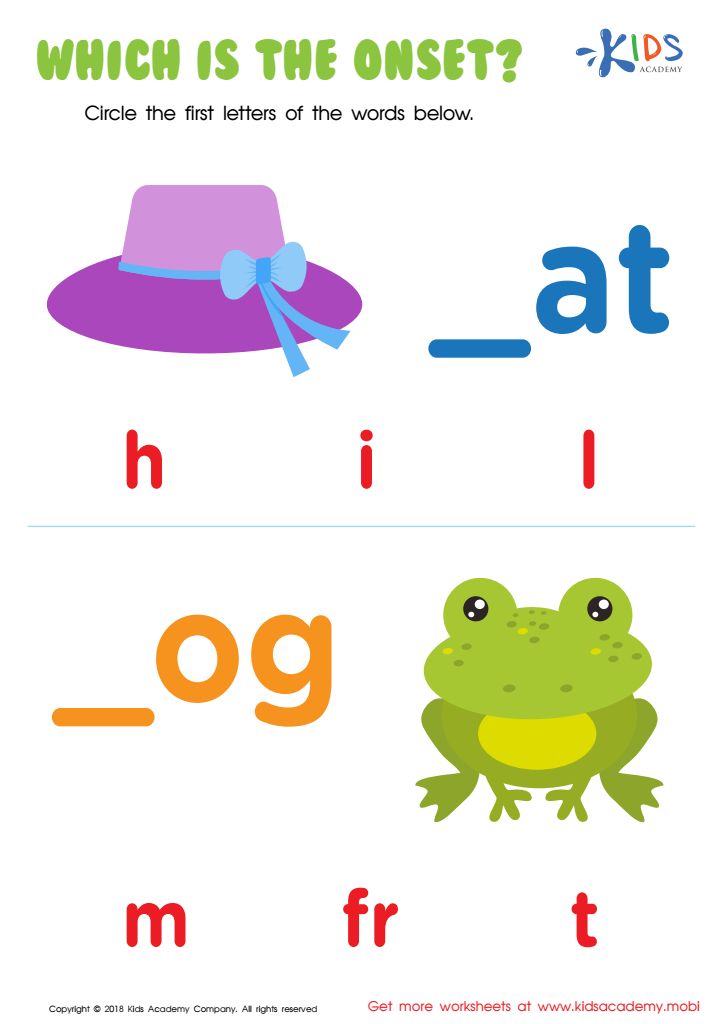
Which Is the Onset? Worksheet






Vocabulary enhancement and awareness of ending sounds are fundamental elements in early childhood education for children aged 4-7. During this critical developmental window, young minds are highly receptive to language acquisition and phonemic awareness, the ability to distinguish and manipulate sounds in words.
Firstly, strong vocabulary skills are directly linked to reading comprehension and academic success. Knowing a variety of words empowers children to better understand stories and texts, allowing them to express thoughts and ideas more clearly. Teaching them to recognize and use words helps in building a solid foundation for lifelong learning.
Secondly, awareness of ending sounds enhances phonological skills, critical in learning to read and spell. When children recognize patterns in word endings, they begin to make connections between different words, such as "cat,” “bat,” and “rat.” This pattern recognition simplifies the reading process and makes decoding new words easier.
Additionally, mastering ending sounds aids in developing better pronunciation and listening skills. These skills support clearer and more effective communication, which is vital for social interactions and classroom participation.
Parents and teachers play a significant role in reinforcing these skills through engaging activities like rhyming games, storytelling, and reading aloud. By prioritizing vocabulary enhancement and phonemic awareness, they help lay a cornerstone for a child’s future academic achievement and communicative competence.








