Phonics Skills Initial and Final Consonant Blends Worksheets for Ages 4-7
3 filtered results
-
From - To
Enhance your child’s reading abilities with our engaging Phonics Skills Worksheets focused on Initial and Final Consonant Blends for ages 4-7. These printable resources are designed to strengthen phonemic awareness, helping children recognize and pronounce consonant blends in both initial and final positions. Each worksheet combines fun activities, from coloring to tracing, ensuring learning is both educational and enjoyable. Ideal for parents and teachers, our exercises reinforce classroom skills and support home learning. Watch as your young learners gain confidence in their reading journey, laying a solid foundation for literacy. Explore our collection today and make phonics practice a delight!
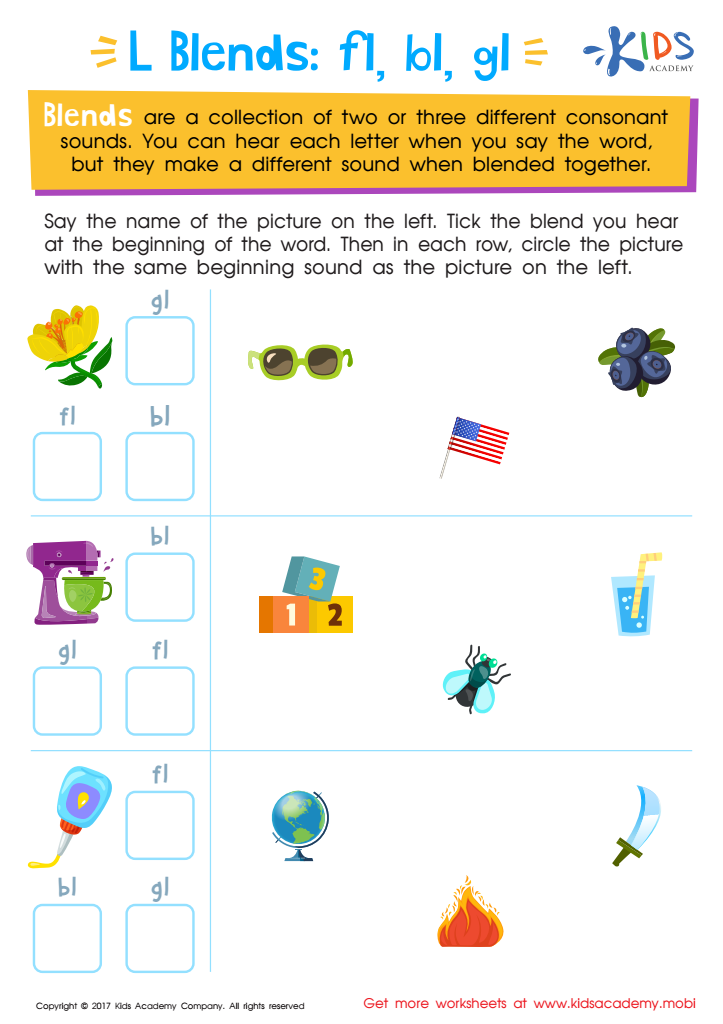
Blending Consonants: "Fl", "Bl" and "Gl" Printable
 Assign to My Students
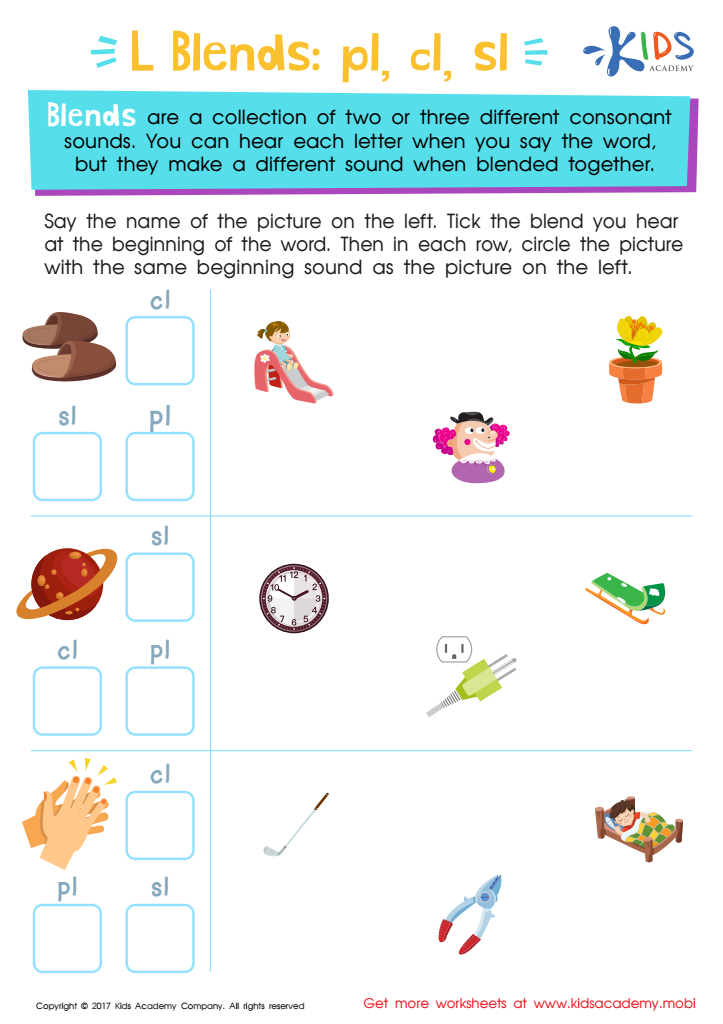
L Blends: "Pl", "Cl" and "Sl" Printable
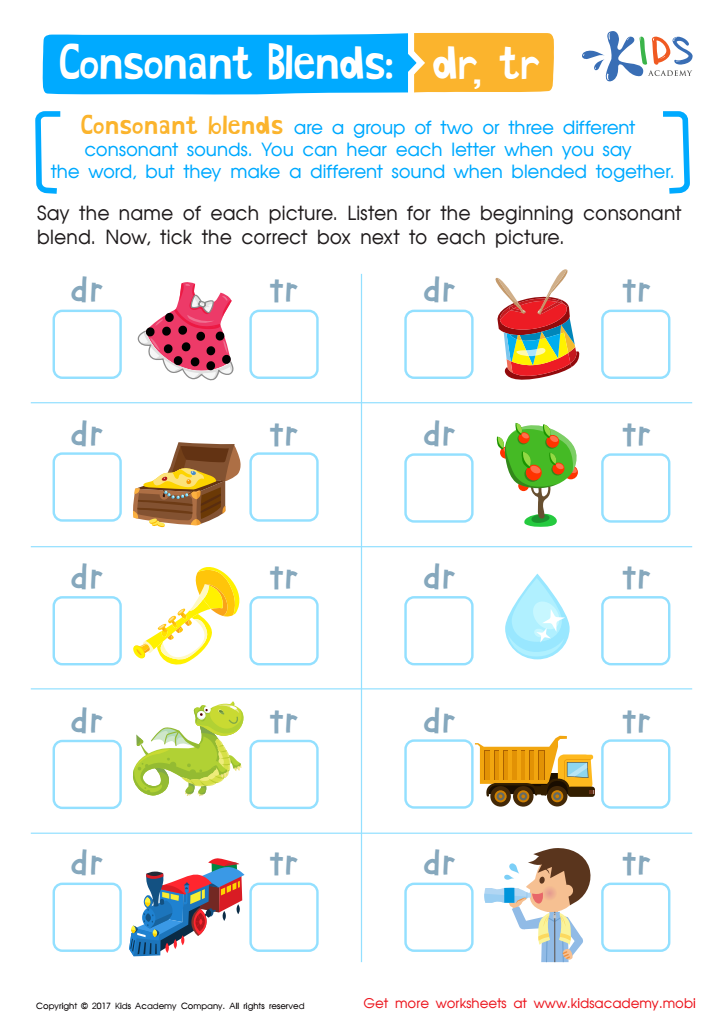
Consonant Blends: "Dr" and "Tr" Printable


Phonics skills, particularly initial and final consonant blends, play a crucial role in literacy development for children aged 4-7. These skills empower young learners to decode words effectively, enhancing their reading fluency and comprehension. Understanding blends—combinations of two or three consonants at the beginning (like "br" in "bring") or end (like "st" in "toast")—is essential because it helps children recognize familiar patterns in words, which fosters confidence in their reading abilities.
By mastering consonant blends, children can also expand their vocabulary as they encounter new words. This foundational knowledge supports spelling skills, enabling learners to write more accurately and expressively. Furthermore, phonics instruction encourages phonemic awareness, allowing children to hear, identify, and manipulate sounds in words, which is critical for overall literacy success.
Parents and teachers should care about these skills because they not only contribute to academic achievement but also lay the groundwork for a lifelong love of reading. Early engagement with phonics promotes greater enjoyment and motivation in learning, helping to cultivate enthusiastic readers who are equipped to tackle more complex texts as they progress in their education. Ultimately, prioritizing phonics skills can lead to better educational outcomes and instill a positive attitude towards learning in young children.








