
Alphabetical understanding Letter Recognition Worksheets for Ages 4-7
3 filtered results
Difficulty Level
Grade
Age
-
From - To
Subject
Activity
Standards
Unlock the door to literacy with our Alphabetical Understanding Letter Recognition Worksheets for Ages 4-7. Tailored to foster early reading skills, these fun and engaging activities help young learners recognize, identify, and write letters. Each worksheet builds foundational knowledge, enhancing alphabetical and phonemic awareness through games, tracing, and coloring exercises. Perfect for kindergarten or first-grade students, our worksheets offer an exciting way to cultivate confidence in your child’s reading abilities while keeping them entertained. Boost your child's learning potential with our expertly designed alphabet resources, ensuring their success in the journey towards effective reading.
Favorites
With answer key
Interactive
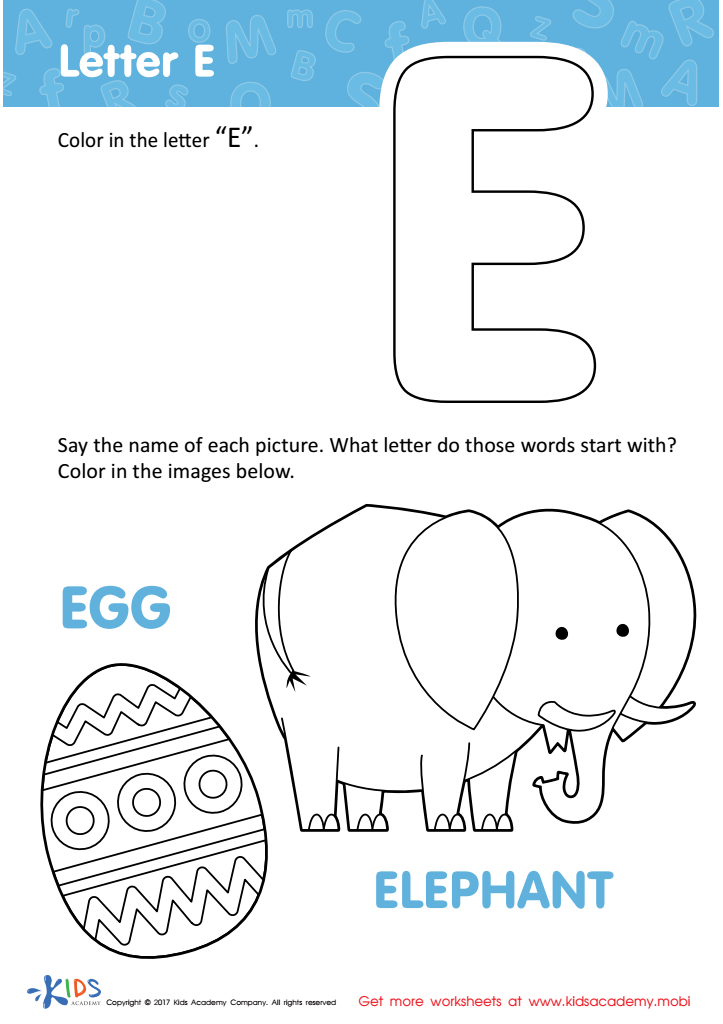
Letter E Coloring Sheet
Coloring pages are great for teaching kids the alphabet and words! This "E" page features a cute elephant and Easter egg. Kids will love it and learn the letter "E" at the same time. 80 words
Download (PDF)
 Assign to My Students
Assign to My Students
Letter E Coloring Sheet
Worksheet
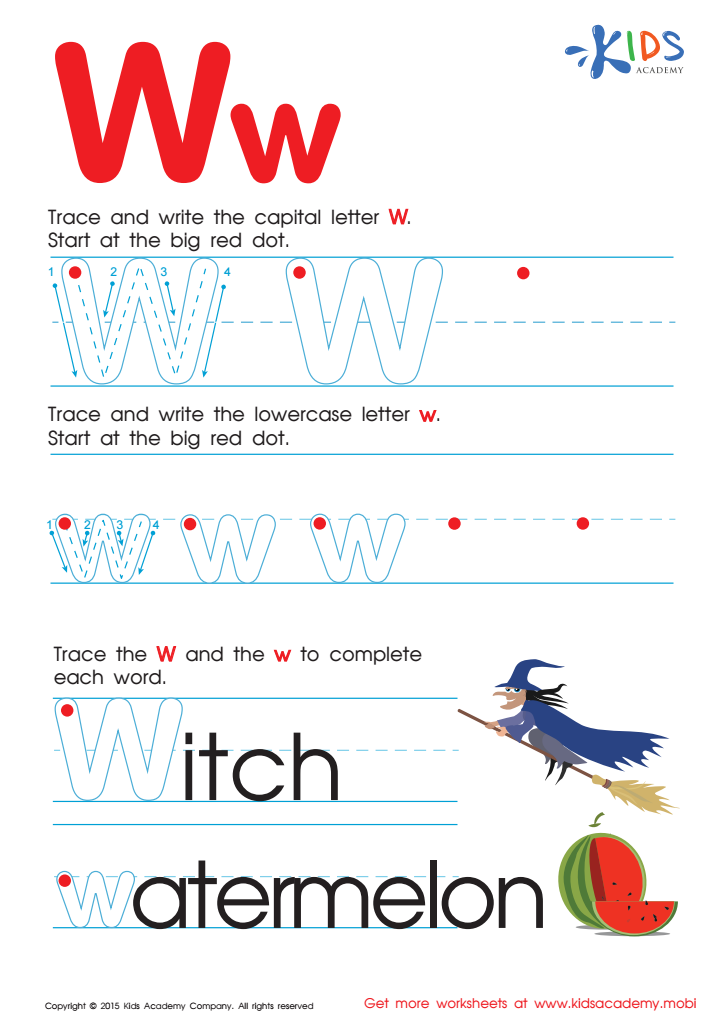
Letter W Tracing Page
Trace and write the capital and lowercase letter W with this free letter tracing worksheet by Kids Academy. Complete the words "Witch" (capital) and "watermelon" (lowercase). Check out our other kindergarten alphabet worksheets!
Letter W Tracing Page
Worksheet
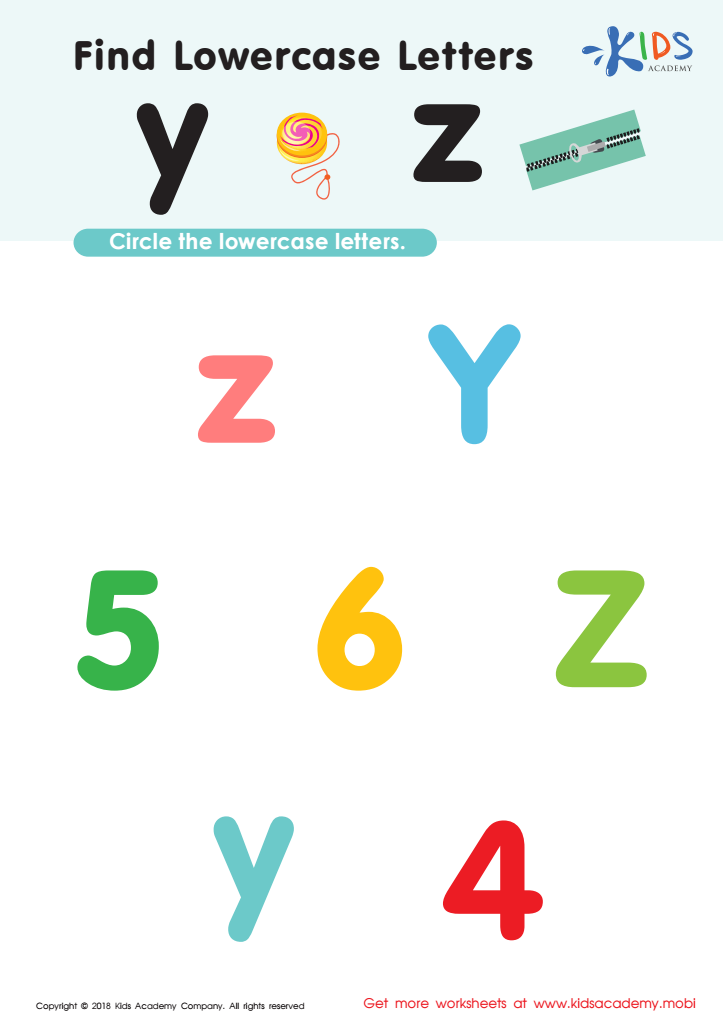
Find Lowercase Letters y z Worksheet
Help your kid learn the alphabet. Before they can move on to words and reading, they must first know the lower and uppercase letters. Show them how to find the letters y and z in this worksheet, which is filled with uppercase letters and numbers. Together, find and circle them.
Find Lowercase Letters y z Worksheet
Worksheet
Join Kids Academy for Free
Who is primarily going to use this learning content?








Alphabetical understanding and letter recognition are foundational skills crucial for early literacy development in children aged 4-7. These skills are essential because they form the basis for reading and writing, which are key components of academic success. When children can recognize letters and understand the alphabet, they become more adept at decoding words, leading to more fluent reading.
For parents and teachers, fostering these abilities early on means providing children with the tools they need to succeed in school and life. Letter recognition is not just about knowing the letters' names, but also about understanding letter sounds and their role in word formation. This phonemic awareness accelerates the process of learning to read by enabling children to sound out and spell new words.
Moreover, children who master these skills typically exhibit greater confidence and enthusiasm towards learning. Early literacy interventions make the differences between lifelong readers and those who struggle academically. It also helps children grasp more complex literacy concepts swiftly in future. By engaging children with alphabet-based activities and games, educators and parents can create an enriching, enjoyable, and effective learning environment. Hence, investing time and effort in developing alphabetical understanding and letter recognition in young children is essential for their overall educational growth and academic self-esteem.







