
Vowel Recognition Letter Recognition Worksheets for Ages 4-7
5 filtered results
Difficulty Level
Grade
Age
-
From - To
Subject
Activity
Standards
Introduce your little learners to the world of vowels with our Vowel Recognition Letter Recognition Worksheets, designed specifically for ages 4-7. These engaging worksheets combine fun activities with educational content to help children identify and differentiate between vowels and consonants. Colorful illustrations and interactive exercises keep young learners motivated while reinforcing their understanding of alphabet letters. Perfect for at-home practice or classroom use, these worksheets build foundational literacy skills that pave the way for proficient reading. Set your child on the path to success with our expertly crafted resources for vowel recognition and letter recognition. Get started today!
Favorites
With answer key
Interactive
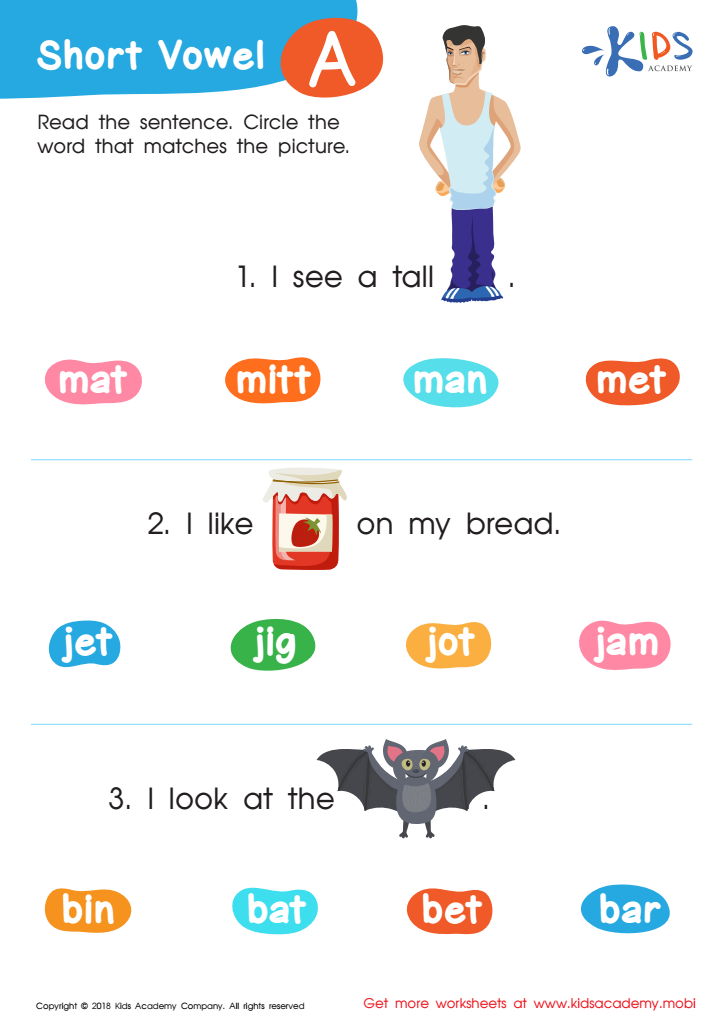
Short Vowel /a/ Worksheet
This free PDF helps new readers use sight words and pictures to read basic sentences. Then, they use accompanying word choices to find the correct word with the short a vowel sound. A key early reading skill, discriminating between short vowel sounds can be tricky in monosyllabic words, so use this PDF to help your reader reinforce it.
 Assign to My Students
Short Vowel /a/ Worksheet
Worksheet
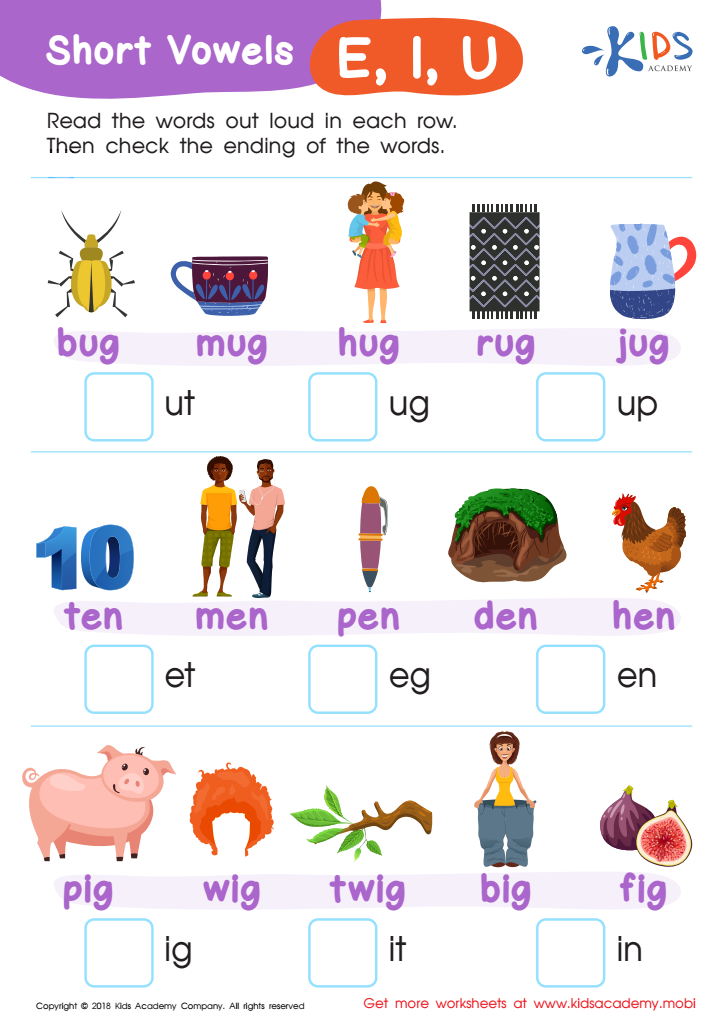
Short Vowels /e/, /i/, and /u/ Worksheet
Your emergent reader can have fun while practicing their short vowel sounds with this free, brightly colored worksheet. They'll identify one-syllable words by their pictures, then match the correct ending for each. They'll gain an understanding of how short vowel sounds vary in closed syllables with different endings, without even realizing it!
Short Vowels /e/, /i/, and /u/ Worksheet
Worksheet
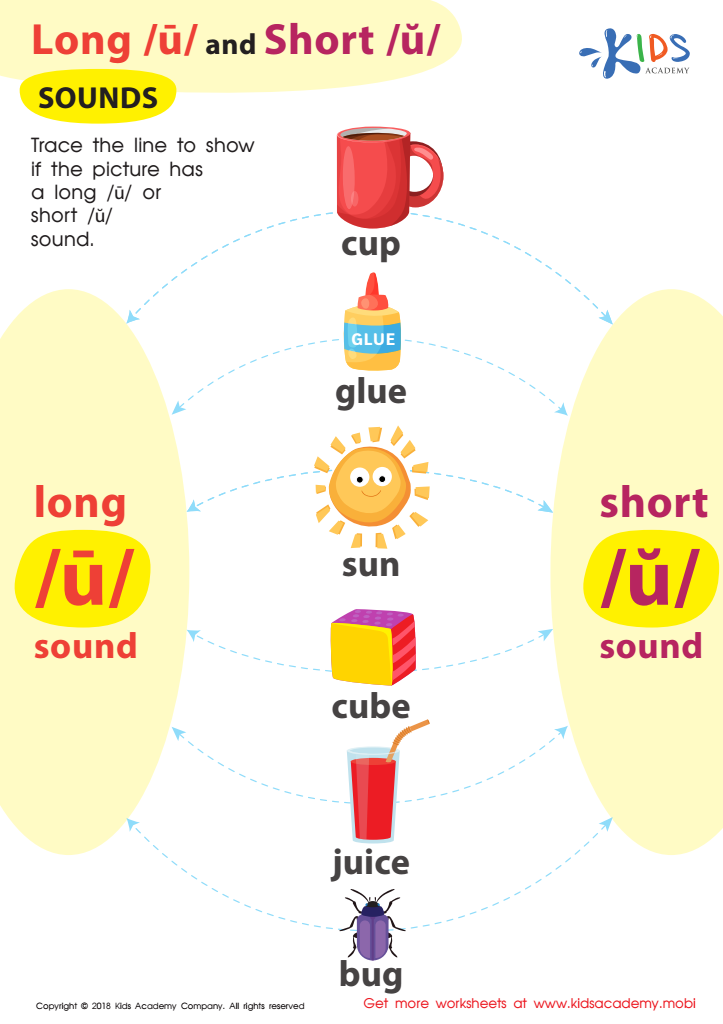
Reading: Long U and Short U Sounds Worksheet
Learning about long and short vowel sounds can be tricky, especially with the letter U. Extra practice with this worksheet is recommended for mastering this sound. Children read words with the different vowel sounds and categorize them. Great for instruction, practice and reteaching in reading classes.
Reading: Long U and Short U Sounds Worksheet
Worksheet
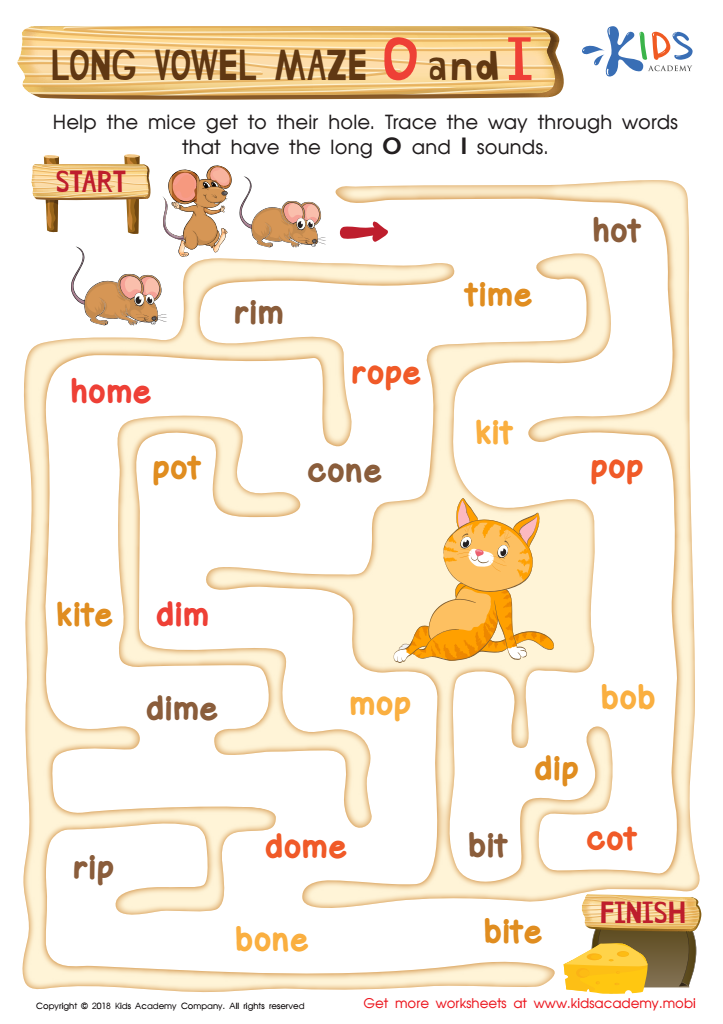
Long Vowel Maze /o/ and /i/ Worksheet
Help your new readers have fun and build their sight word vocabulary! Guide the mice to their prize cheese by having them trace the route on the worksheet, using words with the long o and long i sounds. But watch out for the kitty!
Long Vowel Maze /o/ and /i/ Worksheet
Worksheet
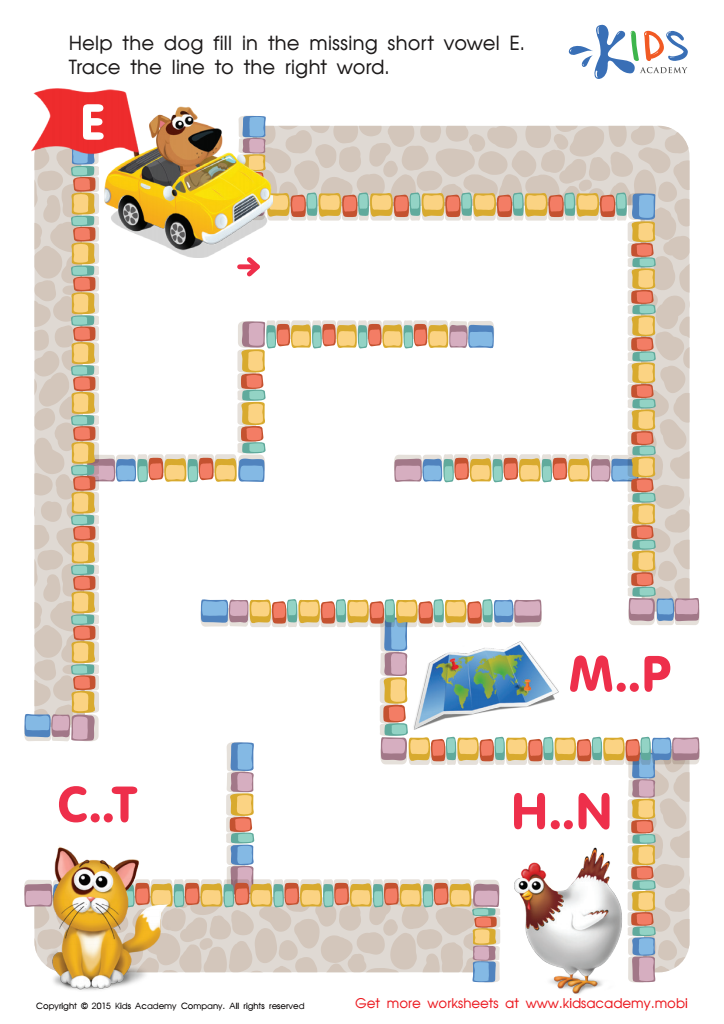
Short Vowel Sound E Worksheet
This free printable phonics worksheet helps kids learn the short vowel sound E. Kids need to help the dog complete the word “hen” by finding their way through a maze. It teaches kids to see the connection between letters and sounds and also strengthens their writing and spelling skills. Fun and educational, this phonics worksheet is great for kids. Want more? Check out here.
Short Vowel Sound E Worksheet
Worksheet
Join Kids Academy for Free
Who is primarily going to use this learning content?








Teaching vowel and letter recognition to children aged 4-7 is fundamental for their early literacy development. During this critical period, children's brains are exceptionally receptive to learning language structures. Understanding vowels and recognizing letters form the backbone of reading and writing skills. Vowels are pivotal because they are present in almost every word; recognizing them helps children decode words efficiently. As they identify these building blocks, children gain confidence in pronouncing and forming words, thus bolstering their reading fluency.
For parents and teachers, emphasizing vowel and letter recognition is essential for furthering children’s comprehension and vocabulary. Early mastery of these skills often leads to better performance in all academic areas, as literacy is foundational to learning. Thus, focally integrating engaging activities that include letters and vowels, like sandpaper letter tracing, alphabet puzzles, and interactive reading sessions, can set the stage for successful lifelong learning.
Moreover, strengthening these early literacy skills can significantly influence a child's future academic trajectory and self-esteem. Children who struggle with basic reading concepts can develop frustration and a dislike for learning. Therefore, an early focus on vowel and letter recognition supports smoother educational journeys and fosters a love for reading and continuous learning.







