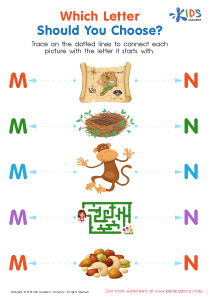
Alphabet familiarity Lowercase/Small Letters Worksheets for Ages 4-7
3 filtered results
-
From - To
Enhance your child's early literacy journey with our Alphabet Familiarity Lowercase/Small Letters Worksheets, specifically designed for ages 4-7. These fun and engaging worksheets help young learners recognize, trace, and master lowercase letters, fostering essential reading and writing skills. Each activity is crafted to build confidence, improve fine motor skills, and develop alphabet familiarity in an easy-to-follow, enjoyable format. Perfect for both classroom and home use, these worksheets are an excellent resource for parents and teachers aiming to provide a strong foundation in early education. Unlock your child's potential with our comprehensive, expertly designed learning tools!
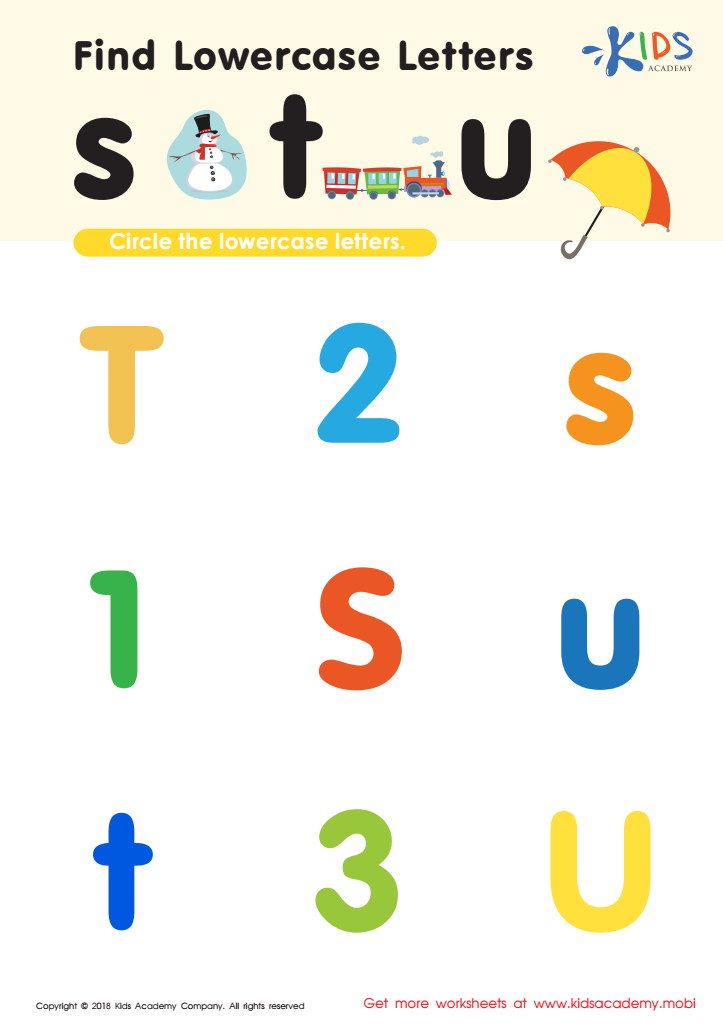
Find lowercase Letters s t u Worksheet
 Assign to My Students
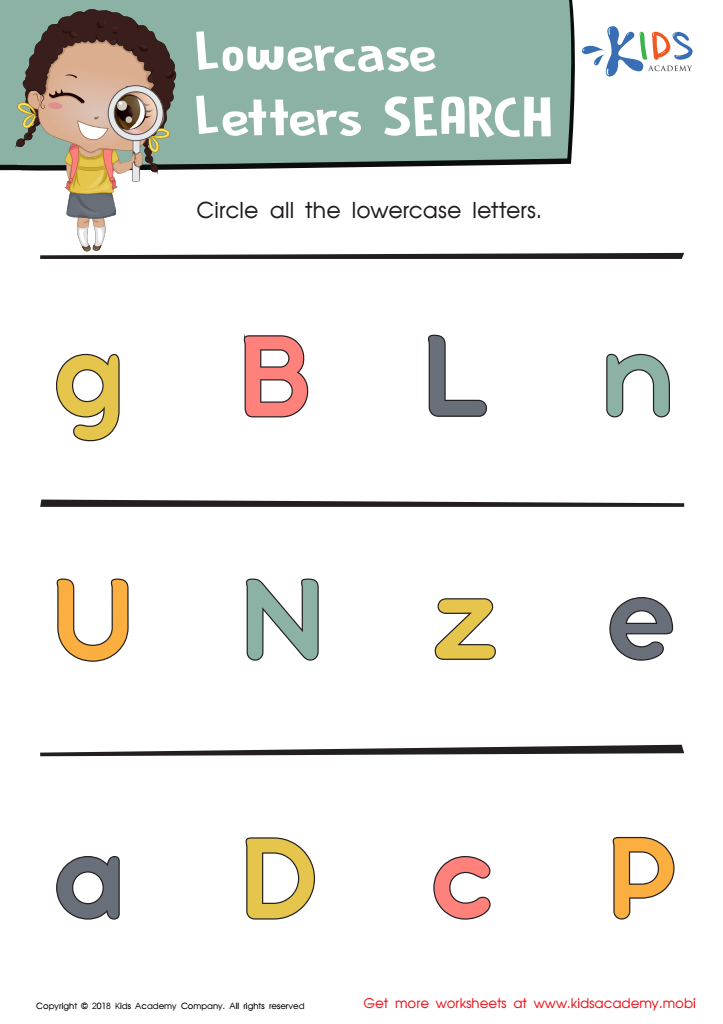
Lowercase Letters Search: Assessment Worksheet
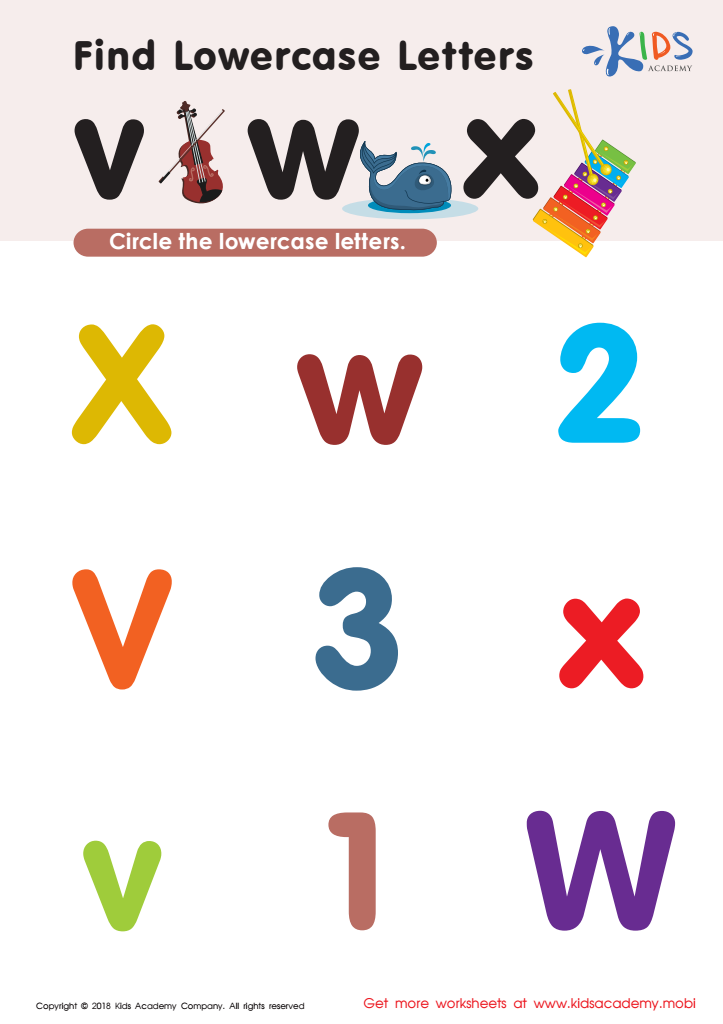
Find Lowercase Letters v w x Worksheet


Alphabet familiarity, especially with lowercase or small letters, is crucial for children ages 4-7 and significantly impacts their early literacy development. Parents and teachers should emphasize this familiarity because lowercase letters dominate printed text. Mastery of these letters lays a solid foundation for reading fluency, enabling children to recognize words in books, signs, and other written materials they encounter daily.
Recognizing lowercase letters also supports writing skills. Young children often start writing in uppercase but need to transition to lowercase to write effectively and legibly. Understanding the shapes and sounds of lowercase letters helps children make this transition smoothly, fostering better spelling and storytelling abilities.
Moreover, early familiarity with lowercase letters boosts a child’s confidence in their literacy journey. When children can easily identify and use these letters, they are more likely to enjoy reading and writing activities, fostering a love for learning.
Early proficiency in lowercase letters further aids in phonemic awareness, the ability to hear and manipulate sounds in words, which is a key predictor of reading success. Children familiar with both uppercase and lowercase letters can more easily decode words, strengthening their overall language skills.
In summary, ensuring that children recognize and use lowercase letters effectively provides essential building blocks for reading, writing, and overall academic success, making it a critical focus for parents and teachers of young learners.