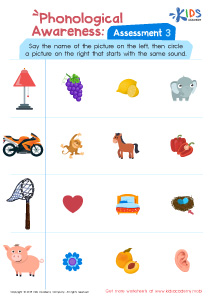
Rhyming skills development Rhyming Worksheets for Ages 4-7
4 filtered results
-
From - To
Enhance your child's language skills with our engaging rhyming worksheets, designed specifically for ages 4-7. These thoughtfully crafted resources help your little learners develop essential rhyming skills through fun activities that include identifying rhyming words, completing rhymes, and creating their own rhyming phrases. By engaging in these playful exercises, children will boost their vocabulary, phonemic awareness, and cognitive flexibility. Whether in the classroom or at home, our rhyming worksheets provide an interactive way for kids to explore the magical world of rhymes and language. Foster a love for learning while building foundational literacy skills—start your rhyming adventure today!
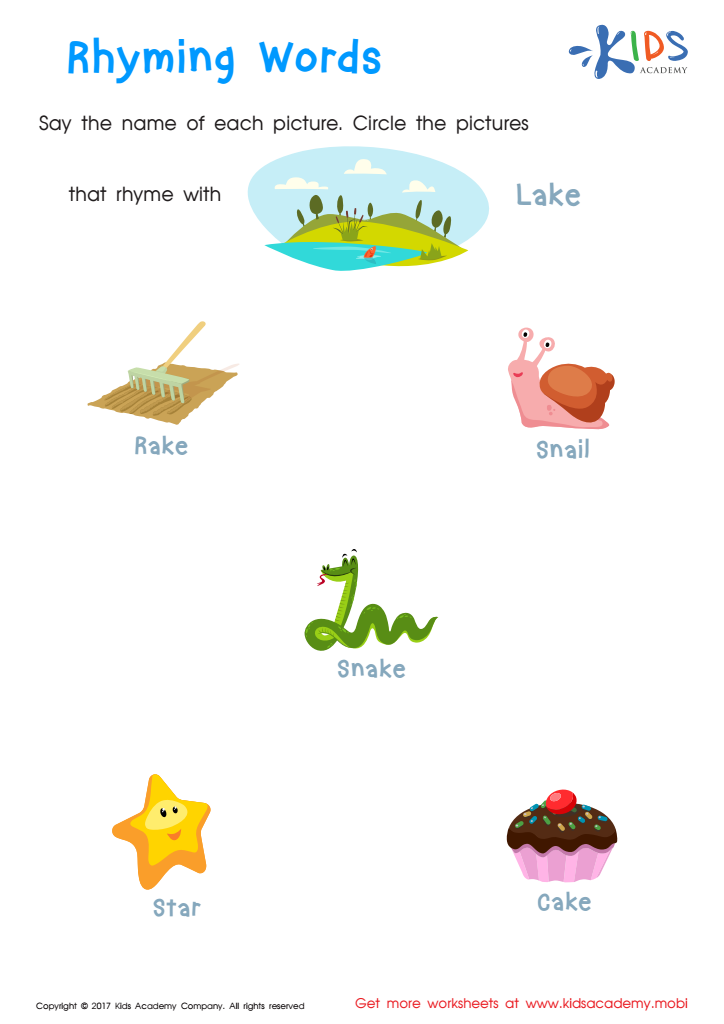
Rhyming Words Rhyming Worksheet
 Assign to My Students
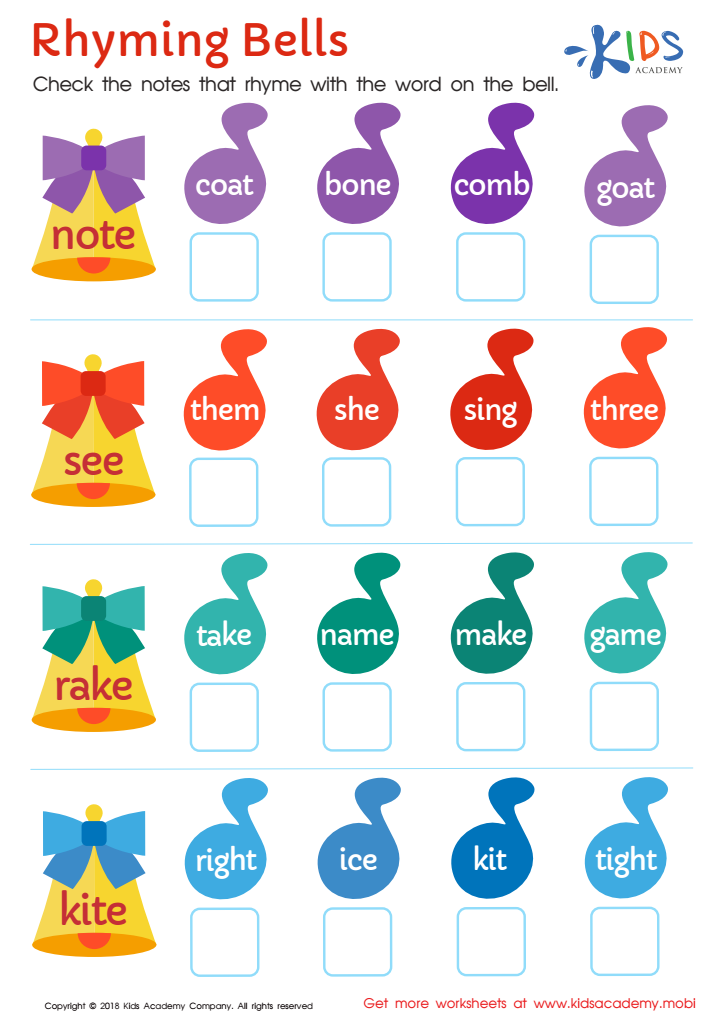
Rhyming Bells Worksheet
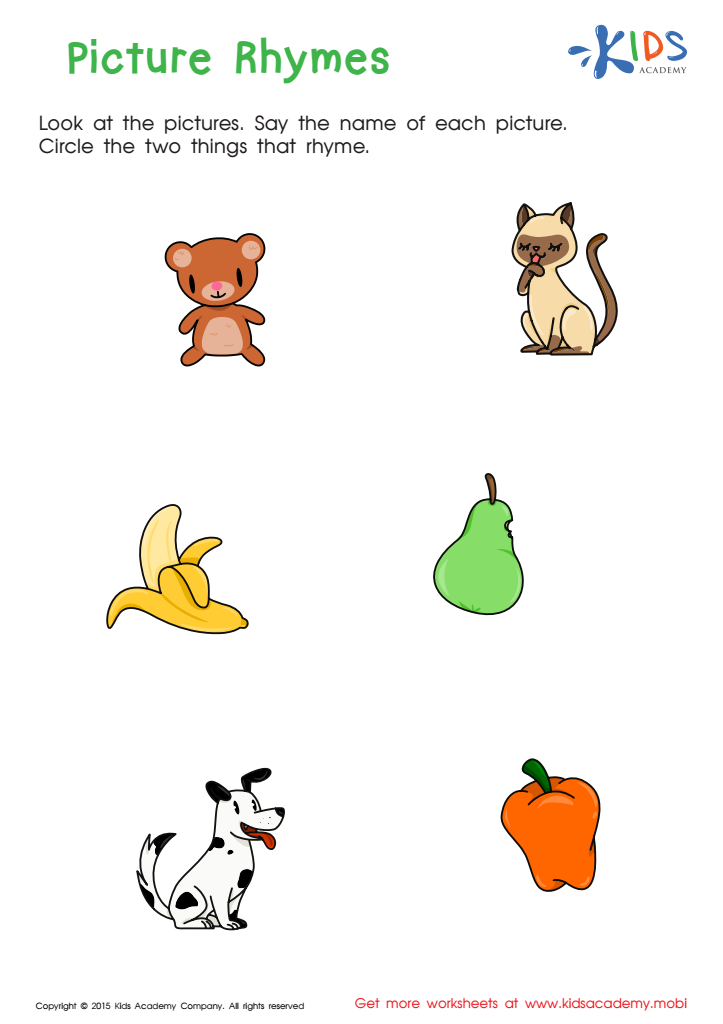
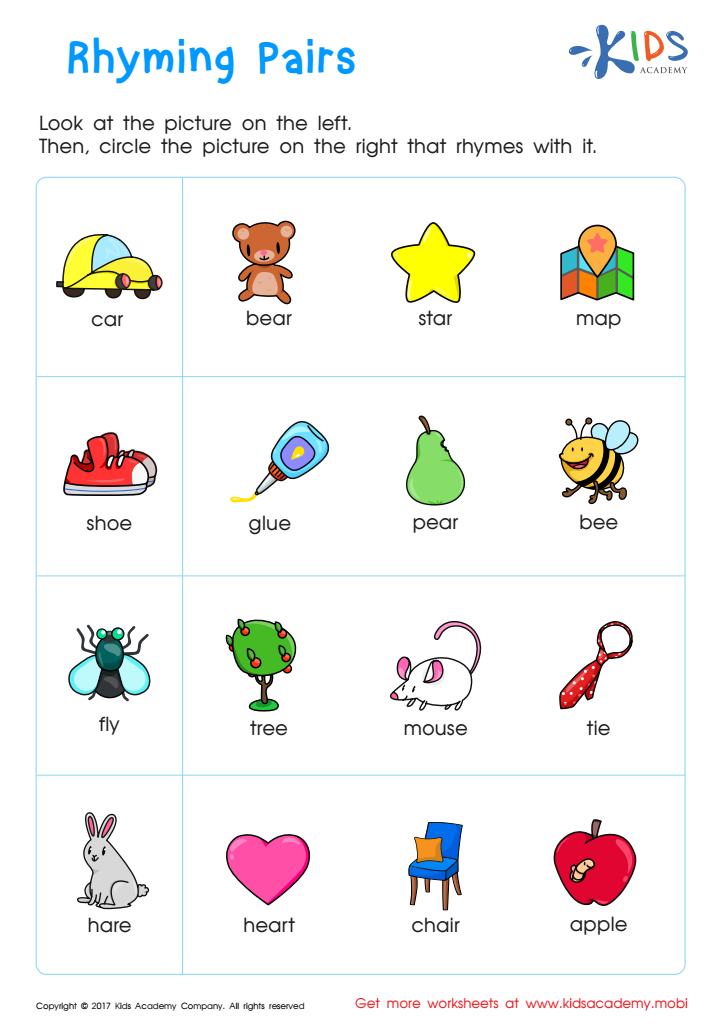
First Words: Picture Rhymes Worksheet







Rhyming skills are a crucial aspect of early literacy development for children aged 4 to 7. Understanding and practicing rhyme enhances phonemic awareness, which is the ability to hear, identify, and manipulate sounds in spoken words. This phonemic awareness lays the foundation for successful reading and writing skills. When children can recognize and produce rhymes, they become more attuned to the sounds and structures of language, facilitating better decoding of words when they begin to read.
Moreover, rhyming helps enrich vocabulary. As children engage with rhyming words, they are exposed to new terms and sounds, sparking curiosity and encouraging language exploration. Engaging in rhyming activities often involves playful interactions through songs, poems, and games, making learning enjoyable and memorable.
Additionally, rhyming supports cognitive skills, such as memory and pattern recognition. These skills are vital not only for literacy but for overall cognitive development. As children learn to create and identify rhymes, they develop critical thinking and problem-solving skills. For these reasons, both parents and teachers should prioritize rhyming activities, fostering a love of language while building essential foundations for future learning.