Letter Tracing Practice Upper & Lowercase Letters Worksheets for Ages 4-7
3 filtered results
-
From - To
Enhance your child's writing skills with our engaging letter tracing worksheets designed specifically for ages 4-7. Our comprehensive collection features both uppercase and lowercase letter tracing activities that promote fine motor skills and letter recognition. The colorful, interactive designs keep young learners motivated while allowing them to practice their handwriting at their own pace. As they connect dots and follow guided lines, children develop crucial pre-writing skills essential for their educational journey. Perfect for home or classroom use, these worksheets make learning fun and effective, paving the way for confident readers and writers. Download and start tracing today!
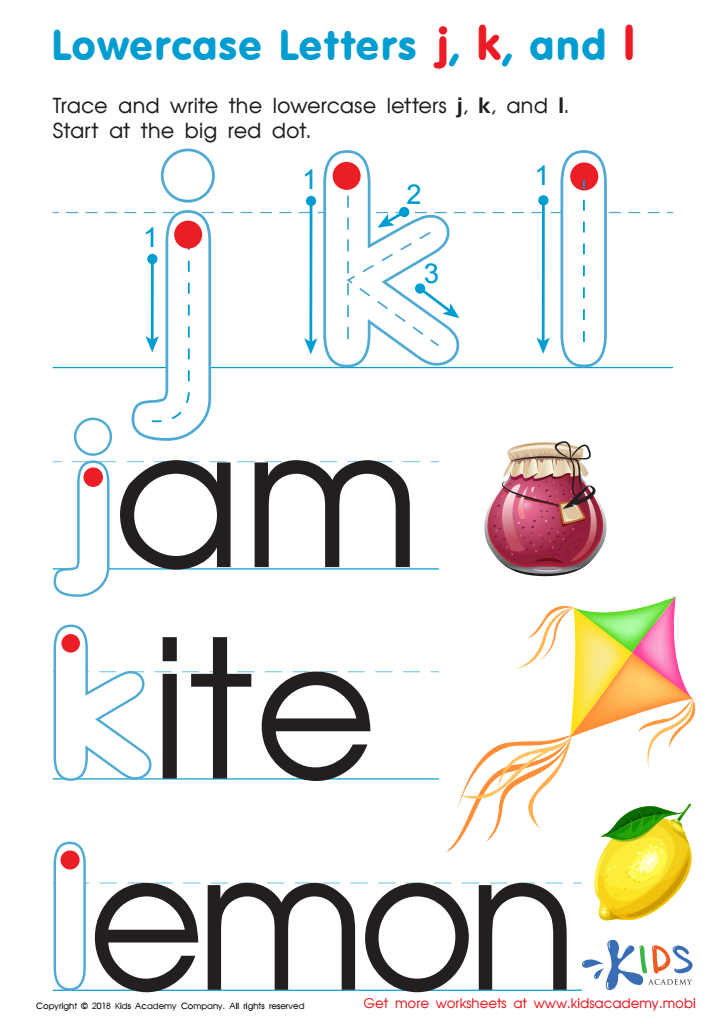
Lowercase Letters j k l Worksheet
 Assign to My Students



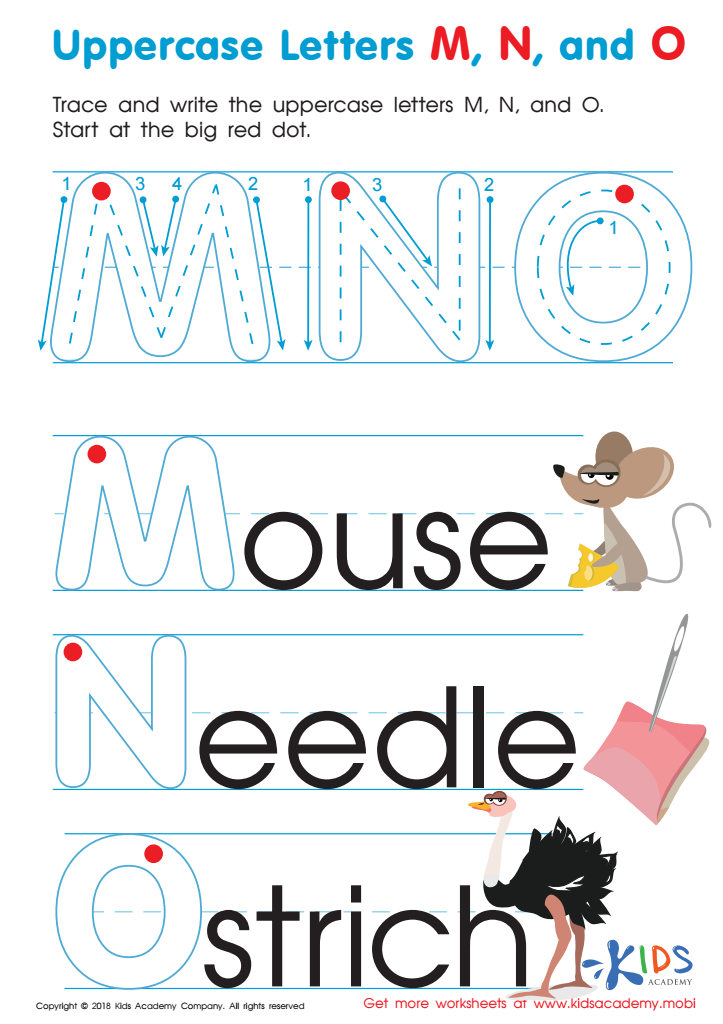
Uppercase Letters M, N, and O Worksheet
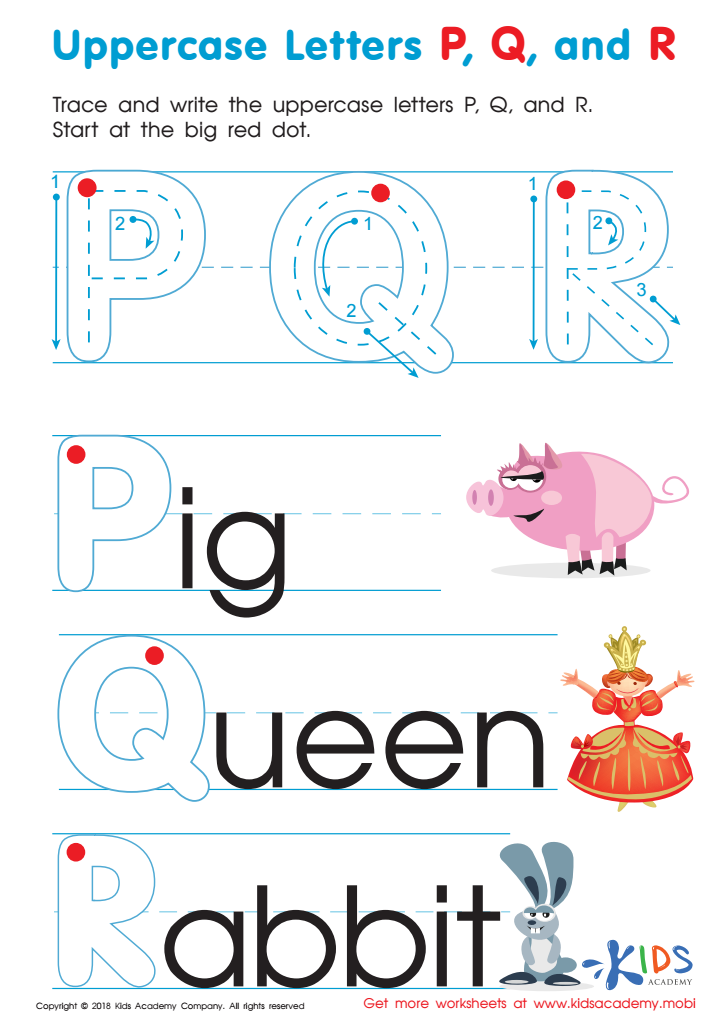
Uppercase Letters P, Q, and R Worksheet






Letter tracing practice for ages 4-7 is crucial for early literacy development, as it lays the foundation for writing skills and reading fluency. For parents and teachers, understanding the importance of this practice is vital. First, tracing reinforces fine motor skills, enhancing hand-eye coordination and control, which are necessary for writing. It allows children to experiment with letter formation, understanding how letters are structured—this is key to developing handwriting consistency.
Additionally, tracing letters enhances letter recognition, as repeated exposure helps young learners identify both uppercase and lowercase letters effectively. This recognition is essential for their future reading abilities. As they engage with different letters, children also begin to connect sounds with letter shapes, promoting phonemic awareness.
Moreover, tracing can be a fun, engaging activity that enhances a child's confidence in writing. This is particularly important for their self-esteem and motivation during these formative years. When children see their progress in tracing, it encourages them to continue practicing and learning.
In conclusion, letter tracing practice is a multifactored approach to learning, fostering essential writing skills, promoting literacy, and building a solid foundation for future academic success. Therefore, it deserves the attention of both parents and educators.







