Visual discrimination Upper & Lowercase Letters Worksheets for Ages 4-7
4 filtered results
-
From - To
Boost your child’s alphabetical skills with our engaging Visual Discrimination Worksheets designed for ages 4-7! These worksheets focus on identifying and differentiating between upper and lowercase letters, fostering essential visual recognition skills. Fun and interactive exercises create a dynamic learning environment that captivates young learners. Each worksheet is thoughtfully crafted to enhance your child's attention to detail while developing their literacy foundations. Perfect for home or classroom use, these resources are tailored to make letter learning enjoyable. Help your child gain confidence in reading and writing by integrating our visual discrimination worksheets into their daily activities today!
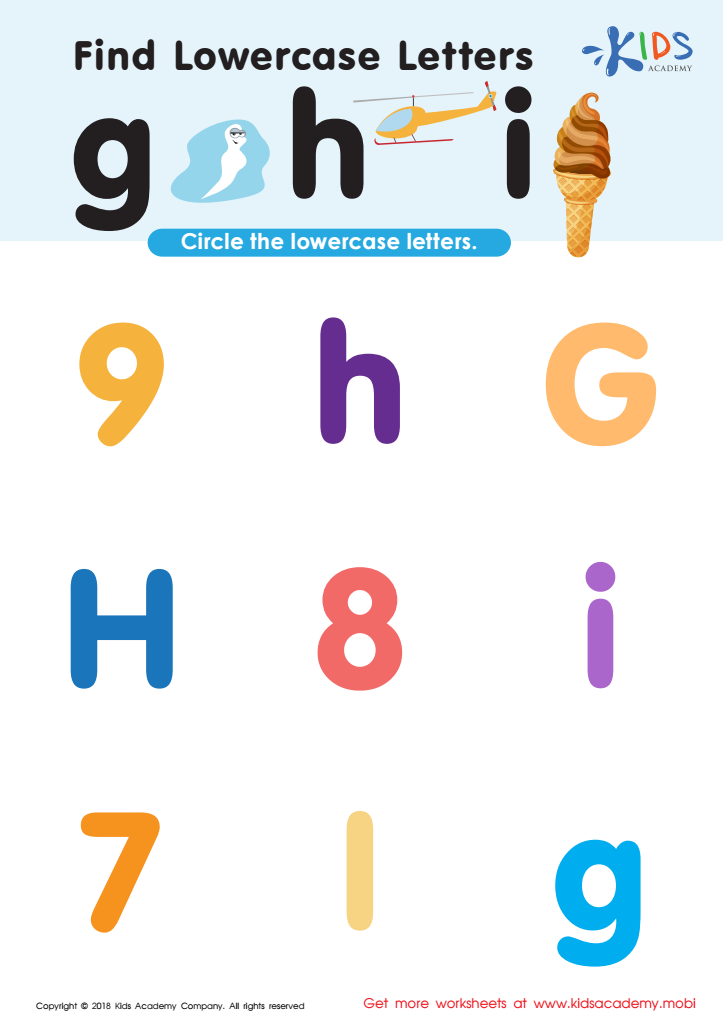
Find Lowercase Letters g h i Worksheet
 Assign to My Students

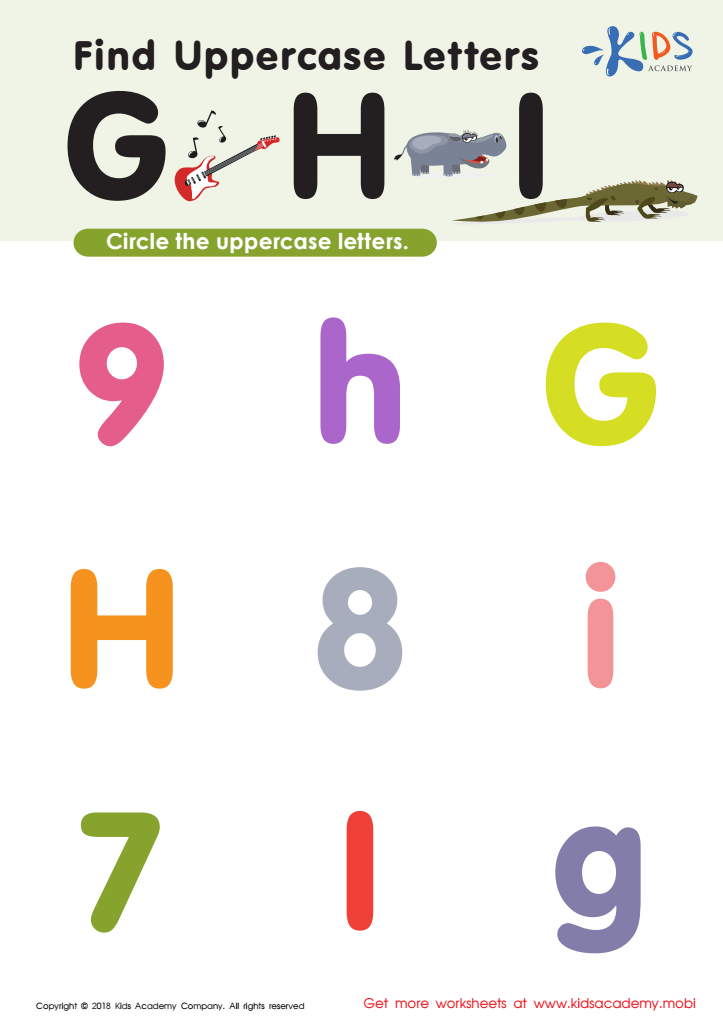
Find Uppercase Letters G, H, and I Worksheet
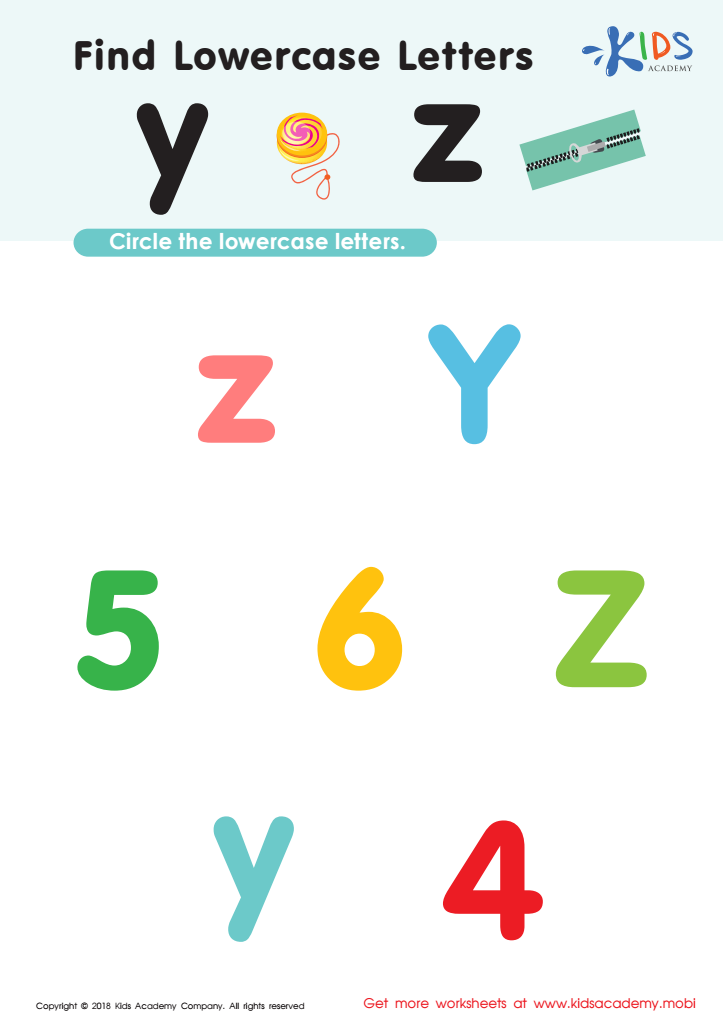
Find Lowercase Letters y z Worksheet
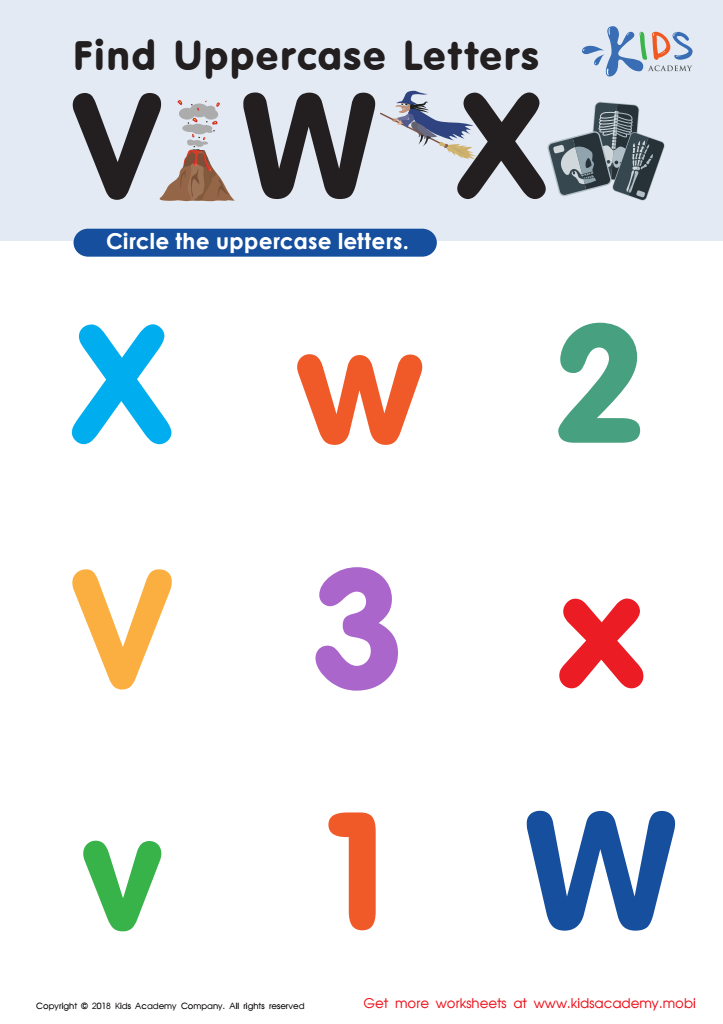
Find Uppercase Letters V, W, X Worksheet






Visual discrimination of uppercase and lowercase letters is crucial for children aged 4 to 7 as it directly impacts their literacy development and overall cognitive skills. At this stage, children are starting to recognize and differentiate between letters, which forms the foundation for reading and writing. Mastering visual discrimination enables students to identify letters in various fonts and contexts, enhancing their ability to read smoothly and comprehend written language.
Furthermore, developing this skill aids in reducing spelling mistakes, as children learn to notice differences between similar-looking letters, such as “b” and “d.” Early intervention in visual discrimination fosters confidence in young learners, ensuring they feel more capable in classroom settings. Ignoring these skills could lead to difficulties in learning, creating frustration and reluctance in engaging with texts.
For parents and teachers, caring about visual discrimination means investing in children's academic futures and catering to diverse learning styles. Engaging children through fun activities—like games, puzzles, or interactive storytelling—not only boosts their letter recognition abilities but also fosters a love for reading. By recognizing the significance of these foundational skills, parents and teachers can work together to support children in mastering the building blocks of literacy.







