Reading Skills Vowels Worksheets for Ages 4-7
5 filtered results
-
From - To
Enhance your child's reading abilities with our engaging Vowels Worksheets designed for ages 4-7. These thoughtfully crafted resources focus on the vital role of vowels in building foundational literacy skills. Kids will enjoy fun activities that promote phonemic awareness, letter recognition, and sound association, making learning to read an exciting adventure. With colorful illustrations and interactive exercises, these worksheets capture young learners' attention while strengthening their understanding of vowels. Suitable for both classroom and home use, our Vowels Worksheets are perfect for supporting early reading development and fostering a love for learning in young minds. Start their reading journey today!
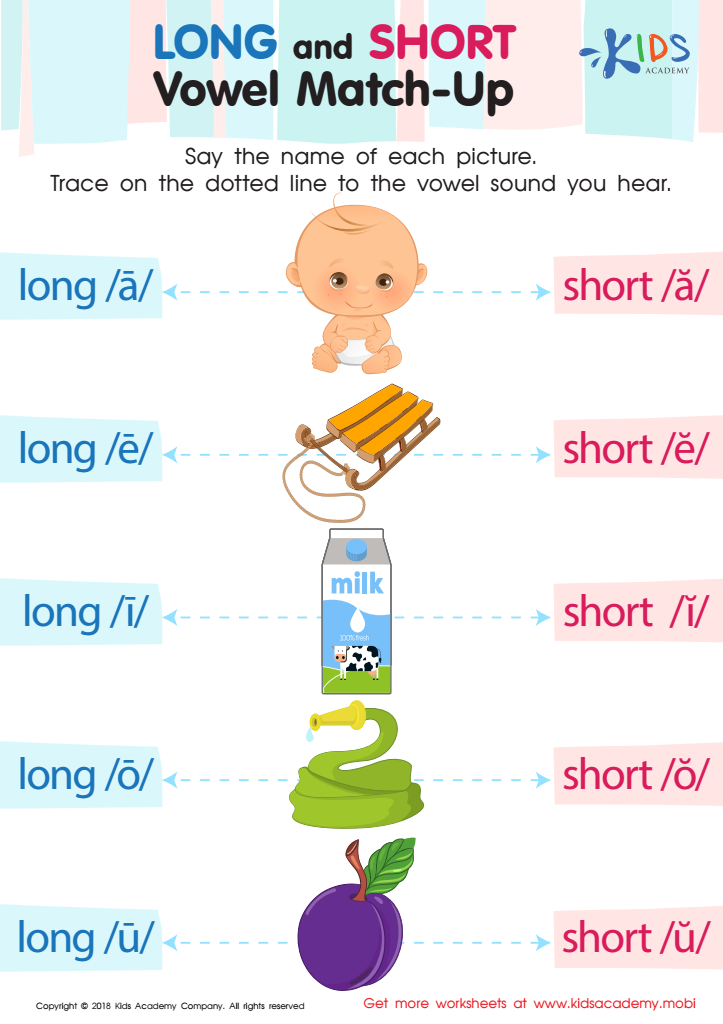
Long and Short Vowel Match up Reading Worksheet
 Assign to My Students
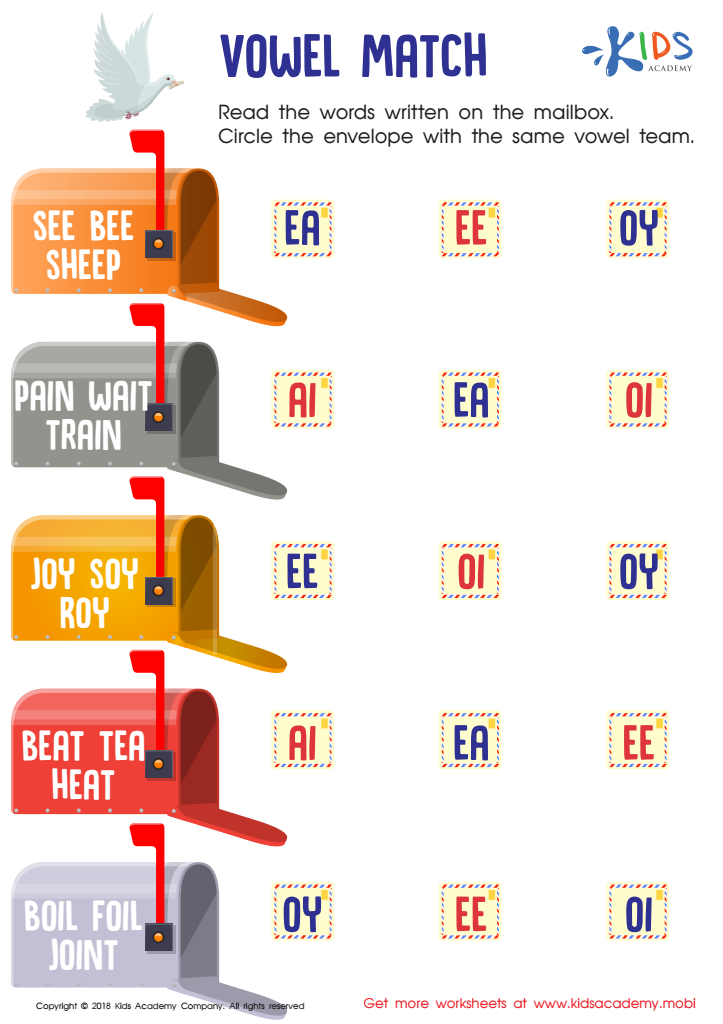
Vowel match Worksheet
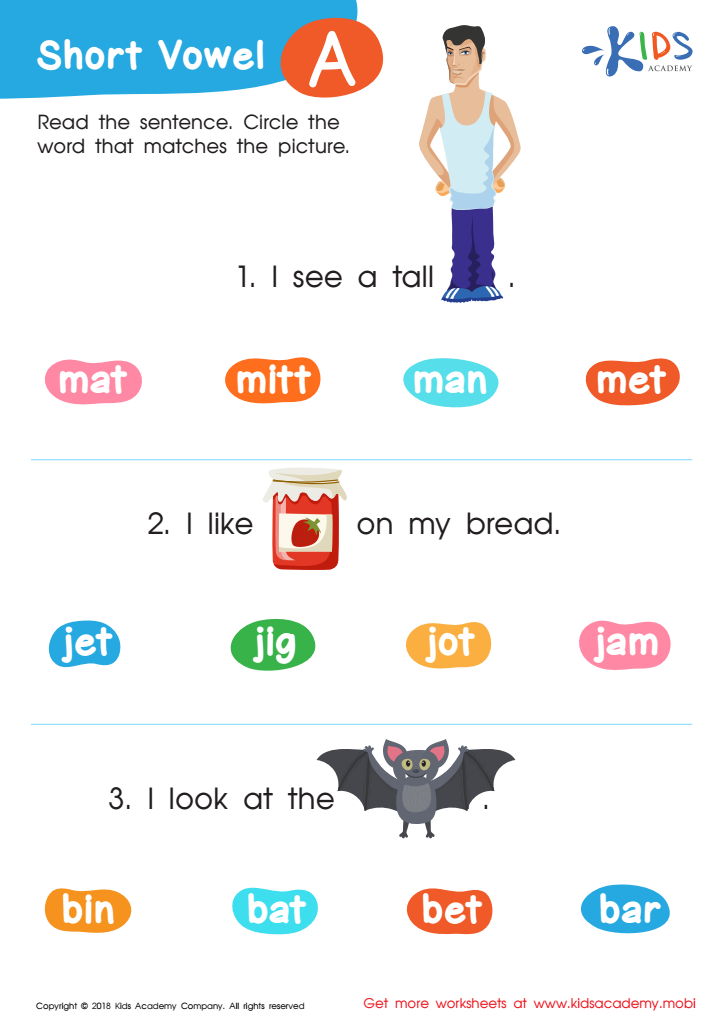
Short Vowel /a/ Worksheet
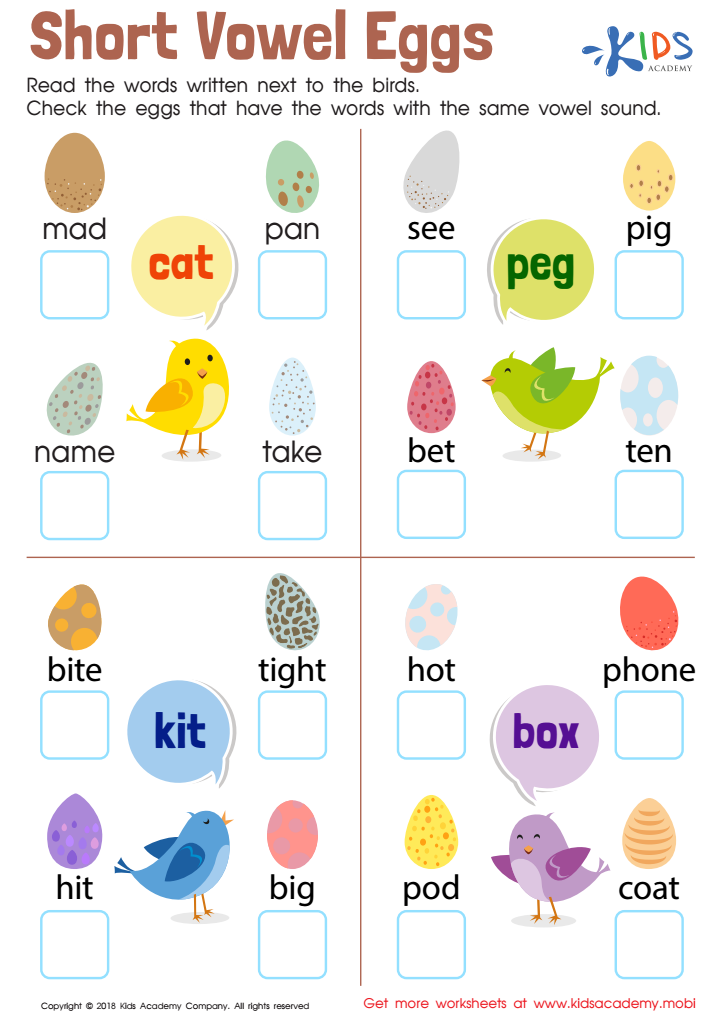
Short Vowel Eggs Worksheet
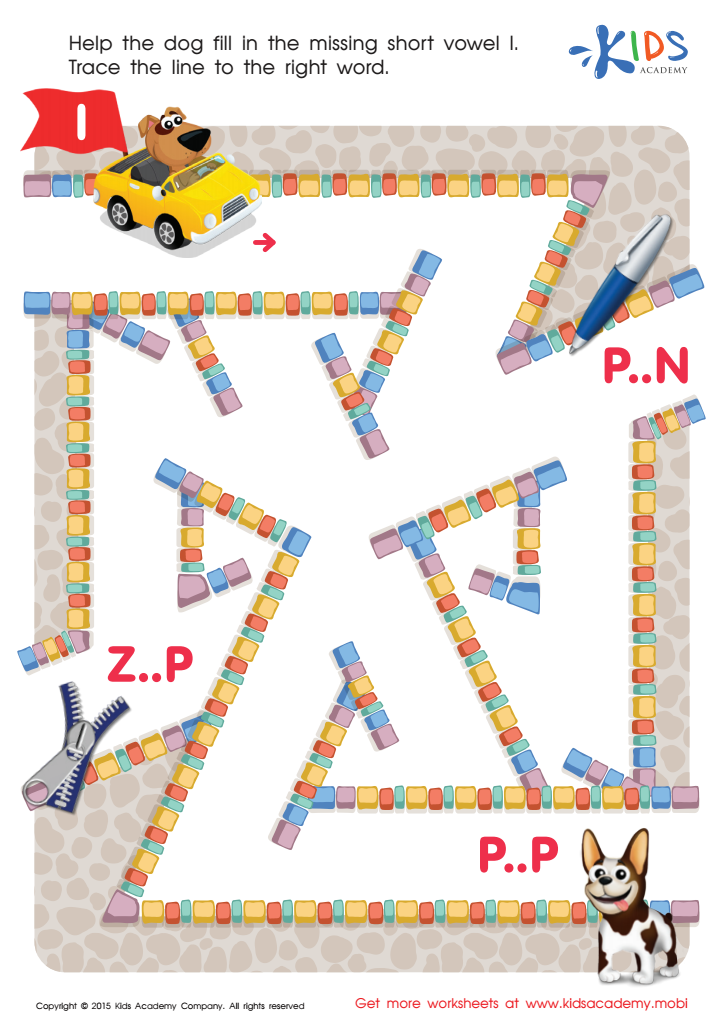
Short Vowel Sound I Worksheet





Reading skills, particularly the understanding of vowels, are crucial for children aged 4-7 as they form the foundation for literacy development. Vowels play a significant role in helping children decode and recognize words, which is essential for reading fluency and comprehension. When children grasp how vowels function, they can tackle a wider range of words, build their vocabulary, and engage with texts more effectively.
For parents and teachers, nurturing these skills cultivates a love for reading and boosts students' confidence. Early mastery of vowel sounds aids phonemic awareness, essential for phonics, which in turn supports spelling and writing. By focusing on vowels, educators can implement targeted strategies that make learning engaging and enjoyable, incorporating games, songs, and interactive activities.
Additionally, investing in reading skills during these formative years may lead to improved academic performance across subjects, as literacy is critical in learning. Ultimately, fostering strong reading skills in early childhood sets a positive trajectory for lifelong learning, and equips children with the tools they need to become successful communicators, critical thinkers, and avid readers. Prioritizing vowel understanding is investing in a child’s future is invaluable.







