
Understanding vowel sounds Vowels Worksheets for Ages 4-7
4 filtered results
Difficulty Level
Grade
Age
-
From - To
Subject
Activity
Standards
Unlock the joy of learning with our "Understanding Vowel Sounds" worksheets designed for ages 4-7. These engaging printables help young learners grasp the essential vowel sounds, enhancing their reading and pronunciation skills. Each worksheet is thoughtfully crafted to provide interactive exercises that make recognizing and distinguishing vowels fun and effective. Perfect for classroom or home use, our activities support early literacy development and build a strong foundation in phonics. With colorful illustrations and kid-friendly tasks, mastering vowel sounds has never been easier or more enjoyable. Start your child's phonics journey today with Kids Academy!
Favorites
With answer key
Interactive
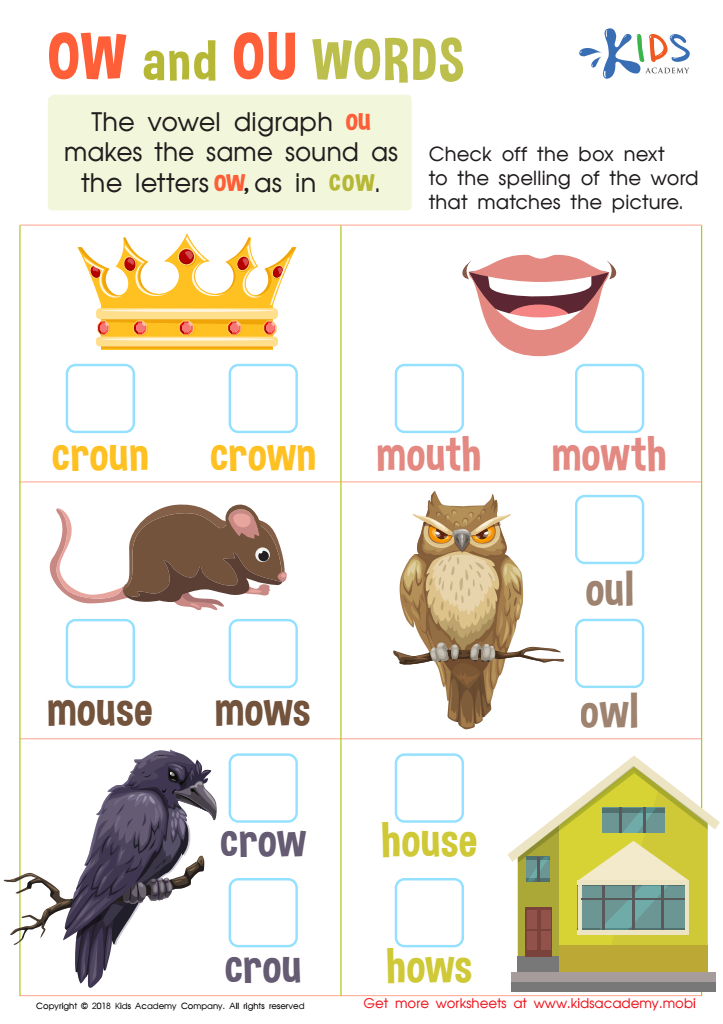
Reading: OW and OU Words Worksheet
Help your kids learn phonetics! Explain the different sounds and long/short variations. Emphasize that some vowel sounds are the same, e.g. ou = ow in cow. For practice, have them read aloud the words in the worksheet and check the box next to the spelling that matches the picture.
Reading: OW and OU Words Worksheet
Worksheet
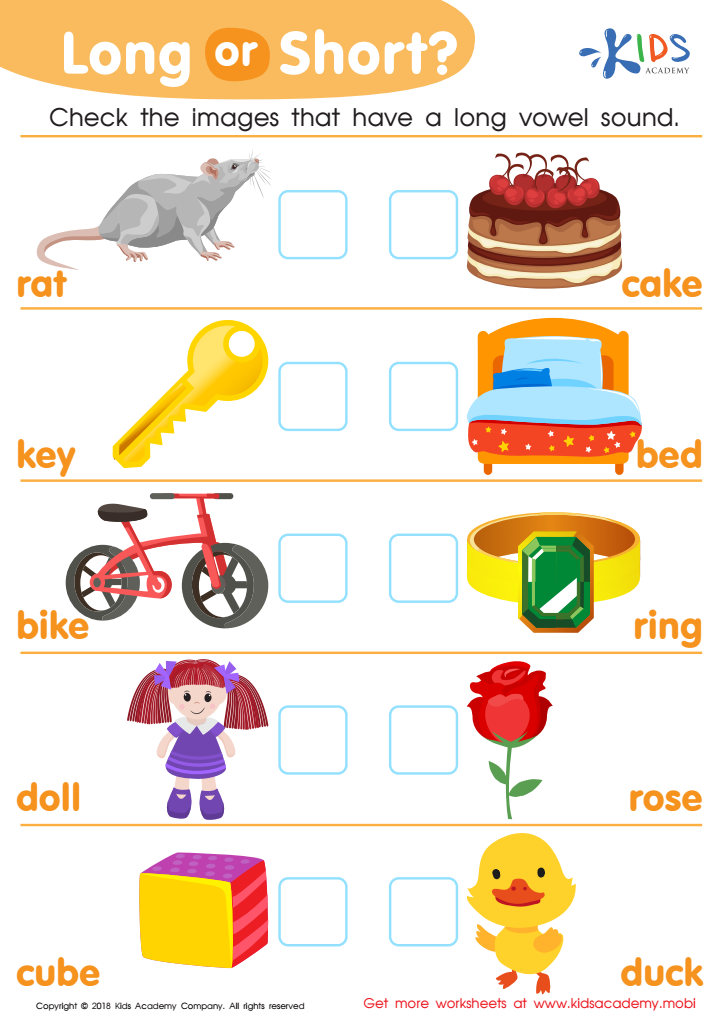
Long or Short Reading Worksheet
Every new reader needs to learn to recognize long and short vowel sounds. This phonics worksheet uses pictures of high-frequency words to help. Kids read the words and then check off images with long vowel sounds. It helps them learn to decode words and improves fine motor skills.
Long or Short Reading Worksheet
Worksheet
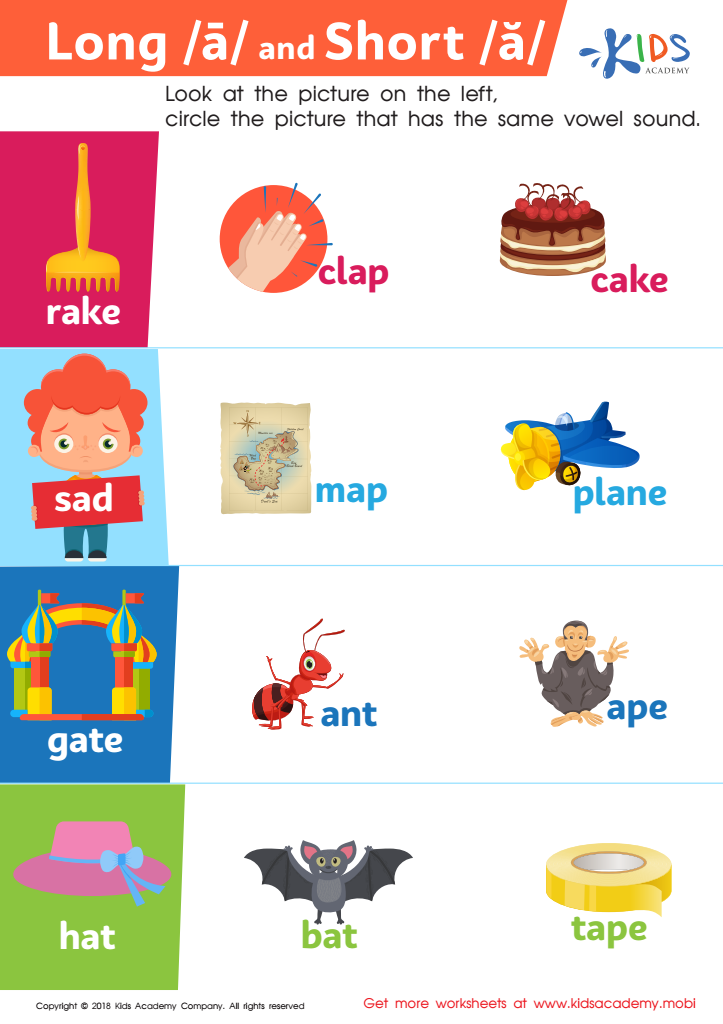
Reading: Long a and Short a Worksheet
This printable helps students practice distinguishing the long and short A sound. Pictures provide clues to read each word and students identify if it has a short or long sound. By completing this worksheet, children gain mastery of the phonics skill.
Reading: Long a and Short a Worksheet
Worksheet
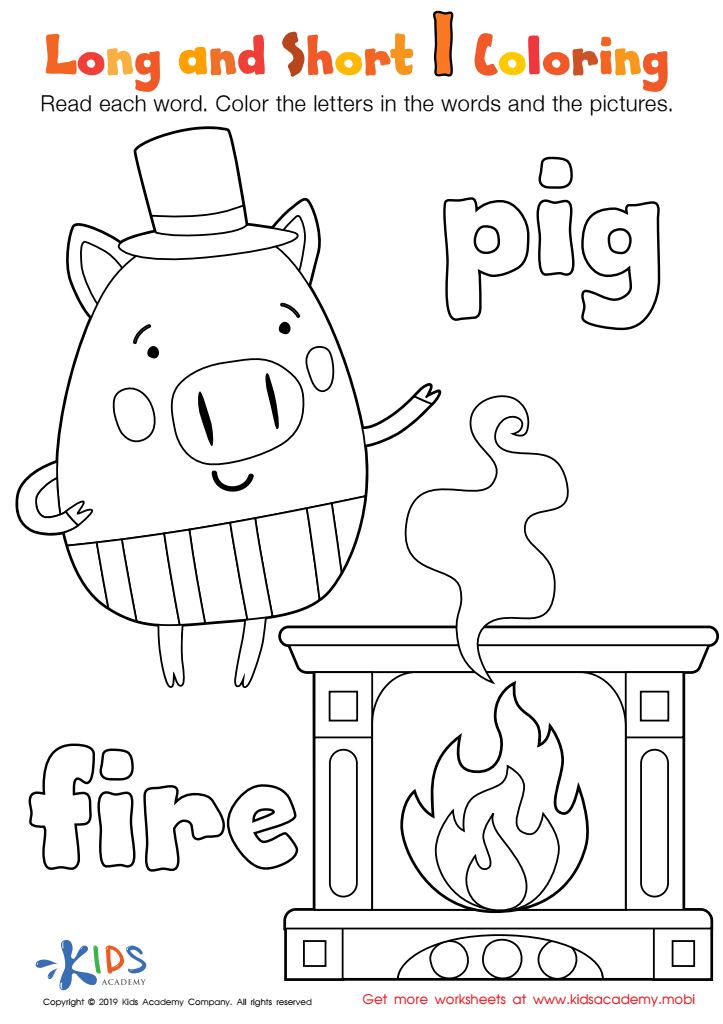
Long and Short I Worksheet
Print the worksheet and have the students read "pig" and "fire". Check for understanding the difference between long and short vowels. Color in words and pictures to make learning phonics fun! This exercise is perfect for introducing the topic to your students.
Download (PDF)
 Assign to My Students
Assign to My Students
Long and Short I Worksheet
Worksheet
Join Kids Academy for Free
Who is primarily going to use this learning content?





Understanding vowel sounds is foundational for young learners, ages 4-7, because vowels are the building blocks of language development. For parents and teachers, investing time in teaching and understanding vowel sounds offers several paramount benefits.
Firstly, vowel sounds are crucial for effective communication. They bridge consonants in words, making speech clear and intelligible. Children who struggle with vowel sounds may find it challenging to pronounce words correctly, potentially impacting their ability to express themselves and be understood by others.
Secondly, mastering vowel sounds is integral to early reading skills. Reading words correctly relies on knowing how to blend consonants and vowels together. Recognizing both long and short vowels can considerably boost a child's capacity to decode new words, enhancing their reading fluency and comprehension.
Moreover, understanding vowel sounds aids in spelling and writing. It allows children to experiment with word construction and increases their ability to spell words accurately, fostering literacy and providing them with confidence in their writing abilities.
Lastly, teaching vowel sounds caters to a foundational understanding of phonics—a pivotal tool for early education. This systematic approach enables young learners to grasp the basics of reading with greater ease.
Early mastery of vowel sounds sets the stage for academic success, equipping children with essential language skills they will use throughout their entire educational journey and beyond.







