Vocabulary development Vowels Worksheets for Ages 4-7
6 filtered results
-
From - To
Develop your child's foundational reading skills with our engaging Vocabulary Development Vowels Worksheets designed for ages 4-7. These fun and educational printables from Kids Academy use colorful, age-appropriate exercises to strengthen vowel recognition, pronunciation, and vocabulary expansion. Each worksheet provides a variety of activities, including matching, tracing, and fill-in-the-blank tasks, to solidify understanding and application of vowel sounds. Ideal for preschool and early elementary learners, these resources foster a love for reading and build the essential skills needed for literacy success. Explore our collection to support your child's vocabulary journey today!
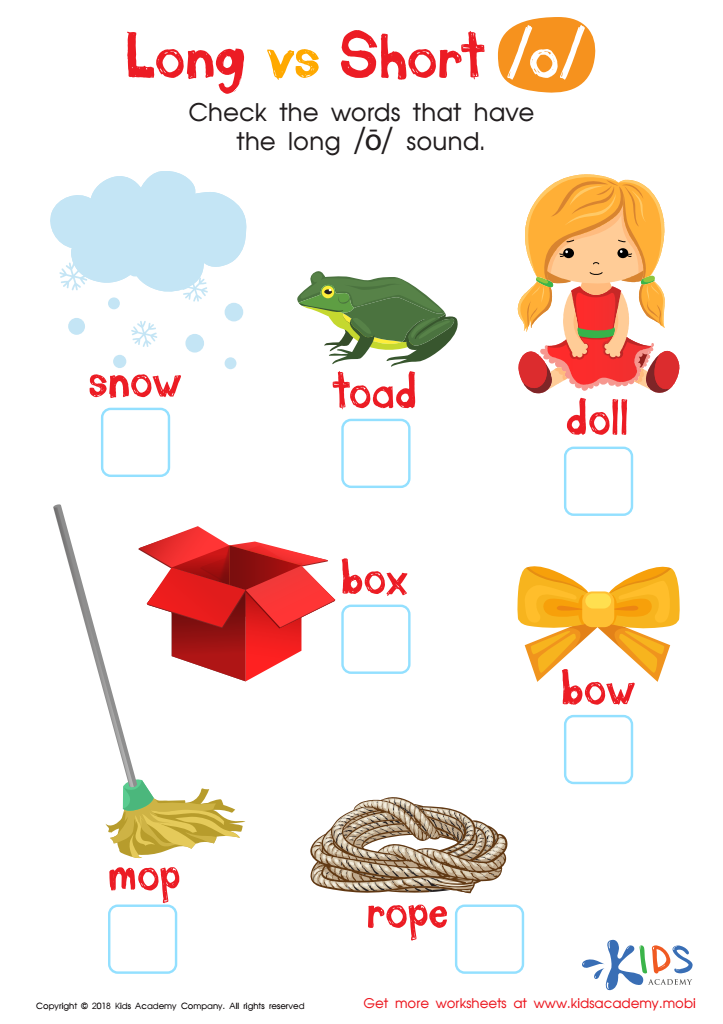
Long vs Short O Reading Worksheet
 Assign to My Students
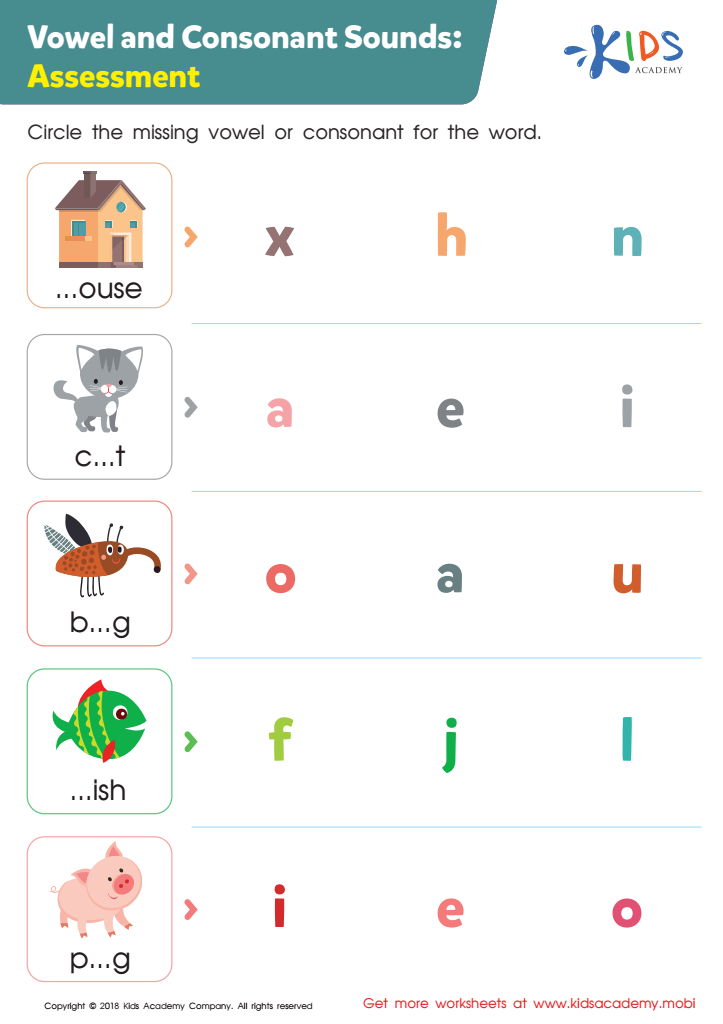
Vowel and Consonant Sounds: Assessment Worksheet
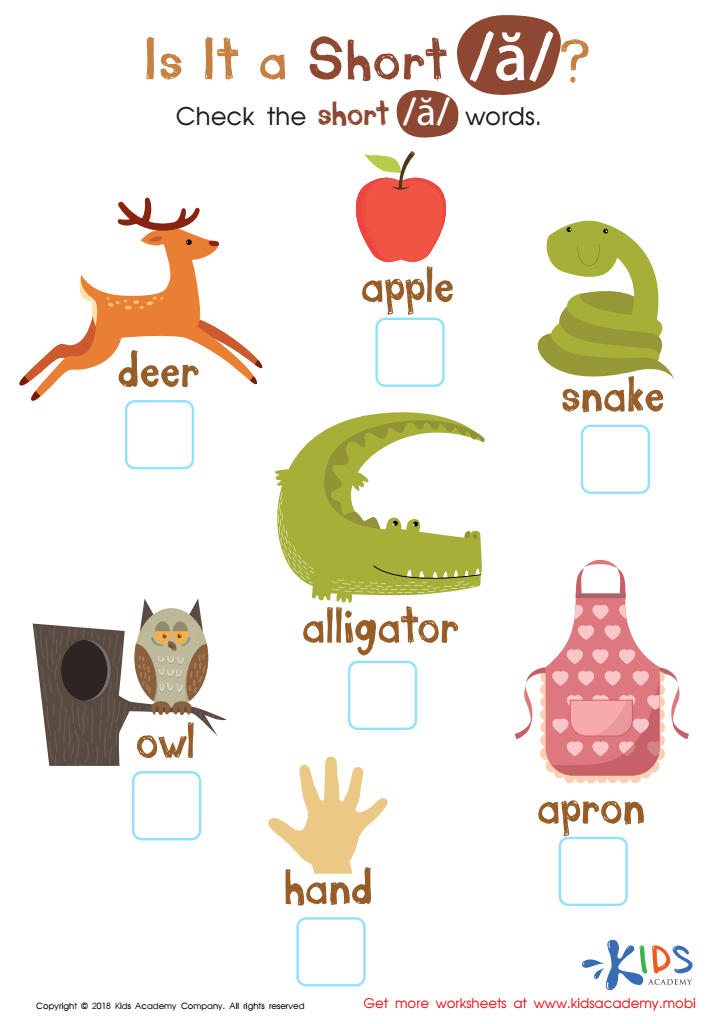
Is It Short A? Reading Worksheet
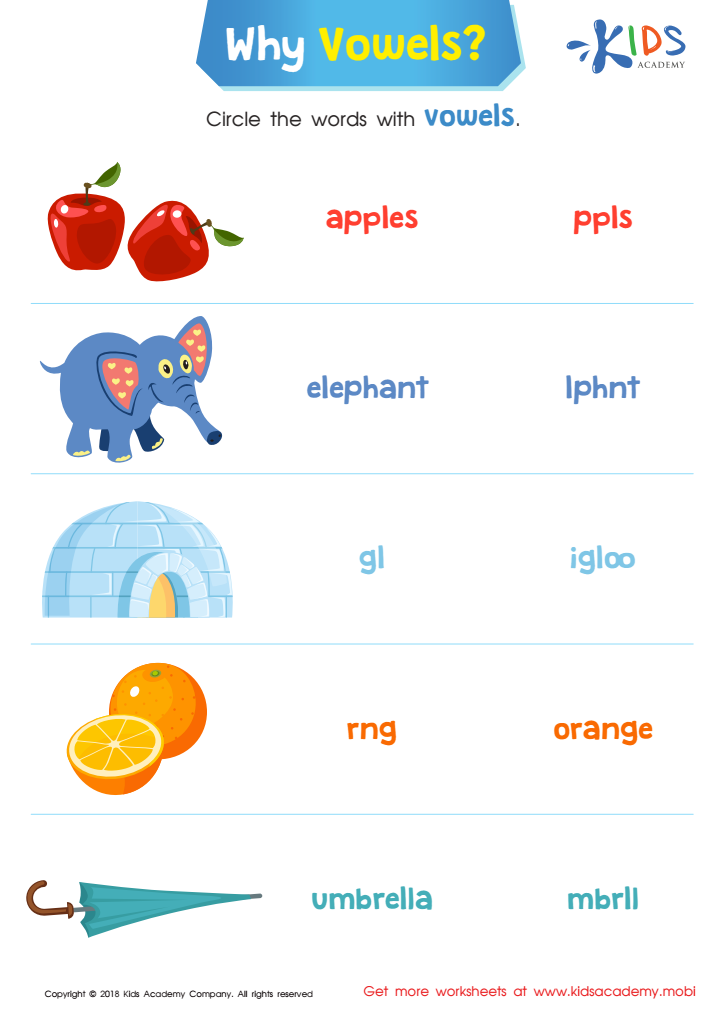
Why Vowels? Reading Worksheet
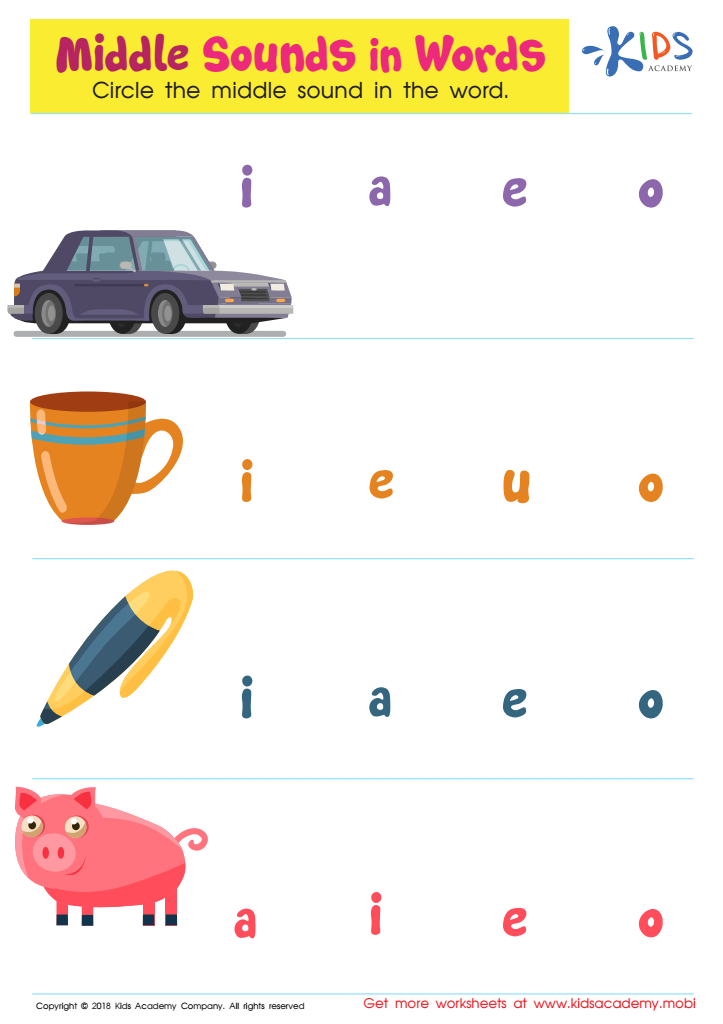
Middle Sounds in Words Worksheet
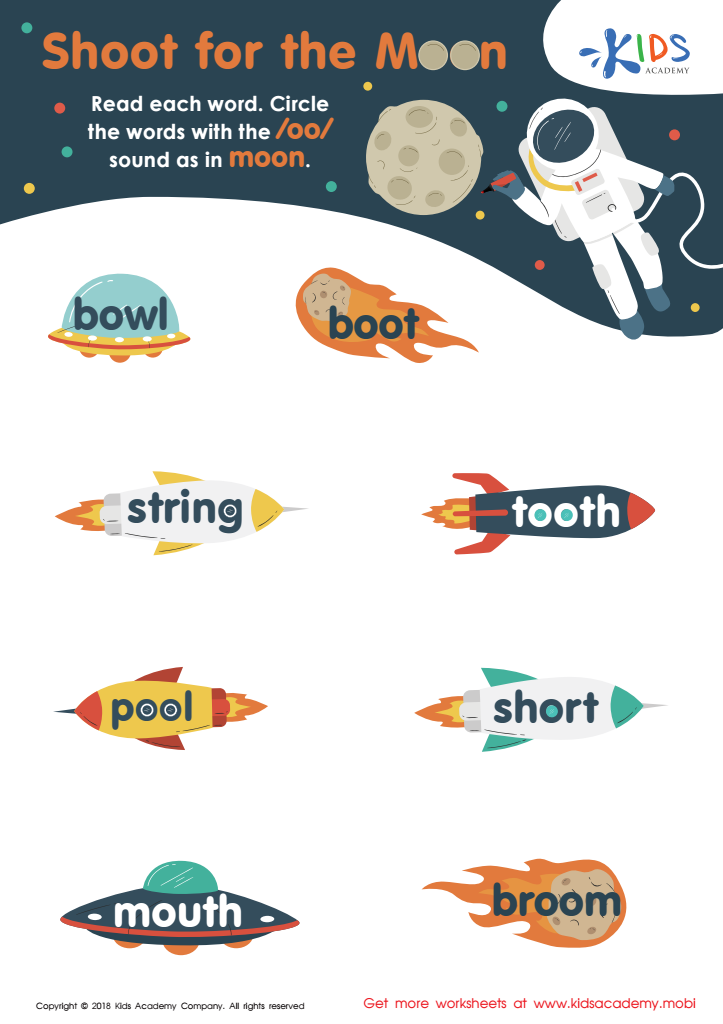
Reading: Shoot for the Moon Worksheet





Vocabulary development and understanding vowels are crucial for children aged 4-7, as they lay the foundation for reading, writing, and communication skills. At this formative age, children are at a critical stage for language acquisition. A robust vocabulary directly influences a child's ability to express thoughts, follow instructions, and understand new concepts.
Vowels are the building blocks of language sounds. Mastery of vowel sounds assists children in decoding words accurately and enhances their phonemic awareness, which is vital for reading fluency. When children understand vowels and can manipulate their sounds, they are better prepared to tackle more complex literacy skills such as blending sounds and constructing words.
Parents and teachers should focus on vocabulary enhancements through engaging activities like reading aloud, interactive games, and phonics exercises. Exposure to a rich and varied vocabulary during these early years fosters a child's ability to grasp and enjoy reading. Moreover, vocabulary proficiency is linked to better performance in future academic pursuits across all subjects, as it supports comprehension and critical thinking.
In summary, prioritizing vocabulary development and vowel understanding for young learners sets the stage for successful communication, literacy skills, and academic confidence, impacting their educational trajectory and lifelong learning journey.







