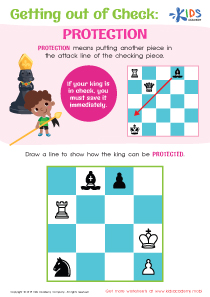
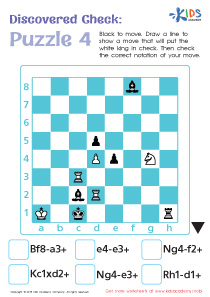
Critical Thinking Chess Worksheets for Ages 4-7
4 filtered results
-
From - To
Foster your child's cognitive development with our engaging "Critical Thinking Chess Worksheets for Ages 4-7" from Kids Academy. These meticulously designed worksheets are perfect for young learners, blending fun with mental exercises through the strategic game of chess. Tailored to cultivate critical thinking skills, these activities encourage pattern recognition, problem-solving, and logical reasoning. Ideal for both beginners and budding chess enthusiasts, our worksheets make learning chess principles enjoyable and accessible. Start your child's journey towards enhanced critical thinking and cognitive prowess today with Kids Academy's dynamic chess worksheets.
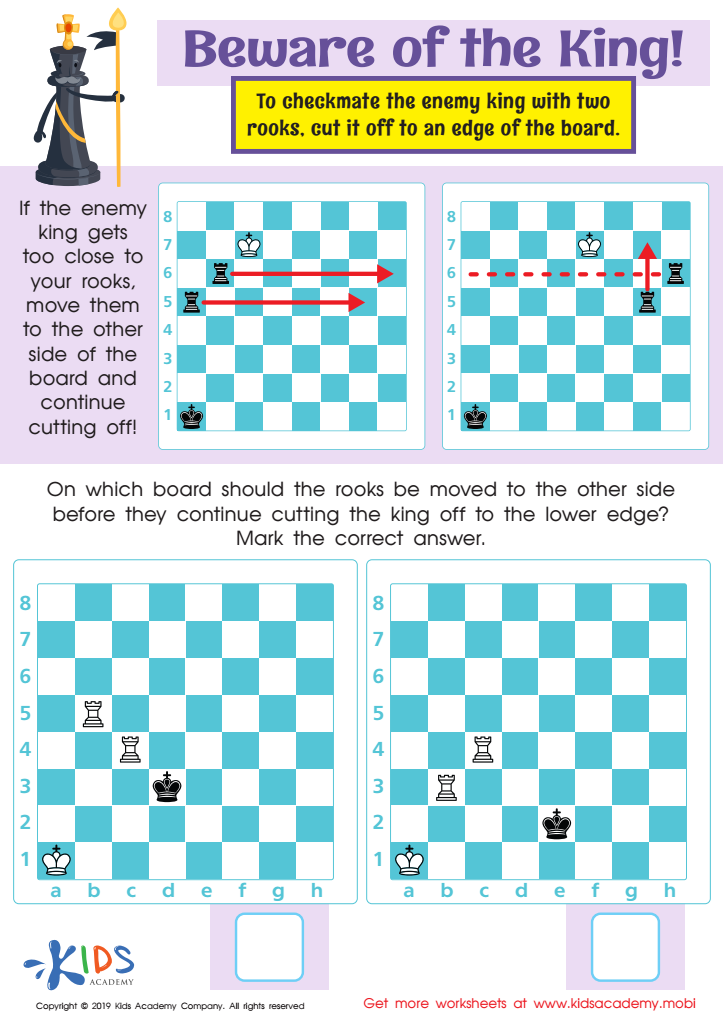
Beware of the King! Worksheet
 Assign to My Students
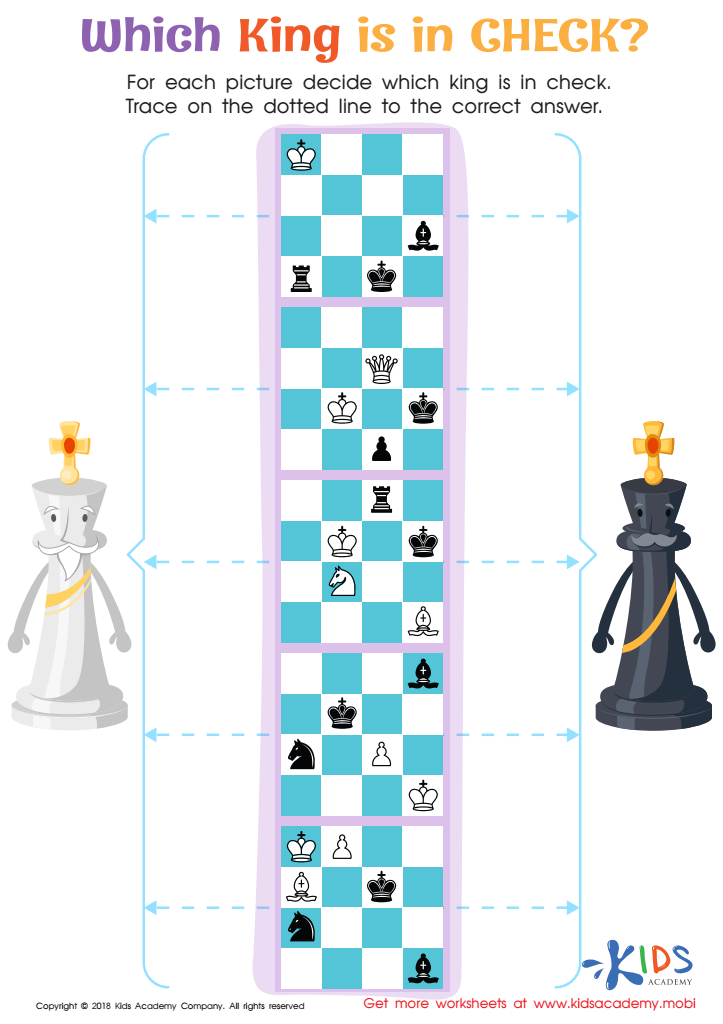
Which King is in Check? Worksheet
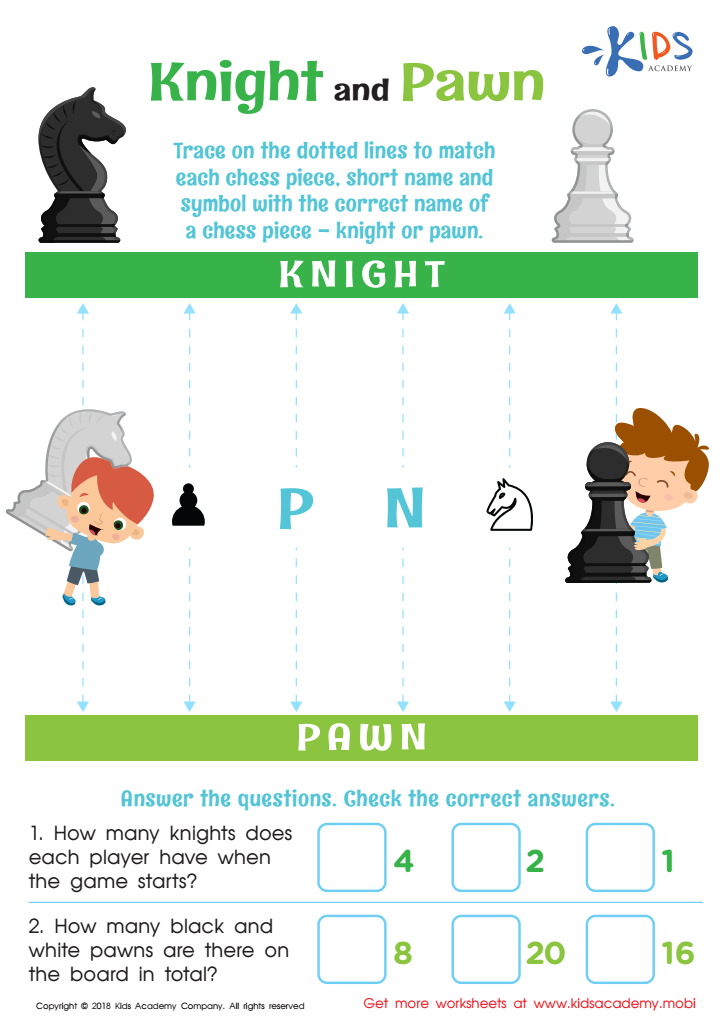
Knight and Pawn Worksheet
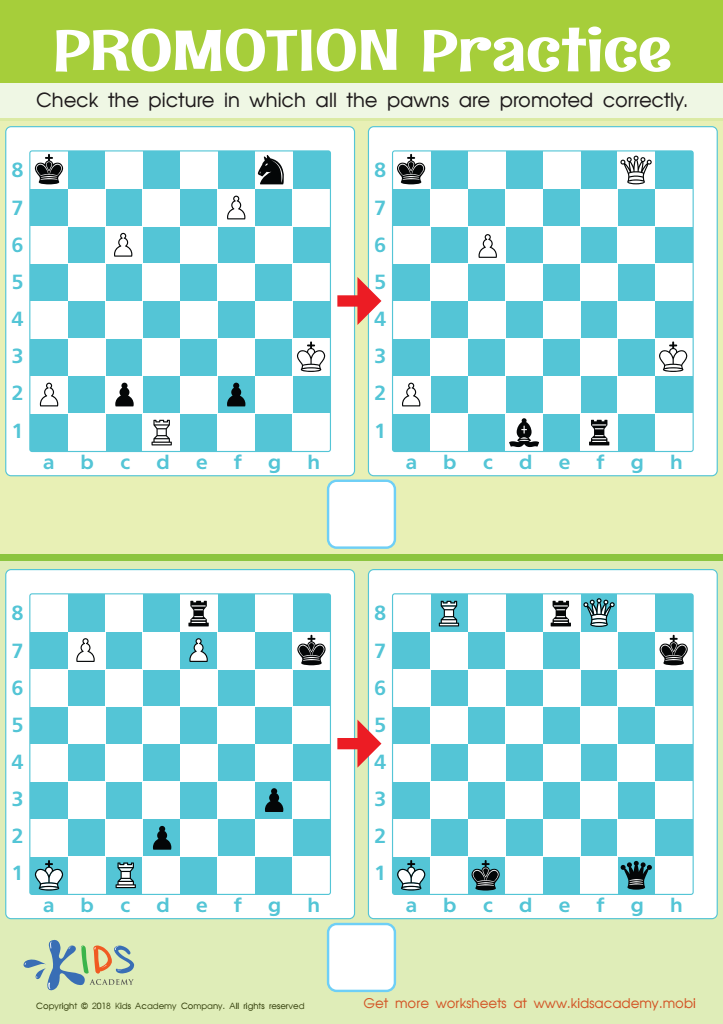
Promotion Practice Worksheet








Parents and teachers should care about Critical Thinking Chess for children ages 4-7 because it provides numerous developmental benefits that lay a strong foundation for future learning and life skills. Chess is more than just a game; it is an educational tool that enhances cognitive abilities. At this tender age, children's brains are incredibly receptive to new concepts, and learning chess can significantly boost their critical thinking and problem-solving skills. As children play and understand the game’s basic rules, they cultivate the ability to think ahead, anticipate consequences, and make strategic decisions.
Moreover, chess encourages patience, perseverance, and concentration. Young children learn to focus better, as the game demands attention to details and careful planning. Socially, playing chess can improve children’s ability to engage in healthy competition, foster sportsmanship, and enhance their communication skills as they discuss moves and strategies with peers and instructors.
Lastly, introducing chess at an early age aligns with educational standards aimed at developing 21st-century skills such as critical thinking and creativity. It integrates seamlessly into STEM (Science, Technology, Engineering, Math) education by promoting pattern recognition, spatial awareness, and numerical skills.
In sum, Critical Thinking Chess is a multifaceted learning tool that sets a strong groundwork for intellectual and social development, making it a valuable addition to early childhood education.