Problem-solving abilities Chess Worksheets for Ages 4-7
3 filtered results
-
From - To
Unlock your child's potential with our "Problem-Solving Abilities Chess Worksheets" designed specifically for ages 4-7! These engaging worksheets combine the fun of chess with essential problem-solving skills, fostering critical thinking and strategic planning from an early age. Each printable activity presents age-appropriate challenges that encourage children to analyze situations, make decisions, and develop their cognitive abilities while enjoying the game of chess. Perfect for both teachers and parents, our resources not only enhance academic skills but also ignite a passion for learning through play. Start your child's journey to becoming a thoughtful and adept problem-solver today!
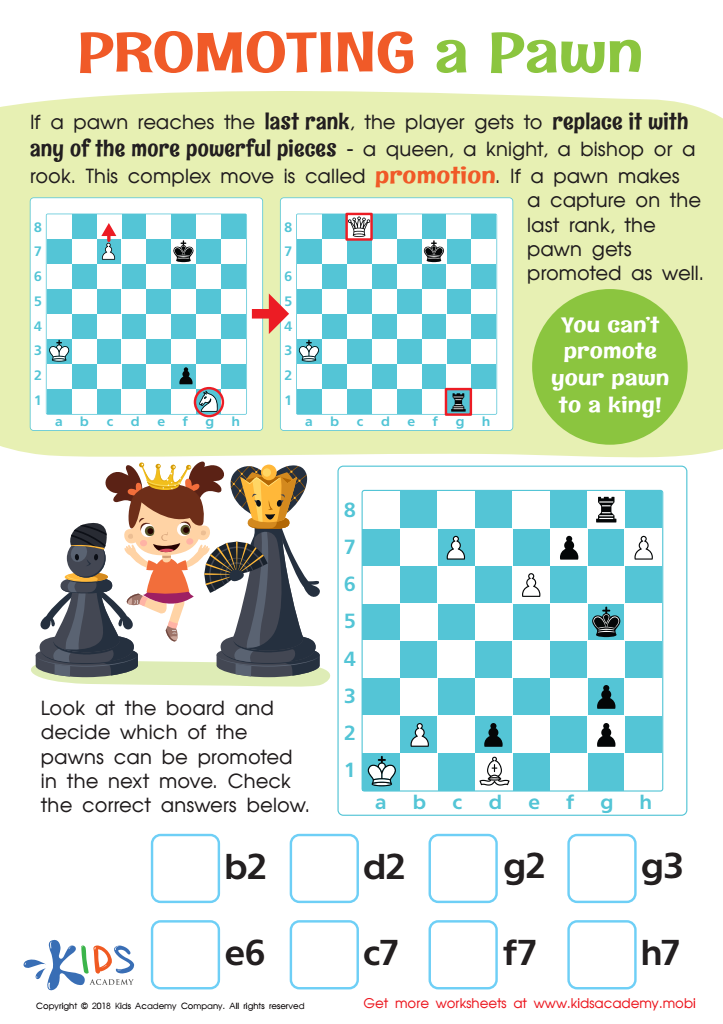
Promoting a Pawn Worksheet
 Assign to My Students
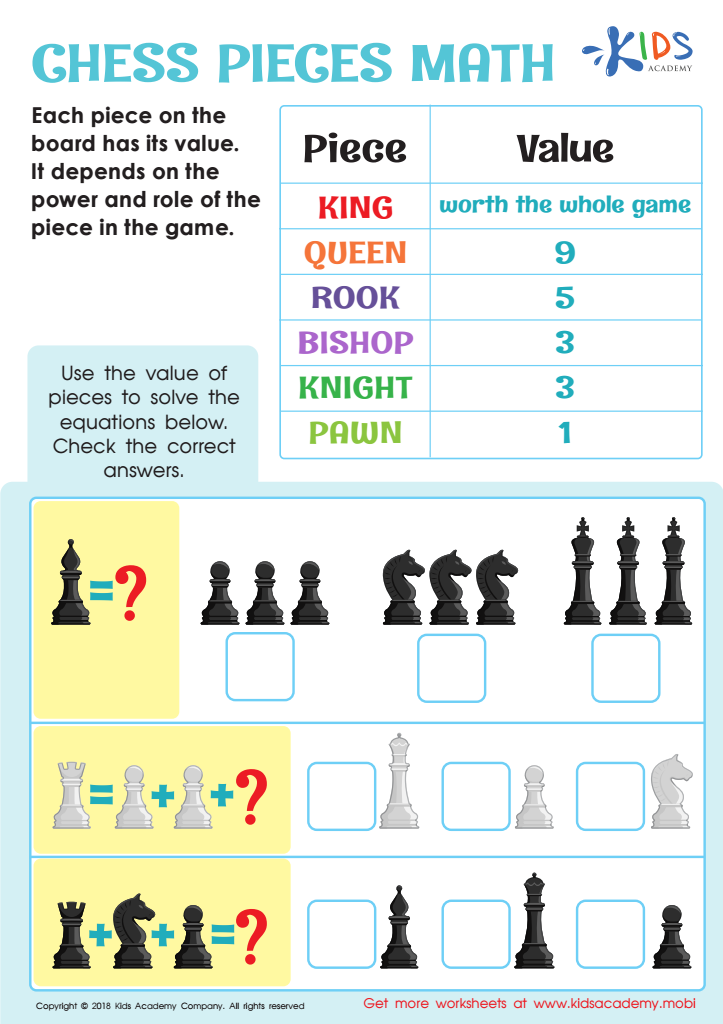
Chess Pieces Math Worksheet
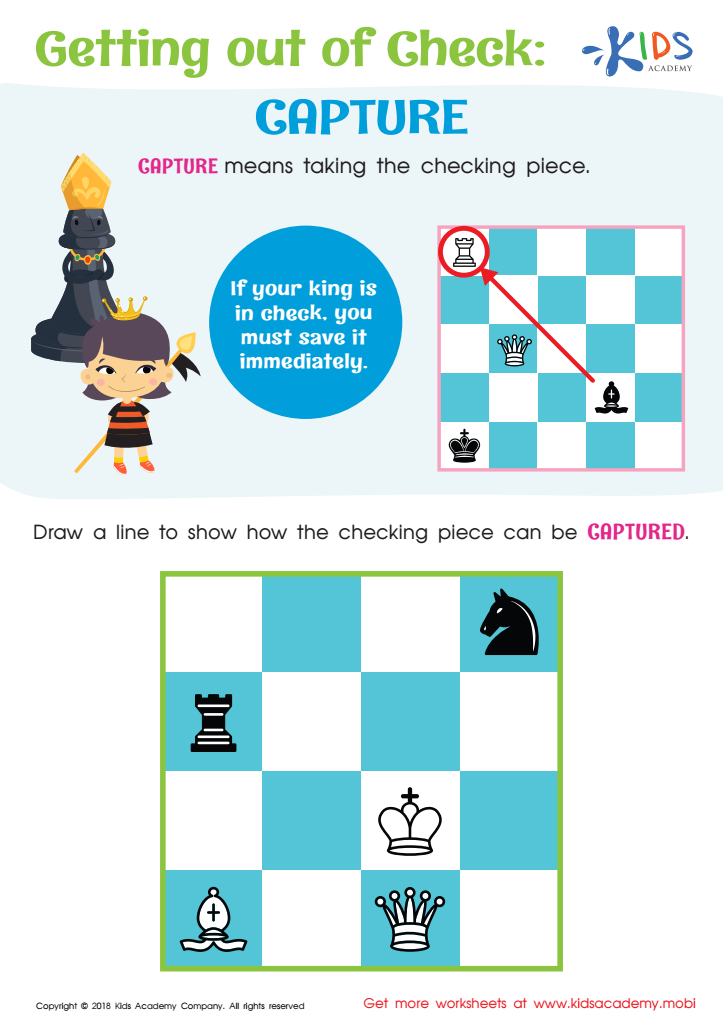
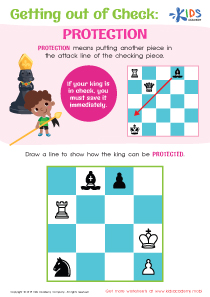
Getting out of Check: Capture







Problem-solving abilities are essential for young children as they form the foundation for critical thinking and cognitive development. Introducing chess to children aged 4-7 is particularly beneficial, as the game encourages them to think ahead, strategize, and plan their moves carefully. These skills translate beyond the chessboard into everyday situations, enabling children to approach challenges more analytically.
Engaging in chess helps children enhance their focus and concentration. The structured nature of the game promotes discipline and patience, which are crucial for their overall academic success. Additionally, chess teaches children how to evaluate different outcomes and consequences—skills directly linked to effective decision-making.
Parents and teachers should recognize the social aspects of chess as well. Playing with peers fosters teamwork, sportsmanship, and respect for others, enriching a child's interpersonal skills. Moreover, chess can serve as a fun, interactive way for adults to engage with children, reinforcing both learning and bonding.
Overall, incorporating chess into activities for young children cultivates a love for learning while developing essential problem-solving abilities, ultimately preparing them for future academic and life endeavors. A strong foundation in problem-solving at a young age helps instill confidence, creativity, and resilience.