Strategic thinking Chess Worksheets for Ages 4-7
3 filtered results
-
From - To
Enhance your child's strategic thinking skills through engaging chess worksheets designed specifically for ages 4-7! Our comprehensive set of printable worksheets fosters critical cognitive abilities while introducing the fundamentals of chess in a fun and interactive way. Each worksheet features age-appropriate activities that challenge young minds to think ahead, recognize patterns, and make thoughtful decisions. Whether your child is a beginner or has some experience, these resources provide a solid foundation for chess mastery. Help develop their problem-solving skills, concentration, and patience while they enjoy the timeless game of chess. Download now and watch your child's strategic mindset flourish!
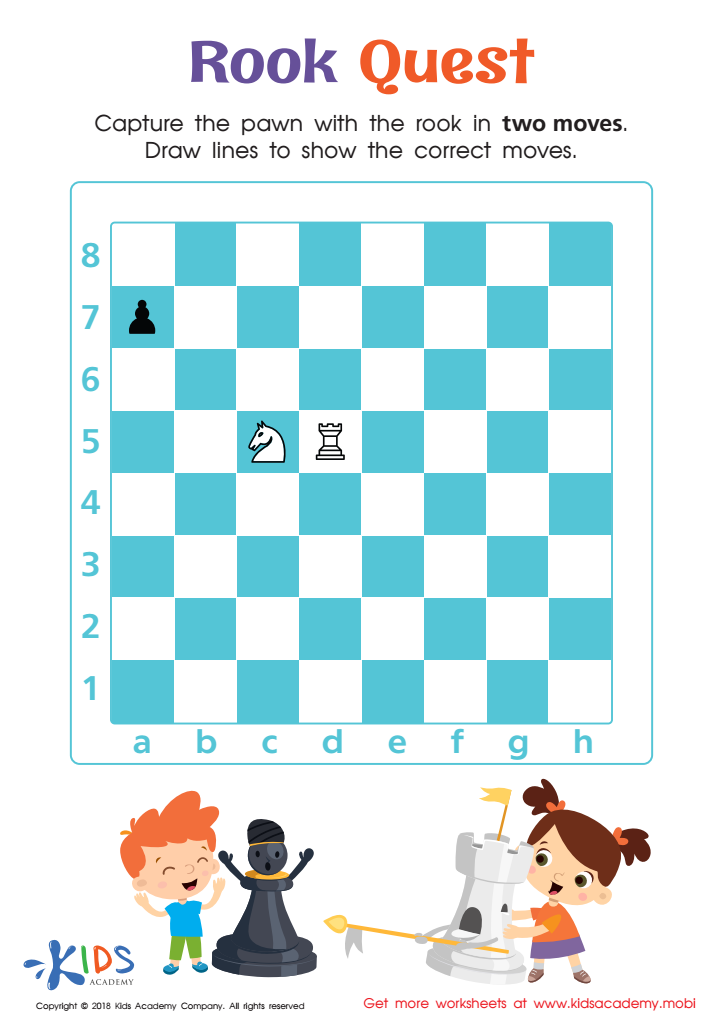
Rook Quest Worksheet
 Assign to My Students
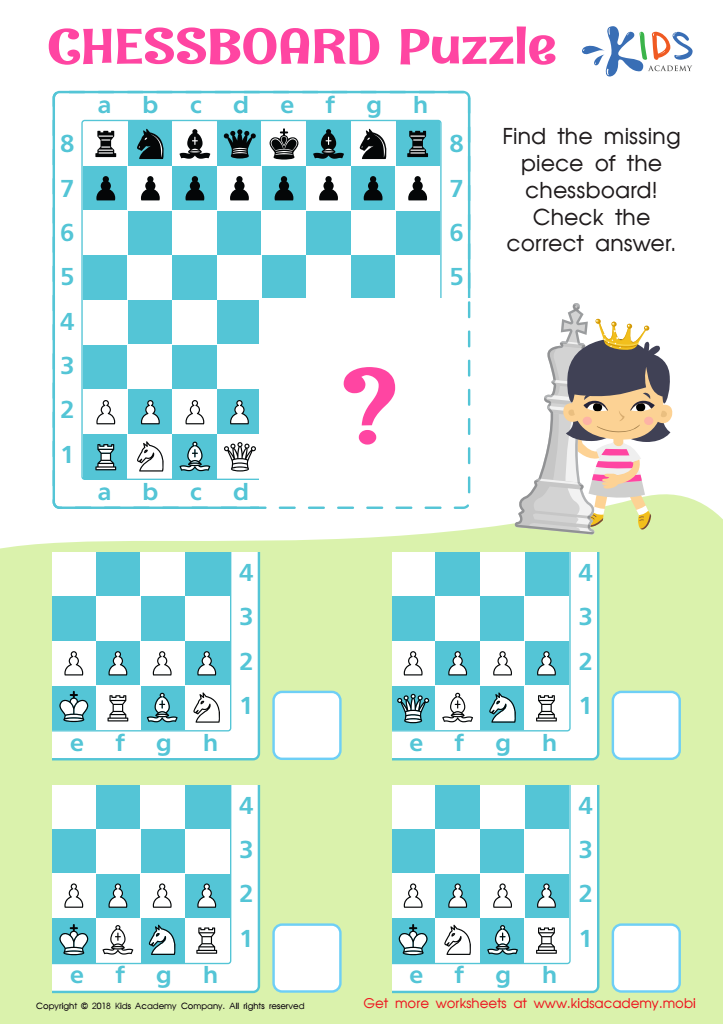
Chessboard Puzzle Worksheet
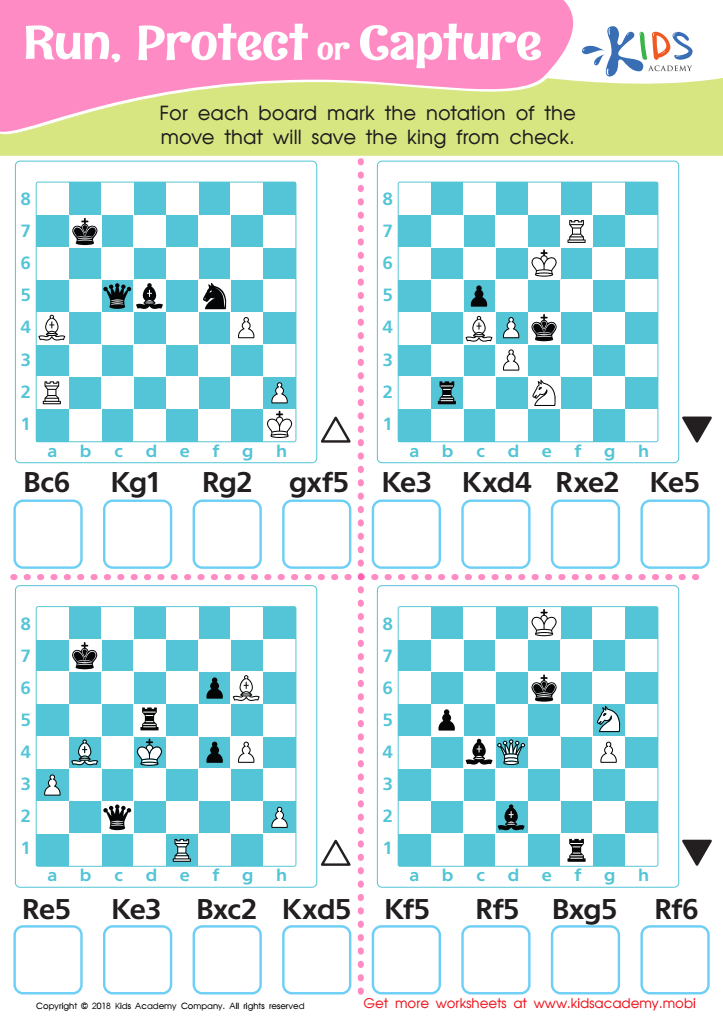
Run, Protect or Capture Worksheet


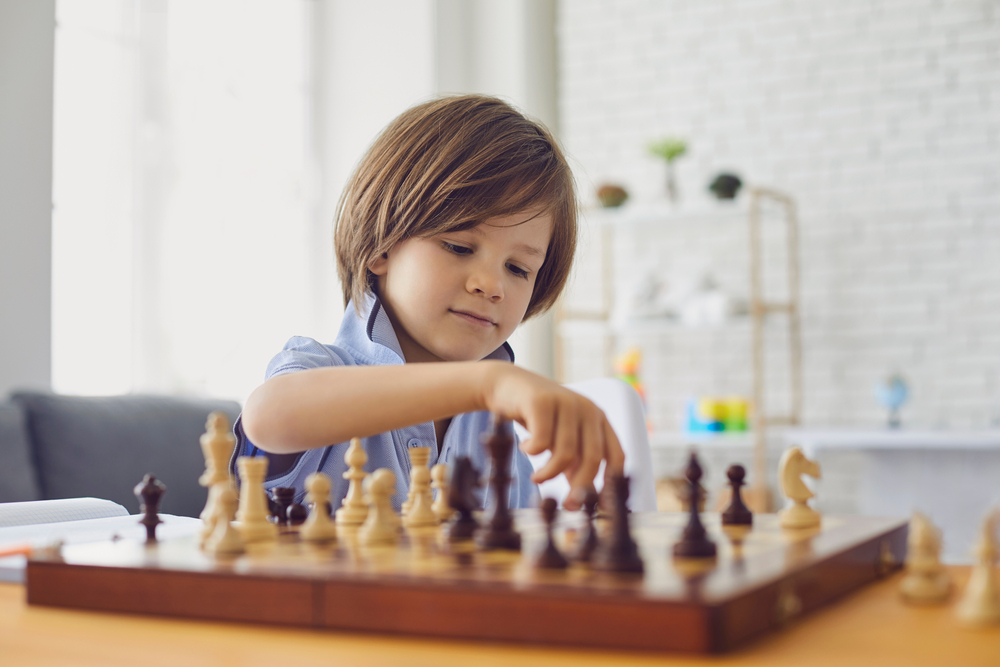




Strategic thinking chess for children aged 4-7 offers numerous developmental benefits that parents and teachers should prioritize. At this formative stage, children are rapidly developing cognitive, social, and emotional skills. Engaging in chess nurtures critical thinking and problem-solving abilities, as youngsters learn to assess situations, anticipate opponents' moves, and strategize accordingly. These skills are crucial not only for success in games but also in real-life situations, fostering a mindset of analysis and foresight.
Additionally, chess promotes patience and resilience, teaching children how to handle setbacks and the importance of perseverance. This can instill a sense of achievement, boosting self-esteem as children improve their game. Socially, chess encourages interaction, cooperation, and fair play among peers, promoting communication skills and an understanding of sportsmanship.
Furthermore, chess can enhance concentration and focus, counteracting the distractions prevalent in today’s fast-paced world. It is a multifaceted tool for intellectual growth, fostering important skills that serve foundational purposes in academic success and social interactions. By supporting strategic thinking chess, parents and teachers equip children to navigate challenges both on and off the board, setting the stage for lifelong learning and development.