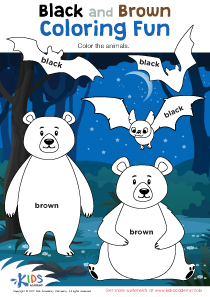
Letter-sound association English for Beginners Worksheets for Ages 4-7
6 filtered results
-
From - To
Unlock the joy of learning with our "Letter-Sound Association English for Beginners Worksheets," specially designed for children aged 4-7. These engaging worksheets help young learners connect letters with their corresponding sounds, laying a solid foundation for reading and language skills. Through fun activities and colorful illustrations, your child will enjoy practicing their phonetic skills in an interactive way. Ideal for early education settings or home learning environments, our resources promote literacy while fostering a love for reading. Dive into this essential phase of language development and watch your little one thrive as they embark on a journey of discovery with letters and sounds!
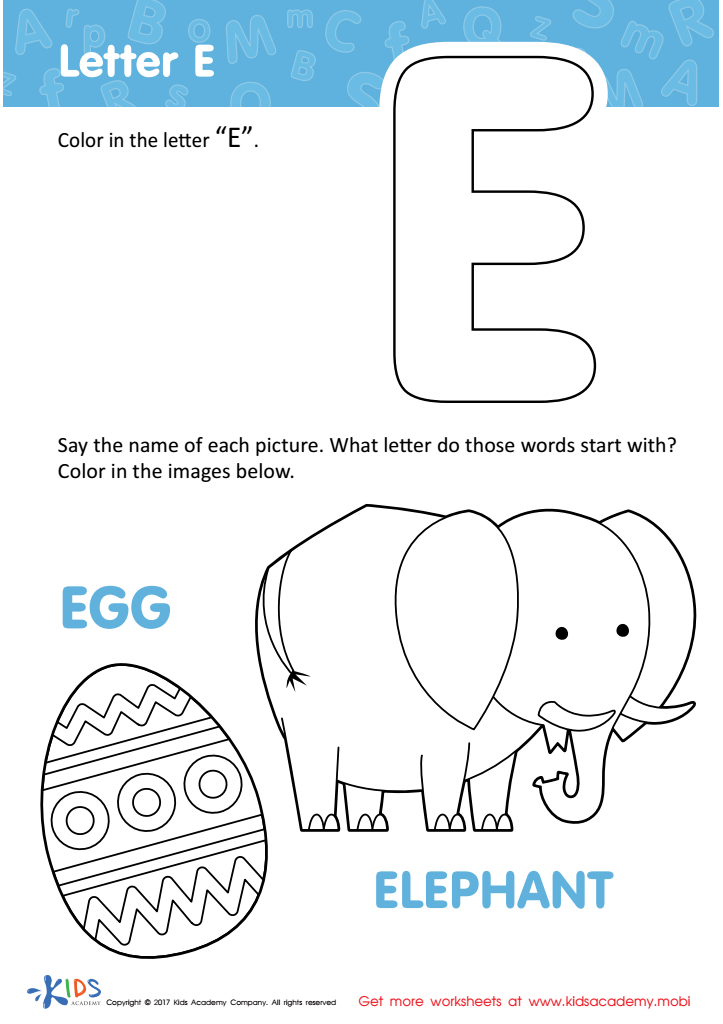
Letter E Coloring Sheet
 Assign to My Students
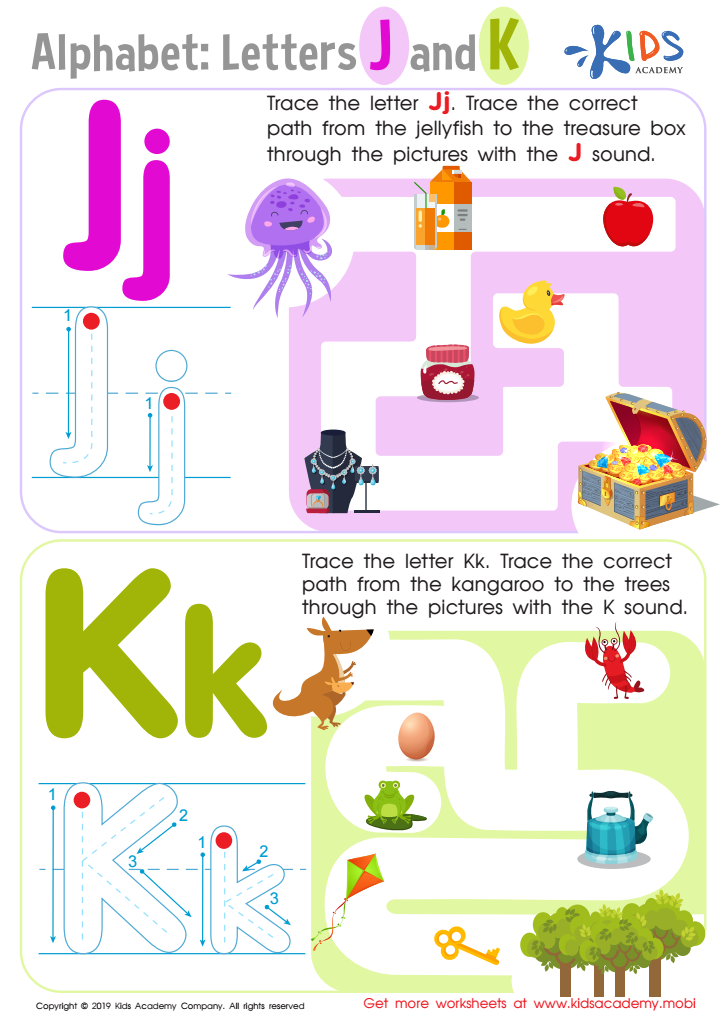
Letters J and K Tracing Worksheet
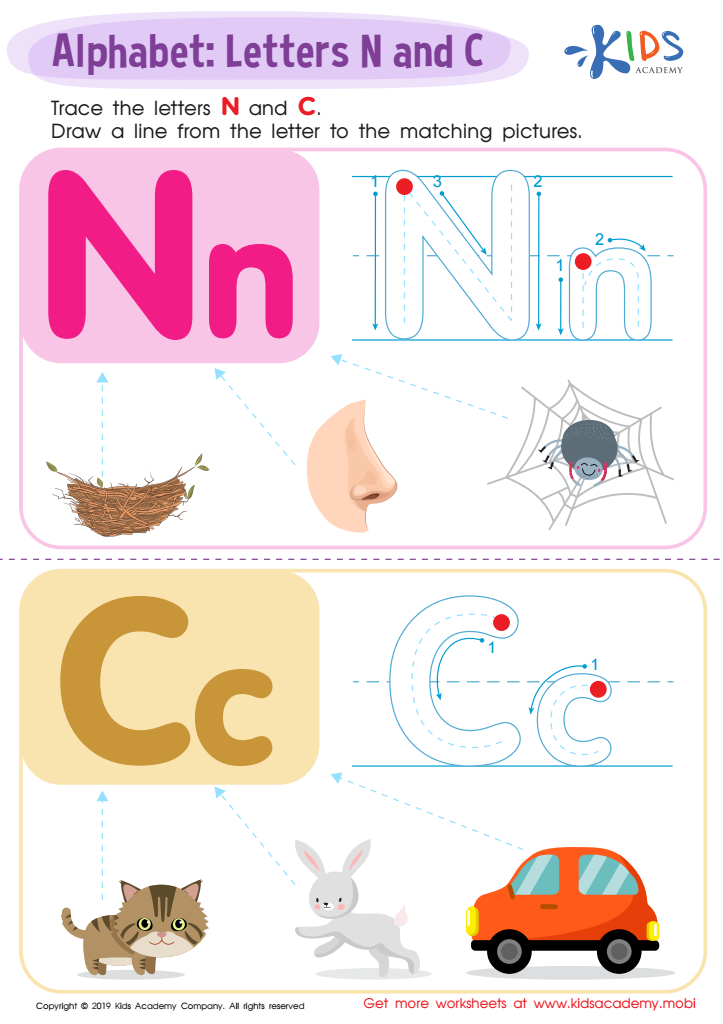
Letter N and C Tracing Worksheet
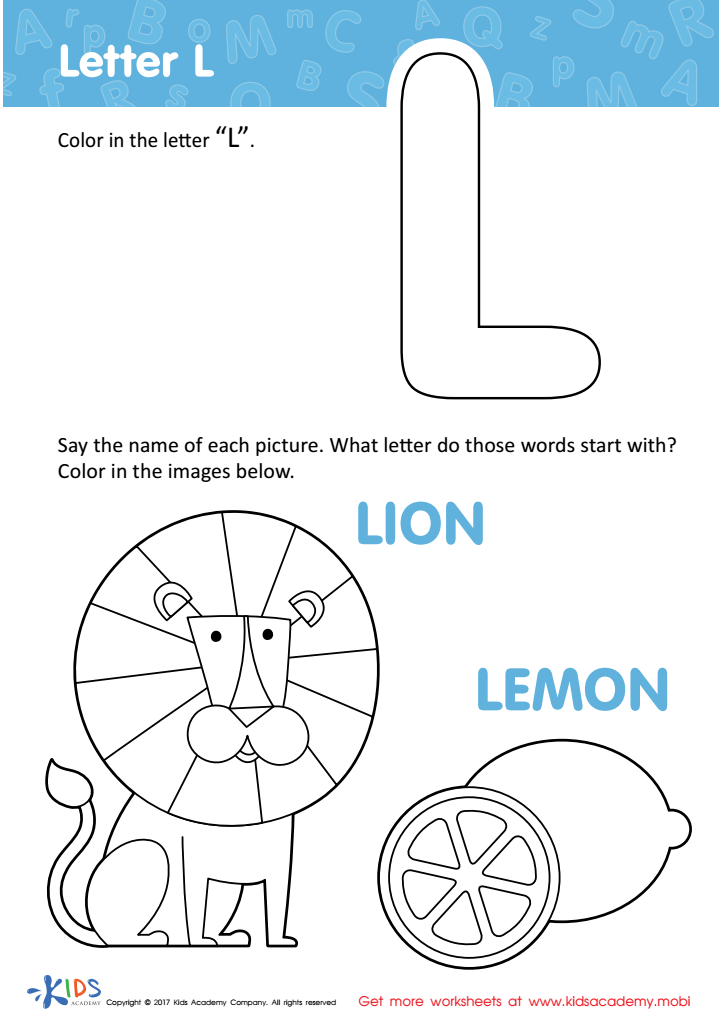
Letter L Coloring Sheet
Assign to My Students
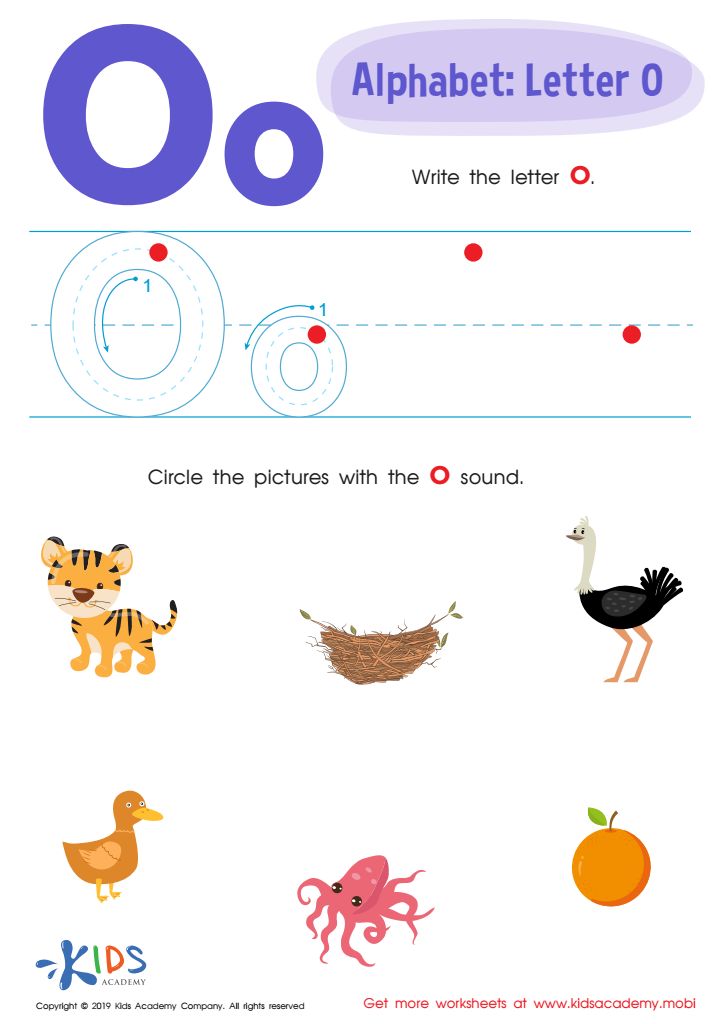
Letter O Tracing Worksheet
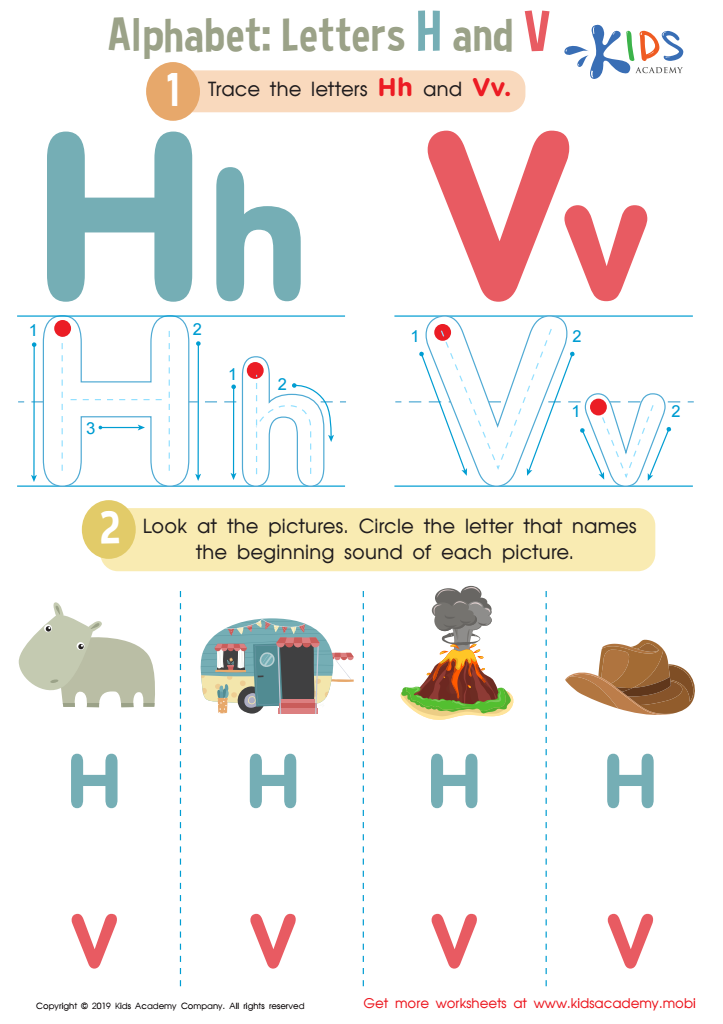
Letters H and V Tracing Worksheet




Letter-sound associations are foundational for literacy development in young children aged 4-7, making it essential for parents and teachers to prioritize this aspect of learning. At this age, children are naturally curious and eager to explore language, and understanding how letters represent sounds helps them decode words, facilitating reading.
When children grasp letter-sound relationships, they gain confidence in attempting to read independently. This skill is critical not just for early literacy but also for overall academic success, as reading proficiency is closely tied to performance in other subjects. Furthermore, mastering these associations lays the groundwork for more complex literacy skills, including spelling and writing.
Engaging in letter-sound activities can also enhance children's phonemic awareness, improving their ability to identify, manipulate, and generate sounds in spoken language. This is valuable in developing effective communication skills.
Additionally, cultivating a love for reading at an early age encourages lifelong learning habits. Parents and teachers play a vital role in this journey by creating enriching environments that integrate fun learning activities. Fostering letter-sound association is an investment in children's academic futures, emotional well-being, and overall cognitive development. Therefore, it is crucial for caregivers and educators to actively engage in this foundational skill.