
Alphabetical understanding Worksheets for Ages 4-7
3 filtered results
Difficulty Level
Grade
Age
-
From - To
Subject
Activity
Standards
Enhance your child's literacy skills with our Alphabetical Understanding Worksheets, designed specifically for ages 4-7. These engaging worksheets provide fun activities that help young learners recognize letters, order the alphabet, and differentiate between uppercase and lowercase letters. Each worksheet includes colorful illustrations and interactive exercises that capture children's attention while fostering a solid foundation in early reading and writing. Perfect for parents and educators alike, our printable resources promote independent learning and encourage excitement about language. Browse our diverse collection to support your child’s educational journey and watch them excel in their alphabetical skills! Activities tailored for various learning styles await!
Favorites
With answer key
Interactive
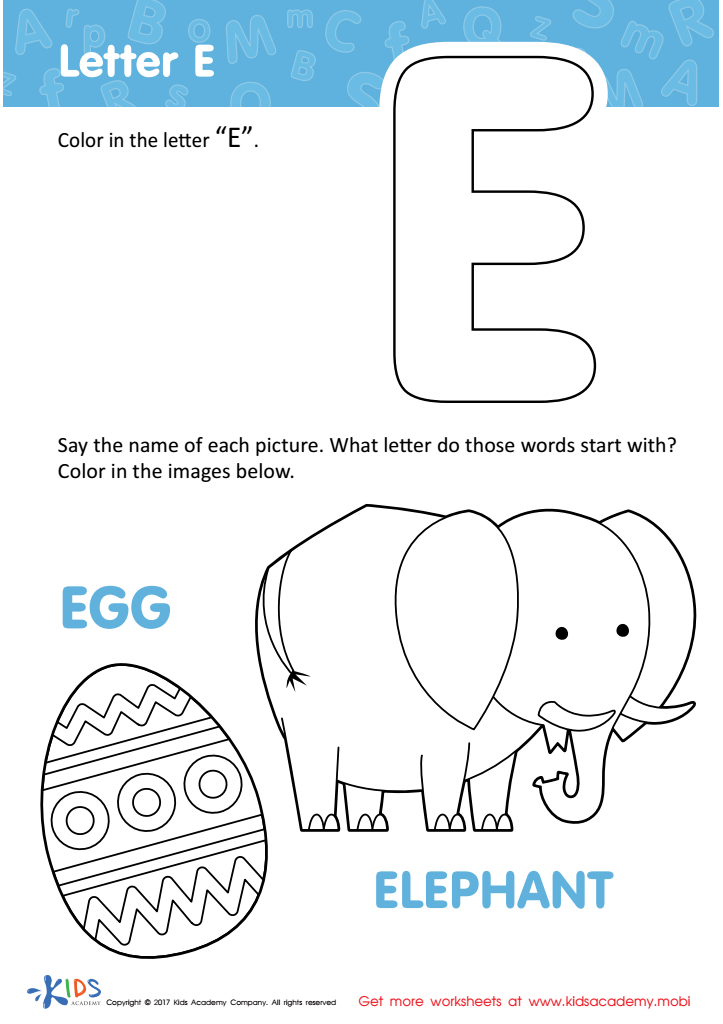
Letter E Coloring Sheet
Coloring pages are great for teaching kids the alphabet and words! This "E" page features a cute elephant and Easter egg. Kids will love it and learn the letter "E" at the same time. 80 words
Download (PDF)
 Assign to My Students
Assign to My Students
Letter E Coloring Sheet
Worksheet
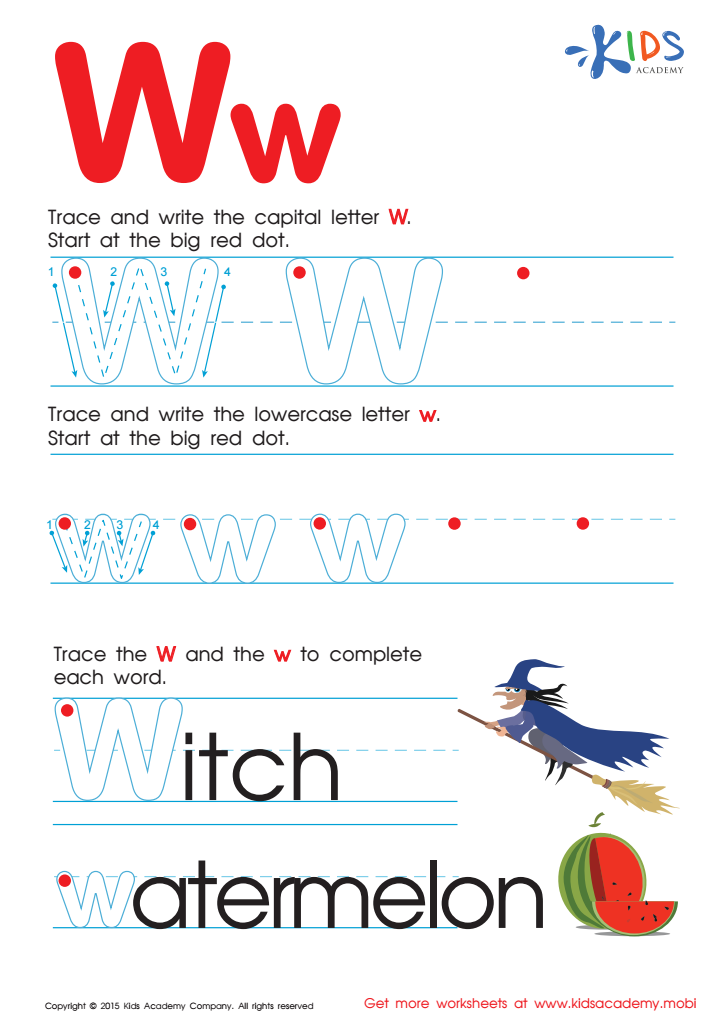
Letter W Tracing Page
Trace and write the capital and lowercase letter W with this free letter tracing worksheet by Kids Academy. Complete the words "Witch" (capital) and "watermelon" (lowercase). Check out our other kindergarten alphabet worksheets!
Letter W Tracing Page
Worksheet
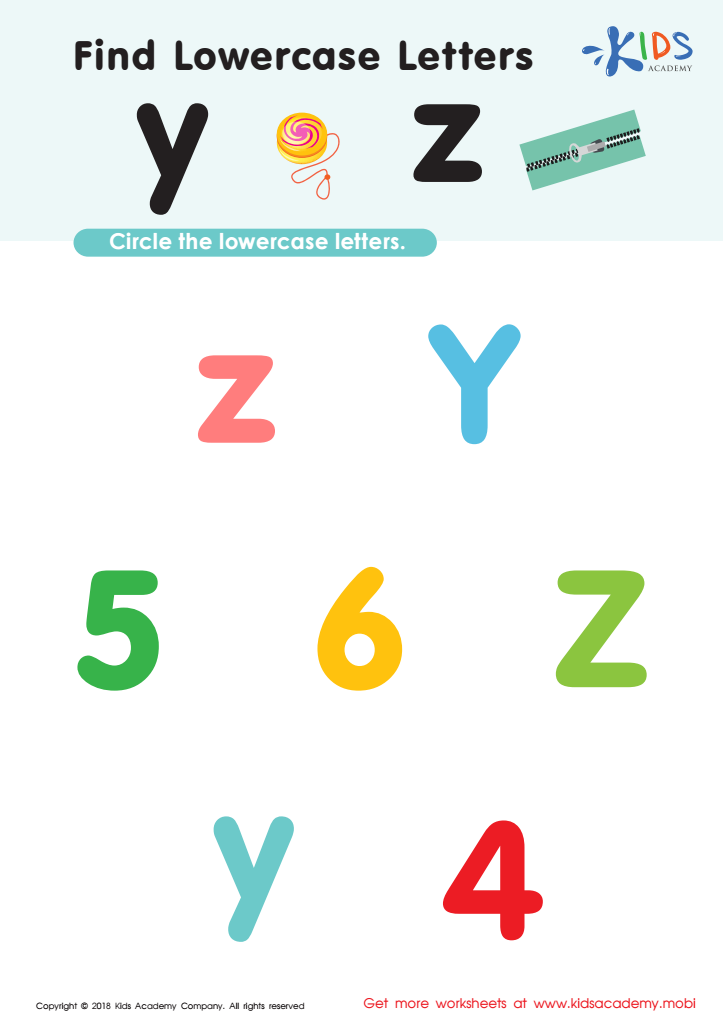
Find Lowercase Letters y z Worksheet
Help your kid learn the alphabet. Before they can move on to words and reading, they must first know the lower and uppercase letters. Show them how to find the letters y and z in this worksheet, which is filled with uppercase letters and numbers. Together, find and circle them.
Find Lowercase Letters y z Worksheet
Worksheet
Join Kids Academy for Free
Who is primarily going to use this learning content?







Parents and teachers should care about alphabetical understanding for children aged 4-7 because it is foundational for literacy development. At this age, children are beginning to learn the relationship between letters and sounds, a critical step in reading and writing. Understanding the alphabet helps children recognize letters and their corresponding phonetic sounds, which are essential for decoding words.
Moreover, strong alphabetical skills provide a sense of accomplishment and boost self-esteem as children successfully identify and use letters in their everyday interactions. This overview leads to enhanced vocabulary, better reading comprehension, and improved writing abilities as they progress in school.
Additionally, fostering alphabetical understanding supports cognitive development, as children will learn organizational skills by arranging letters and understanding sequences. It also promotes engagement through play-based learning activities, driving a love for literacy. Lastly, as children prepare for school readiness, foundational letters and sounds help bridge the gap during the transition into formal education, equipping them with the necessary tools for future learning. Therefore, nurturing alphabetical understanding is critical for cultivating confident, literate, and well-rounded learners.








