Analog clock reading Worksheets for Ages 4-7
4 filtered results
-
From - To
Enhance your child's understanding of time with our engaging Analog Clock Reading Worksheets designed for ages 4-7! These worksheets provide fun and interactive exercises that help young learners master the basics of telling time on analog clocks. Featuring colorful illustrations and simple instructions, kids will enjoy learning essential skills such as identifying hour and minute hands, recognizing numbers on clocks, and solving time-related problems. Each activity is crafted to build confidence and reinforce classroom learning, making it an ideal resource for teachers and parents alike. Download our worksheets today and help your child become a time-telling pro!
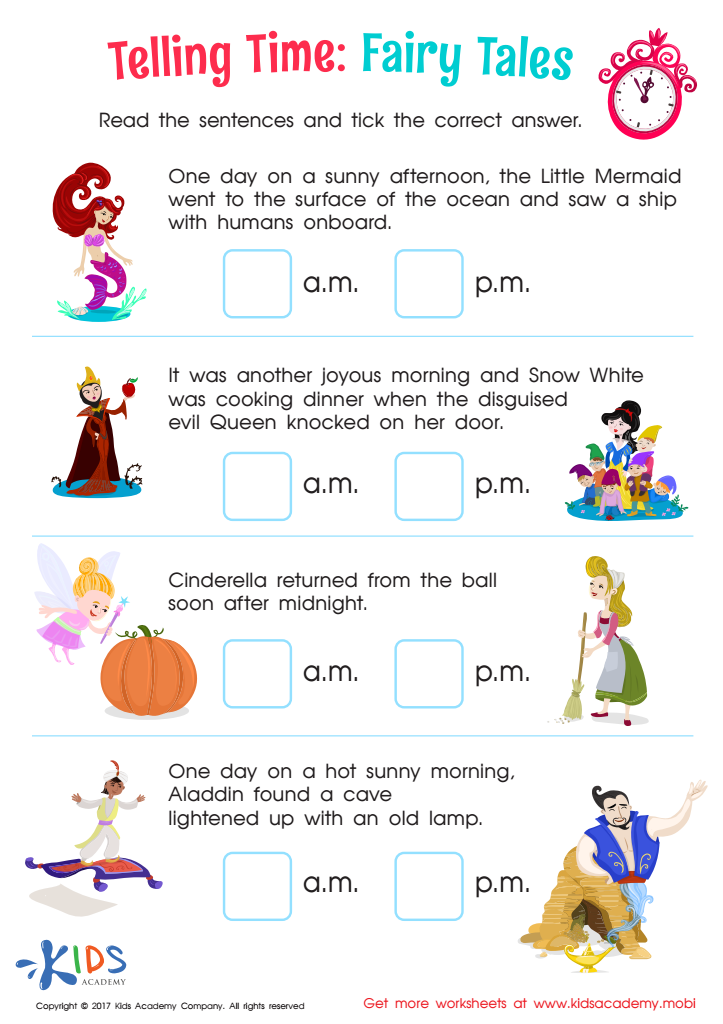
Telling Time: Fairy Tales Worksheet
 Assign to My Students
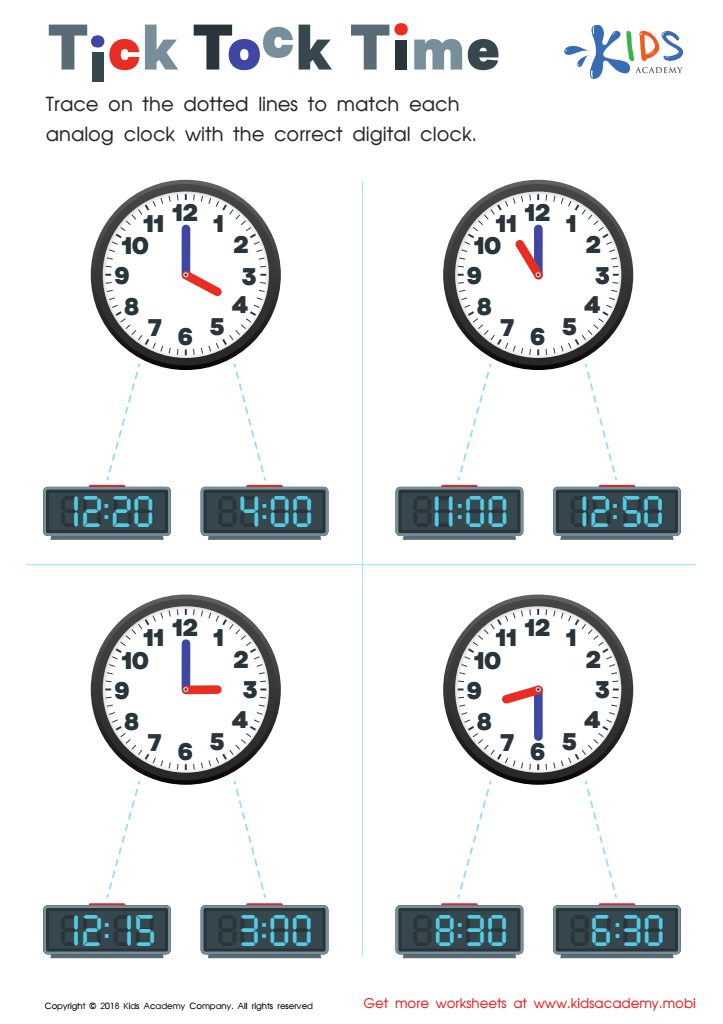
Tick Tock Time Worksheet
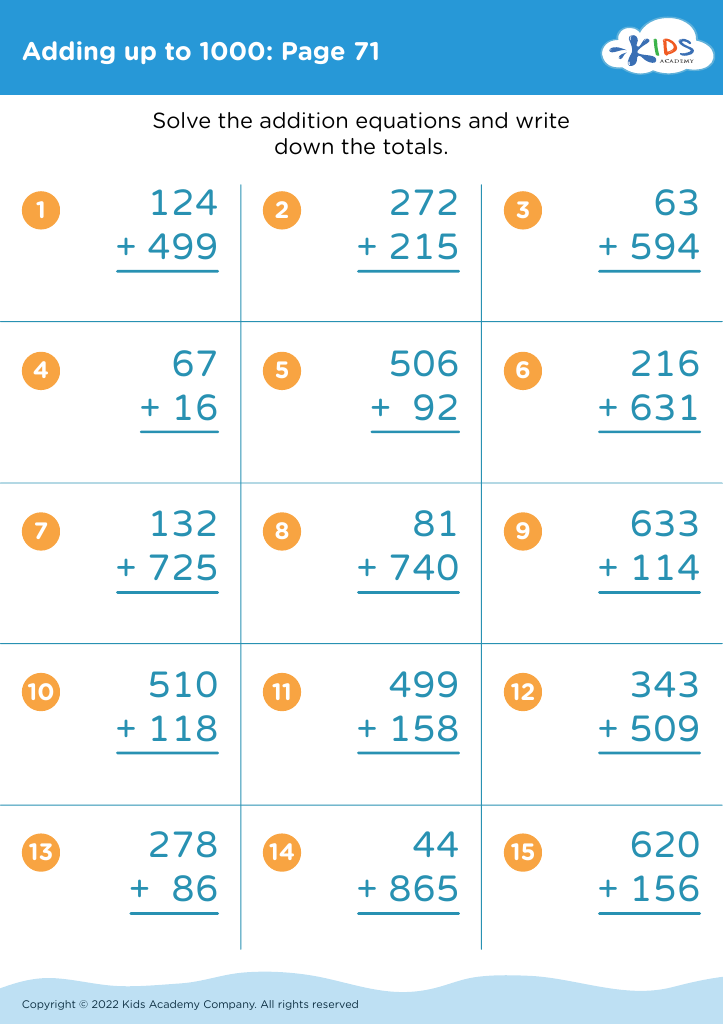
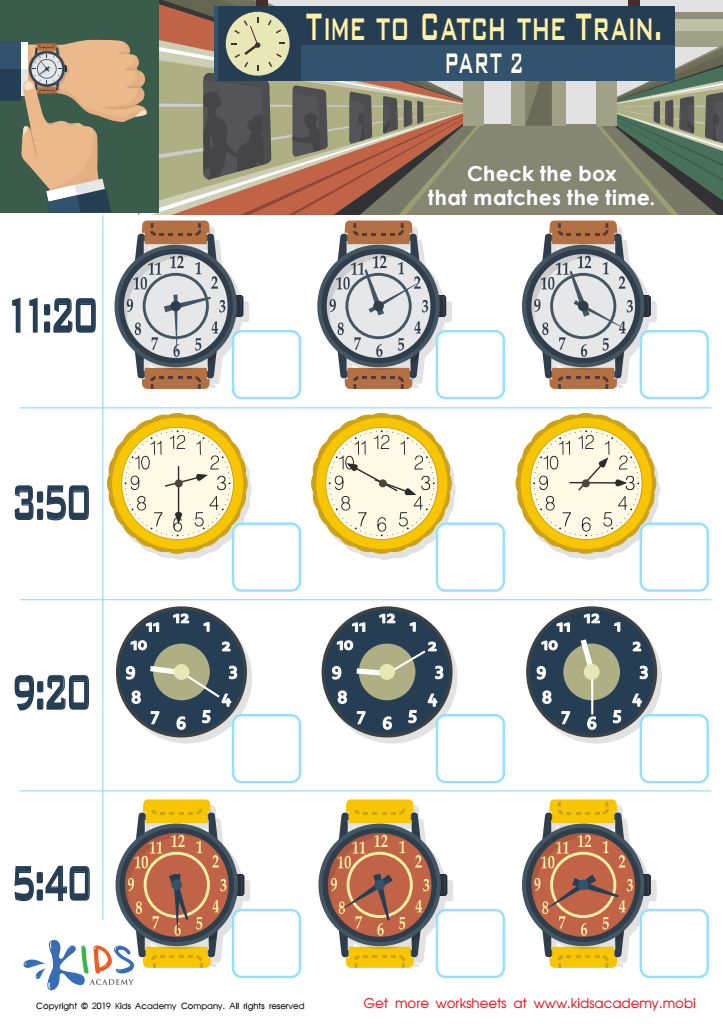
Time to Catch the Train Part 2 Worksheet






.jpg)
Teaching children to read an analog clock is essential for their holistic development during early childhood, particularly for ages 4-7. Understanding how to tell time enhances cognitive skills and encourages problem-solving abilities. By learning to read analog clocks, children become familiar with the concepts of fractions and visual-spatial reasoning, as they decipher the positions of the hour and minute hands.
Furthermore, analog clocks help children cultivate a sense of time management. In today’s fast-paced world, it is crucial for young learners to develop routines. Knowing how to tell time helps instill discipline, allowing children to understand the importance of schedules and punctuality.
Also, learning analog clock reading promotes essential life skills such as responsibility and independence. Children gain confidence as they can keep track of their activities and transitions, contributing to reduced anxiety over time management.
Finally, teaching analog clocks fosters deeper connections within families and communities, as they often provide a shared point of learning and conversation. By prioritizing analog clock reading, parents and teachers help children nurture critical foundational skills while enriching their social interactions and everyday experiences.








