
Analyzing patterns Worksheets for Ages 4-7
3 filtered results
Difficulty Level
Grade
Age
-
From - To
Subject
Activity
Standards
Discover engaging "Analyzing Patterns Worksheets" designed for children ages 4-7! Our thoughtfully crafted worksheets foster critical thinking and enhance pattern recognition skills through interactive activities. Perfectly suited for early learners, these worksheets incorporate colorful visuals and age-appropriate challenges that make learning fun and effective. Children will explore various types of patterns, from simple shapes to more complex sequences, helping to build their cognitive skills and confidence. Whether in classrooms or at home, our worksheets provide a valuable resource for teachers and parents alike. Download now to inspire young minds and set the foundation for future mathematical success!
Favorites
With answer key
Interactive
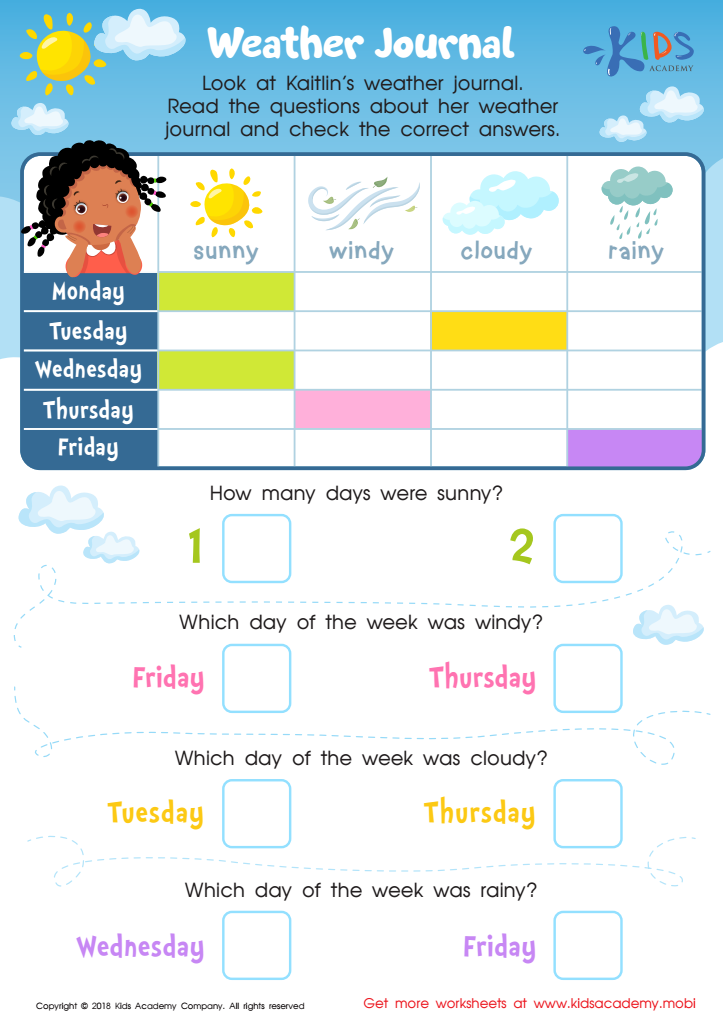
Weather Journal Worksheet
Kaitlin keeps a weather journal. Encourage your child to do the same! Look at Kaitlin's journal with them, and have them note the weather for each day. Read aloud the questions and check the correct answers.
 Assign to My Students
Weather Journal Worksheet
Worksheet
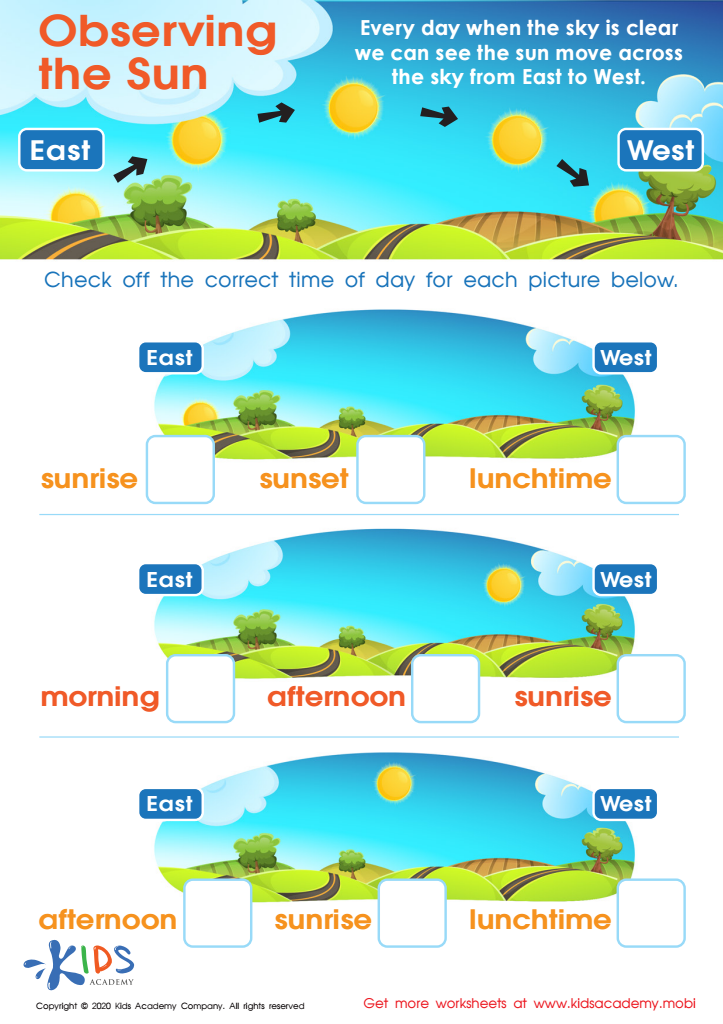
Observing the Sun Worksheet
Observe the image of the sun's progression with your child and use it to complete this free printable worksheet from Kids Academy. Have your kid look at the pictures on the left and check off the numbers in the correct order from sunrise to sunset! This will expand their science knowledge and help them understand when it's time to rise, reach its highest point during midday and set again in the West.
Observing the Sun Worksheet
Worksheet
Join Kids Academy for Free
Who is primarily going to use this learning content?








Analyzing patterns is a foundational skill for children aged 4-7 that significantly impacts their cognitive development and academic growth. Understanding patterns aids in developing critical thinking and problem-solving abilities, essential skills for future learning. When children identify, create, and extend patterns, they enhance their reasoning skills and begin to understand abstract concepts crucial in math and science.
Patterns can be found in various contexts, like colors, shapes, and sounds, which helps children recognize relationships and predict outcomes. This ability not only builds confidence in their logical reasoning but also fosters creativity, as they learn to think beyond the obvious. Furthermore, pattern recognition is closely linked to literacy; as children recognize rhythms and sequences in stories or songs, they develop language skills and phonemic awareness.
Teachers and parents play a vital role in facilitating pattern recognition through engaging activities and games. When adults actively engage in conversations about patterns in everyday life—whether in nature, art, or routines—they reinforce the learning process. Additionally, fostering this skill early nurtures a love of learning, laying a solid groundwork for more complex mathematics in later education. Ultimately, caring about pattern analysis equips young children with the essential tools to navigate and understand their world.








