Animal identification Worksheets for Ages 4-7 - Page 3
50 filtered results
-
From - To
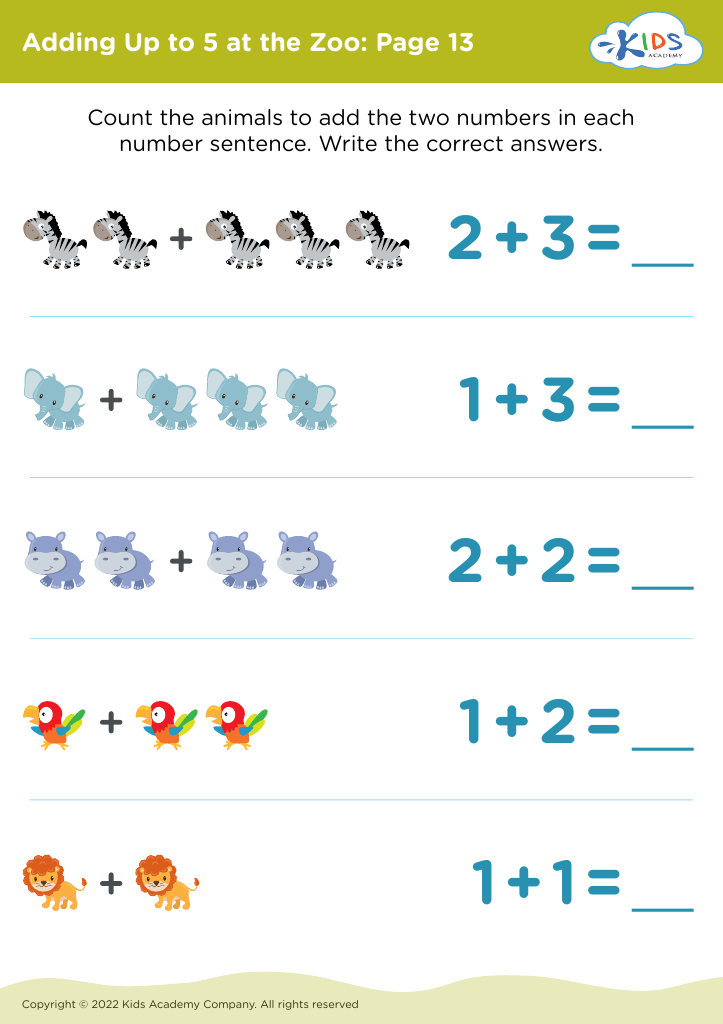








Animal identification is an important topic for children aged 4-7 as it lays the foundation for various essential skills and values. First, learning to identify animals broadens children’s knowledge of the natural world, fostering curiosity about the environment and promoting a sense of wonder. Understanding different animals enhances vocabulary and encourages communication skills, as children learn to describe and express their thoughts about various species.
Additionally, animal identification fosters empathy and compassion. When children recognize different animals and learn about their habitats and behaviors, they develop a connection to living creatures, which can cultivate a sense of responsibility toward their care and protection. Teaching children about local wildlife encourages them to be mindful of their surroundings and the impact of human actions on animal habitats.
Furthermore, this knowledge improves critical thinking and observation skills as children learn to notice differences in size, color, and patterns among species. Parents and teachers can integrate this learning through fun activities like nature walks, storytelling, or interactive games. Engaging children with animal identification is not only educational but also inspires a lifelong appreciation for nature, promoting conservation values from an early age. In essence, it shapes well-rounded, caring individuals who respect all forms of life.








