Basic geometry knowledge Worksheets for Ages 4-7
4 filtered results
-
From - To
Unlock your child's potential in math with our “Basic Geometry Knowledge Worksheets for Ages 4-7.” Tailored to young learners, these fun and engaging activities cover essential concepts such as shapes, patterns, and spatial awareness. Each worksheet is designed to develop critical thinking and problem-solving skills while fostering a love for learning. Our colorful and interactive exercises make it easy for ages 4-7 to understand geometry basics in a playful yet educational manner. Ideal for preschool through first grade, these worksheets provide a solid foundation for future math success. Explore and download today to give your child a head start!
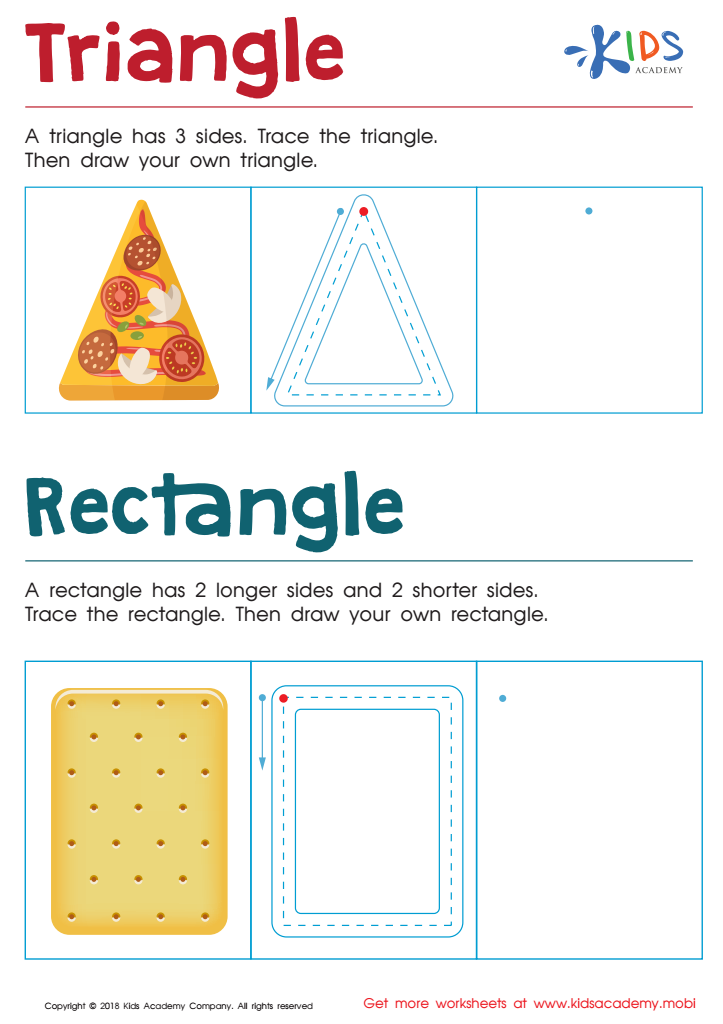
Triangle Rectangle Worksheet
 Assign to My Students
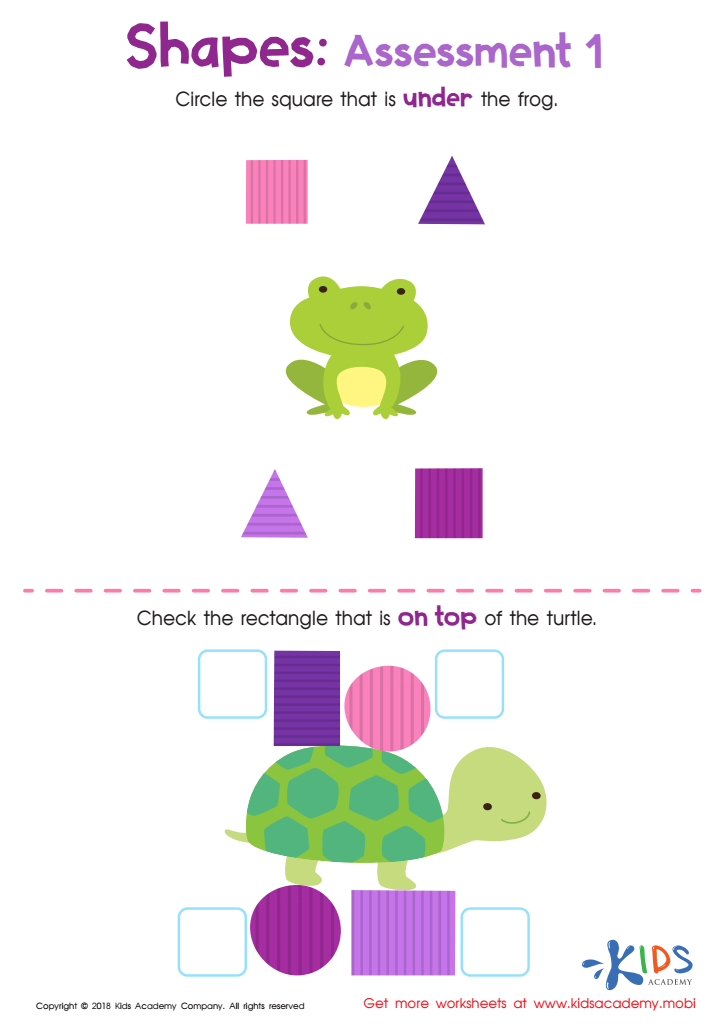
Geometry – Assessment 1 Worksheet
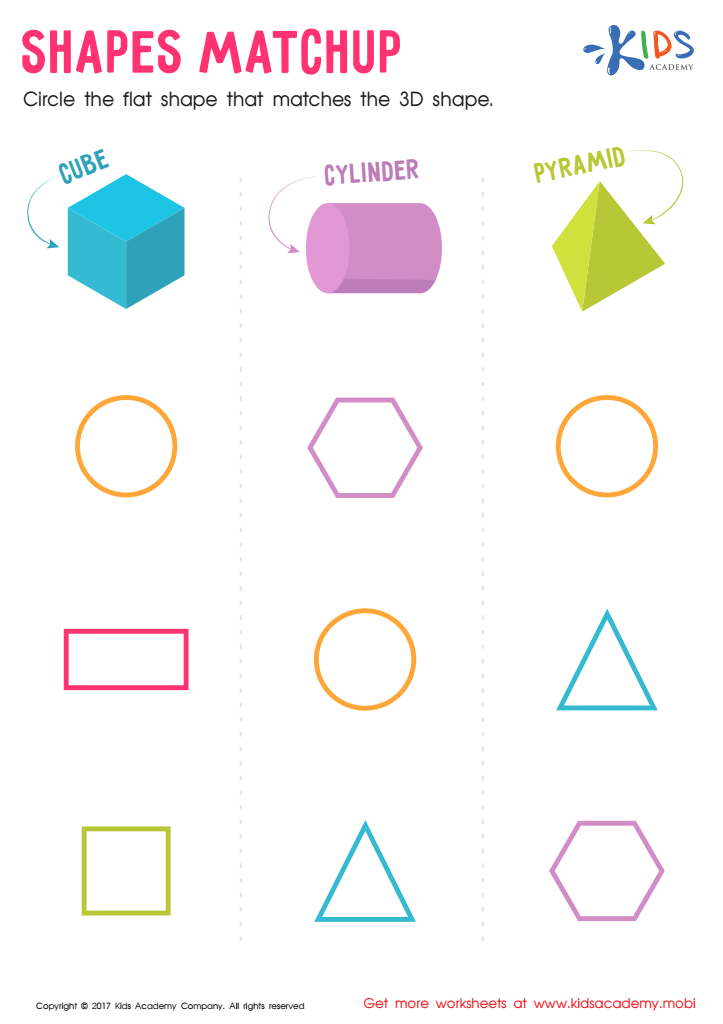
Shapes Matchup Worksheet







Basic geometry knowledge is crucial for young children, even between the ages of 4 and 7, as it lays the foundation for essential skills that extend beyond their early years. Firstly, understanding basic geometric concepts such as shapes, sizes, and spatial relationships enhances cognitive development. It promotes critical thinking, problem-solving abilities, and logical reasoning, which are fundamental skills across all areas of learning.
Geometry aids in the development of spatial awareness, allowing children to navigate and make sense of the world around them. This understanding facilitates tasks such as following directions, understanding maps, or even organizing spaces. Additionally, recognizing and differentiating shapes helps improve visual perception and fine motor skills, important for reading and writing readiness.
Incorporating geometry into early education can also spark curiosity and interest in mathematics, making it a fun and engaging subject rather than one to be feared. This positive attitude towards math can lead to a lifetime of benefits, promoting academic success in later grades.
Moreover, activities involving geometry provide opportunities for collaborative learning, where children can improve their social skills by interacting with classmates. Therefore, parents and teachers should regard basic geometry knowledge as an integral part of early childhood education, essential for holistic development.








