Basic physics concepts Worksheets for Ages 4-7
3 filtered results
-
From - To
Introduce young learners to the wonders of physics with our "Basic Physics Concepts Worksheets for Ages 4-7"! These engaging printable worksheets are designed to make complex scientific concepts accessible and fun. Perfect for early grade students, the worksheets cover foundational topics such as motion, force, gravity, and simple machines through interactive activities that foster curiosity and critical thinking. Each worksheet combines vivid illustrations with age-appropriate exercises to captivate young minds. Start building a strong STEM foundation for your child today with Kids Academy’s expertly crafted physics worksheets—ideal for both classroom and at-home learning.
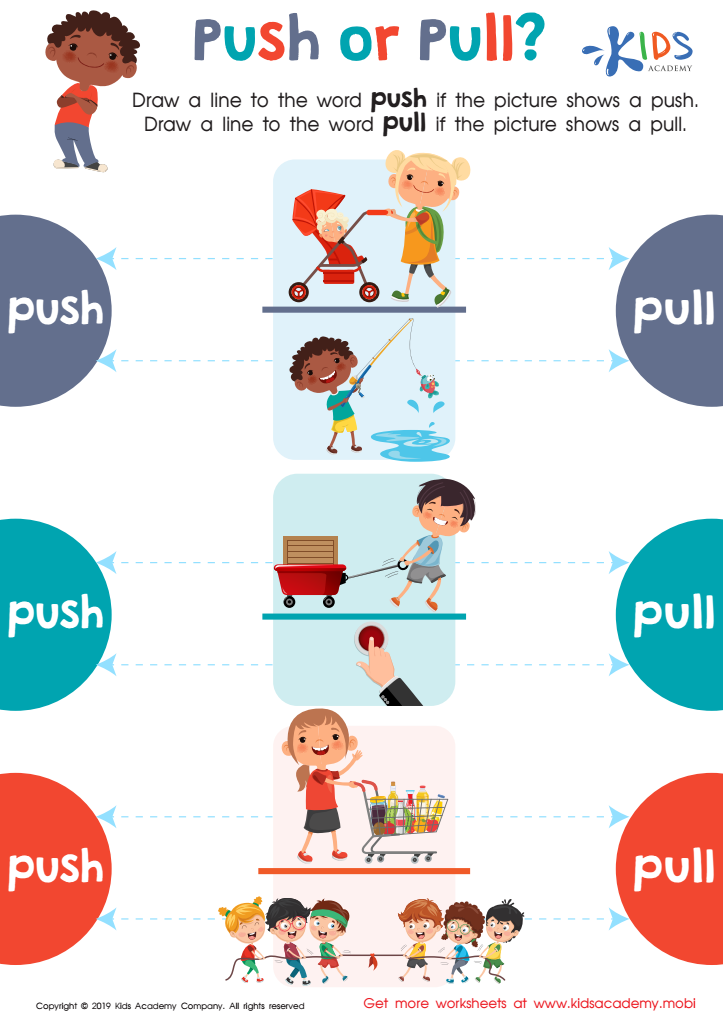
Push or Pull? Worksheet
 Assign to My Students
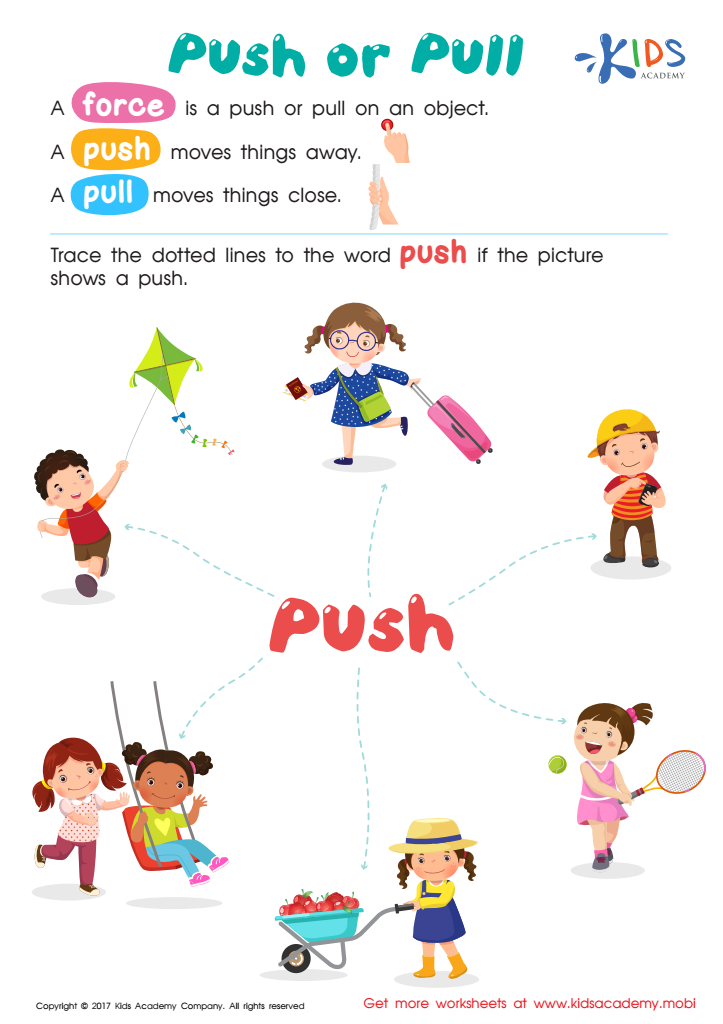
Push or Pull Worksheet
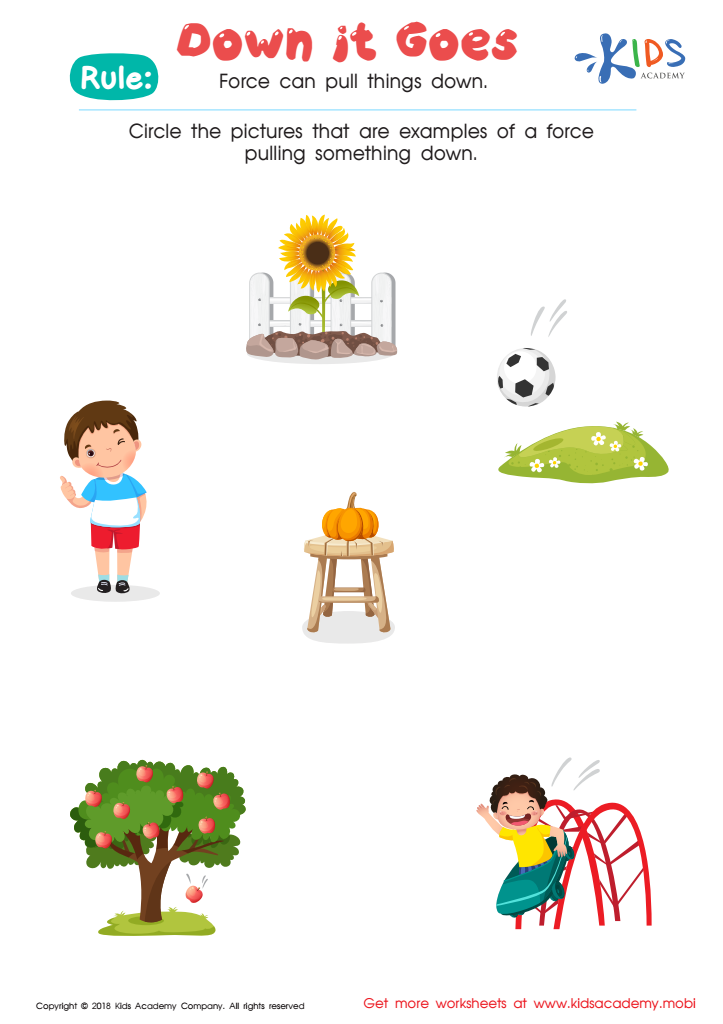
Down it Goes Worksheet








Basic physics concepts are important for young children because they lay the foundation for critical thinking, problem-solving, and understanding the world around them. At ages 4-7, children are naturally curious and eager to explore their environment. Introducing them to basic physics concepts, such as gravity, motion, and energy, taps into this curiosity and fosters a lifelong love for learning.
When children observe how objects fall due to gravity or how pushing a toy car affects its speed, they begin to grasp essential scientific principles through hands-on experiences. These early interactions with real-world phenomena help develop their observational skills and encourage questioning, which are crucial components of the scientific method.
Moreover, early exposure to physics helps build fine motor skills, spatial awareness, and basic mathematical understanding. Activities like building blocks, using ramps, or playing with pulleys can enhance their cognitive development and prepare them for more complex concepts in later grades.
For parents and teachers, engaging young learners in basic physics concepts also supports the development of language skills and vocabulary by introducing terms like force, friction, and acceleration in a meaningful context. This early engagement not only strengthens their academic foundation but also builds confidence and enthusiasm for STEM (Science, Technology, Engineering, and Mathematics) subjects, shaping well-rounded, inquisitive, and capable individuals.








