
Chess piece identification Worksheets for Ages 4-7
3 filtered results
Difficulty Level
Grade
Age
-
From - To
Subject
Activity
Standards
Introduce your young learners to the fascinating world of chess with our engaging Chess Piece Identification Worksheets, designed specifically for ages 4-7! These fun and interactive worksheets help children recognize and understand various chess pieces, including pawns, knights, bishops, rooks, queens, and kings. Through colorful illustrations and simple activities, kids will enhance their critical thinking and observation skills while fostering a love for this strategic game. Perfect for home or classroom use, our worksheets make learning about chess entertaining and educational. Set your child on a path to becoming a chess enthusiast with these creative and age-appropriate resources!
Favorites
With answer key
Interactive
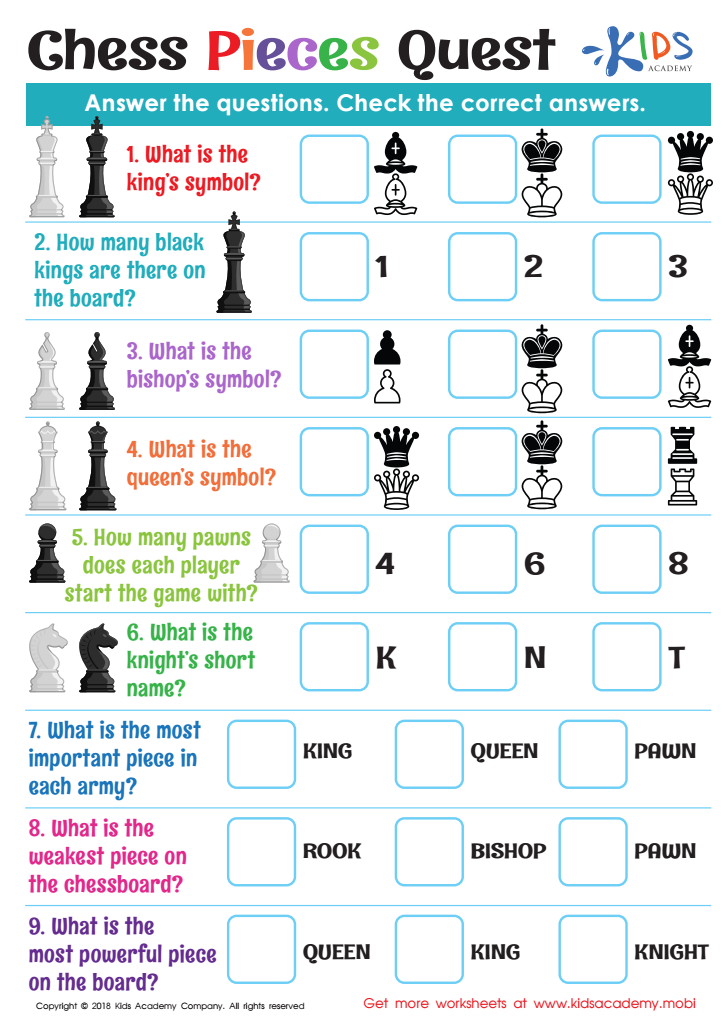
Chess Pieces Quest Worksheet
Help your child prepare for the chess quest by refreshing their knowledge of the symbols and characteristics of each chess piece. Then, have them try the 9 questions on this worksheet. These questions will assess their understanding of the symbols and how many pieces each player starts with.
 Assign to My Students
Chess Pieces Quest Worksheet
Worksheet
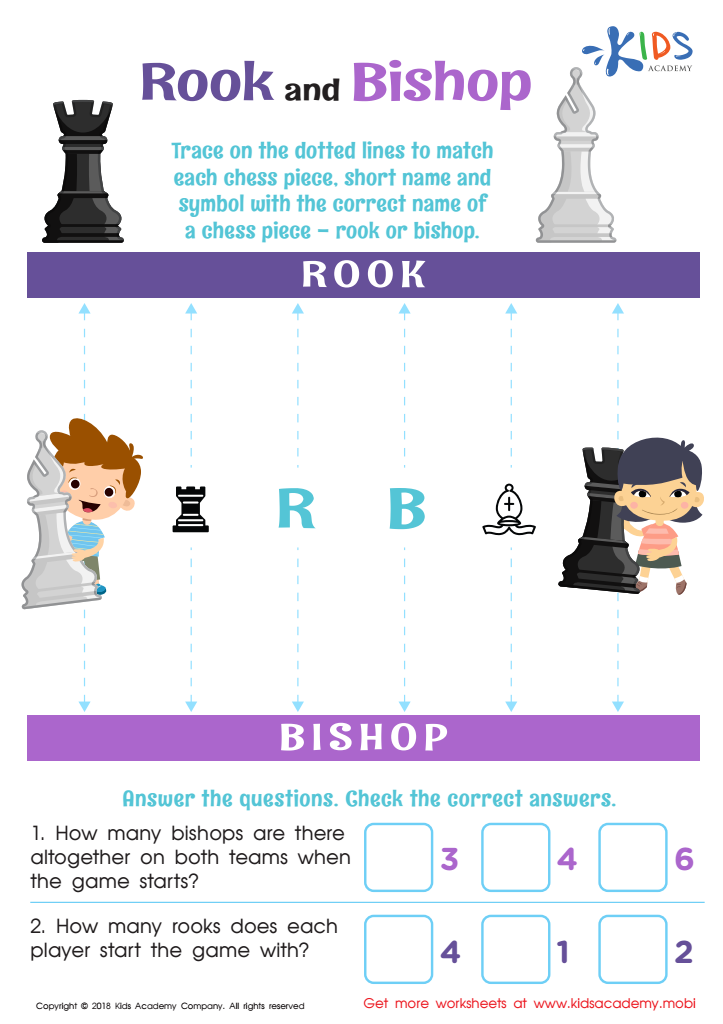
Rook and Bishop Worksheet
This tracing sheet helps your child learn chess pieces by matching each piece, short name and symbol to the correct name. After tracing, have them answer the questions and check their answers. It's a great way for them to become familiarized with chess.
Rook and Bishop Worksheet
Worksheet
Join Kids Academy for Free
Who is primarily going to use this learning content?








Chess piece identification is a valuable skill for children aged 4-7, serving as a gateway to critical thinking and cognitive development. Teaching young learners the different pieces – pawns, rooks, knights, bishops, queens, and kings – introduces foundational concepts of strategy, problem-solving, and decision-making.
Identifying chess pieces encourages visual discrimination, enhancing memory and attention to detail. Engaging with the game promotes cooperative play, teaching children how to take turns, manage wins and losses, and develop sportsmanship. Additionally, chess nurtures patience and perseverance, as young players must think ahead and consider multiple outcomes before making a move.
Furthermore, chess is a tool for fostering social interaction, serving as a fun, structured group activity that can strengthen relationships among peers and between students and teachers. In an age where screens dominate playtime, chess serves as an analog alternative, inviting children to think actively.
For parents and teachers, recognizing and encouraging chess piece identification in early education can form a basis for lifelong skills, helping to enhance academic performance and personal growth. Supporting children's engagement with chess cultivates critical thinking, social skills, and emotional intelligence, making it a worthwhile endeavor for parents and educators alike.








