Chess strategy learning Worksheets for Ages 4-7
10 filtered results
-
From - To
Welcome to our Chess Strategy Learning Worksheets designed specifically for ages 4-7! These engaging and interactive worksheets introduce young learners to the exciting world of chess, helping them develop critical thinking and strategic skills. Each worksheet is crafted to be age-appropriate, featuring colorful graphics and simple instructions that make learning fun. Children will explore fundamental concepts like piece movement, basic tactics, and board recognition through playful exercises. Perfect for home or classroom use, our worksheets encourage creativity, foster concentration, and support cognitive development. Start your child’s journey into chess today and watch them build confidence while mastering essential strategies!
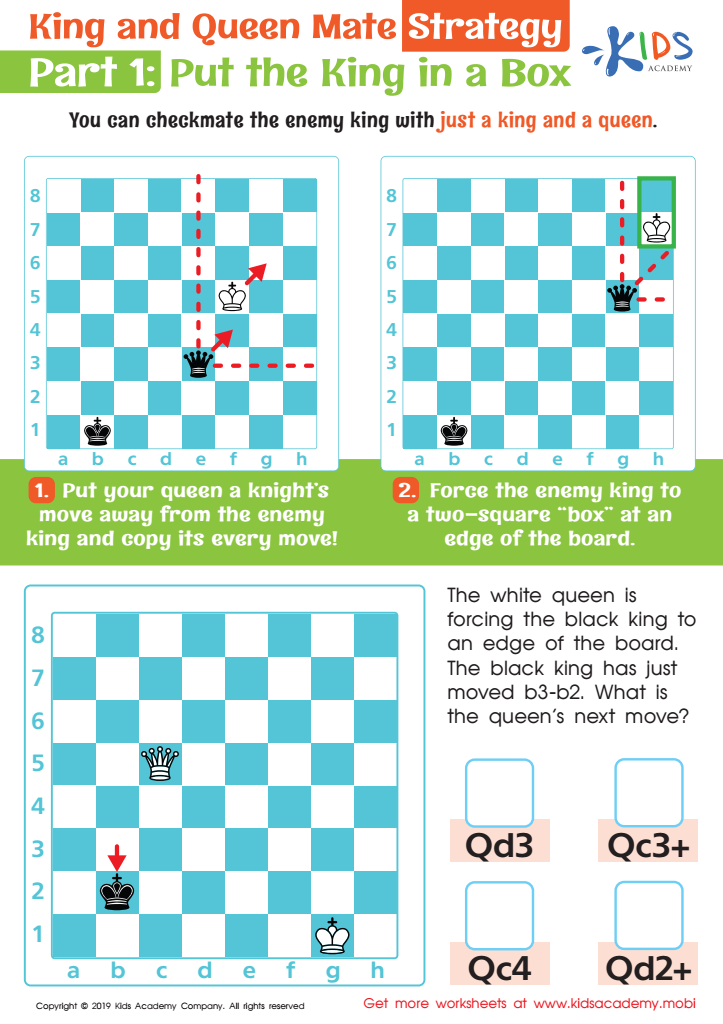
King and Queen Mate Strategy: Part 1 Worksheet
 Assign to My Students
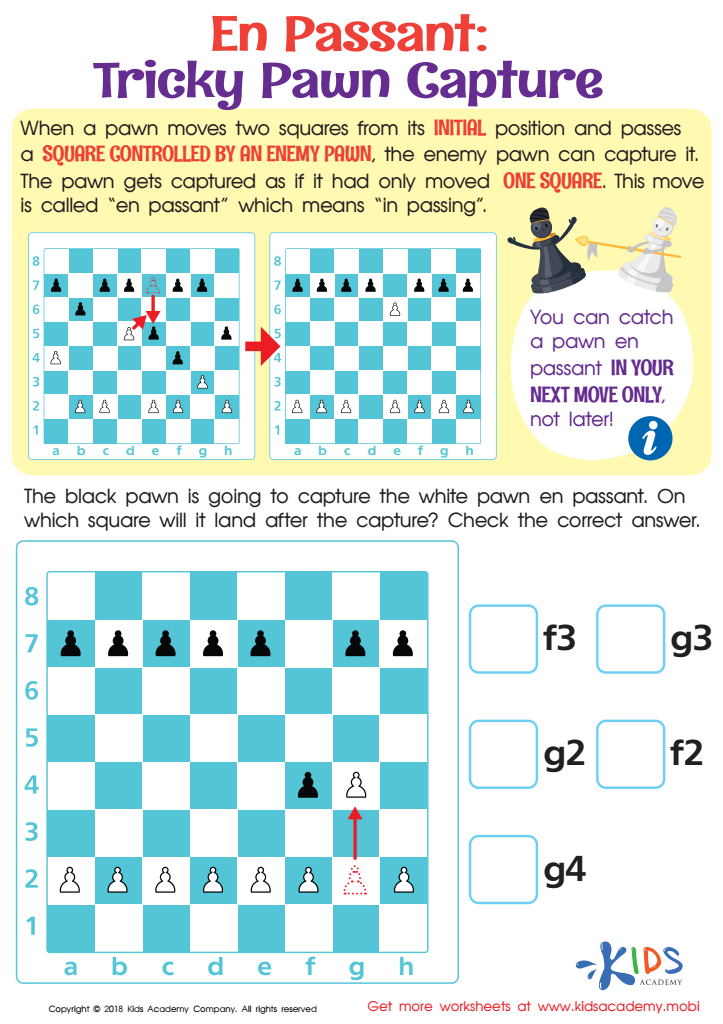
En Passant: Tricky Pawn Capture Worksheet
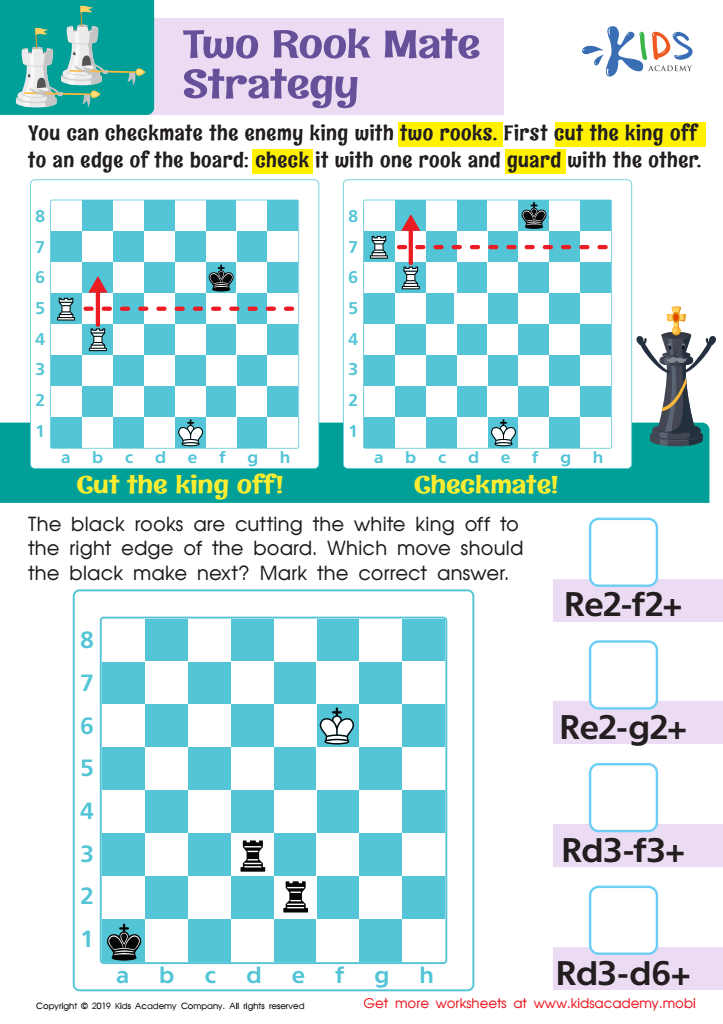
Two Rook Mate Strategy Worksheet
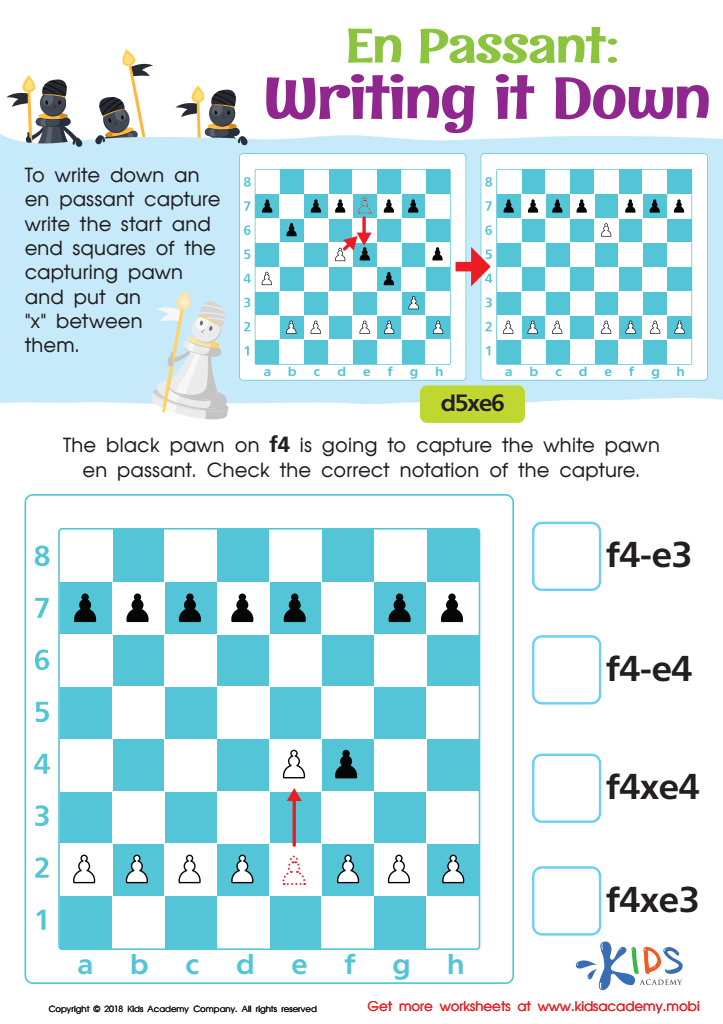
En Passant: Writing it Down Worksheet
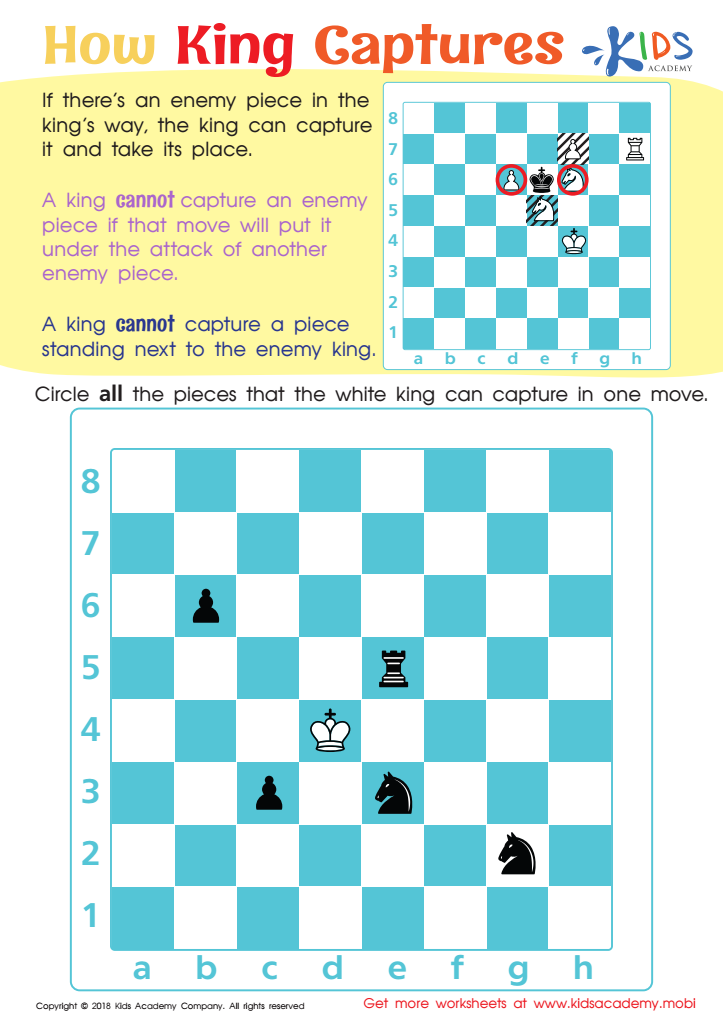
How King Captures Worksheet
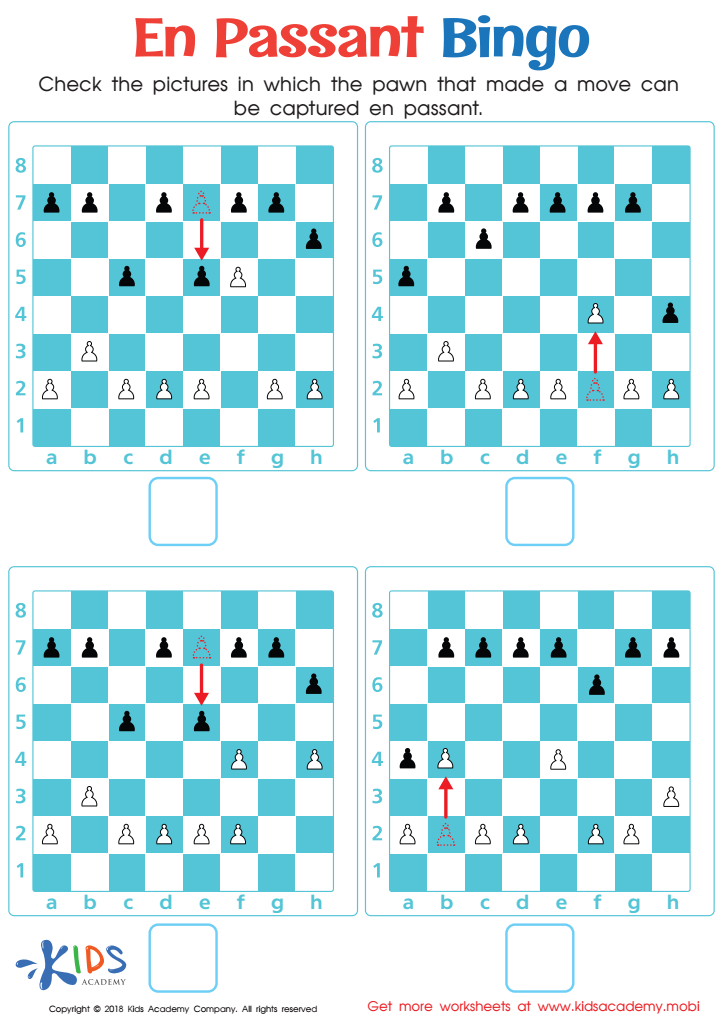
En Passant Bingo Worksheet
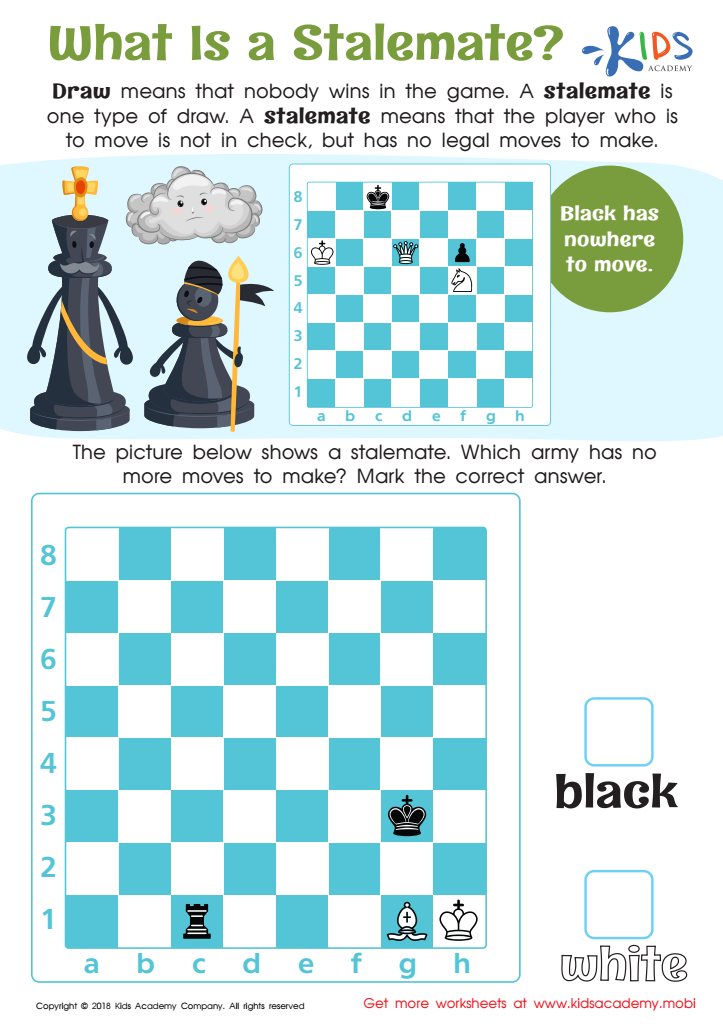
What Is a Stalemate? Worksheet
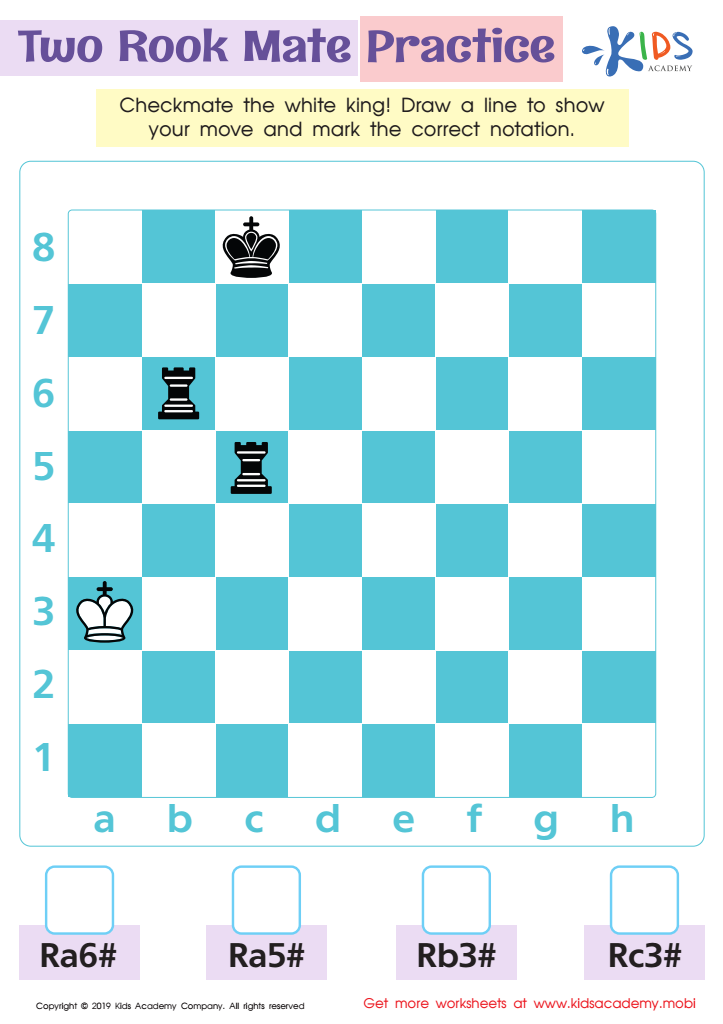
Two Rook Mate Practice Worksheet
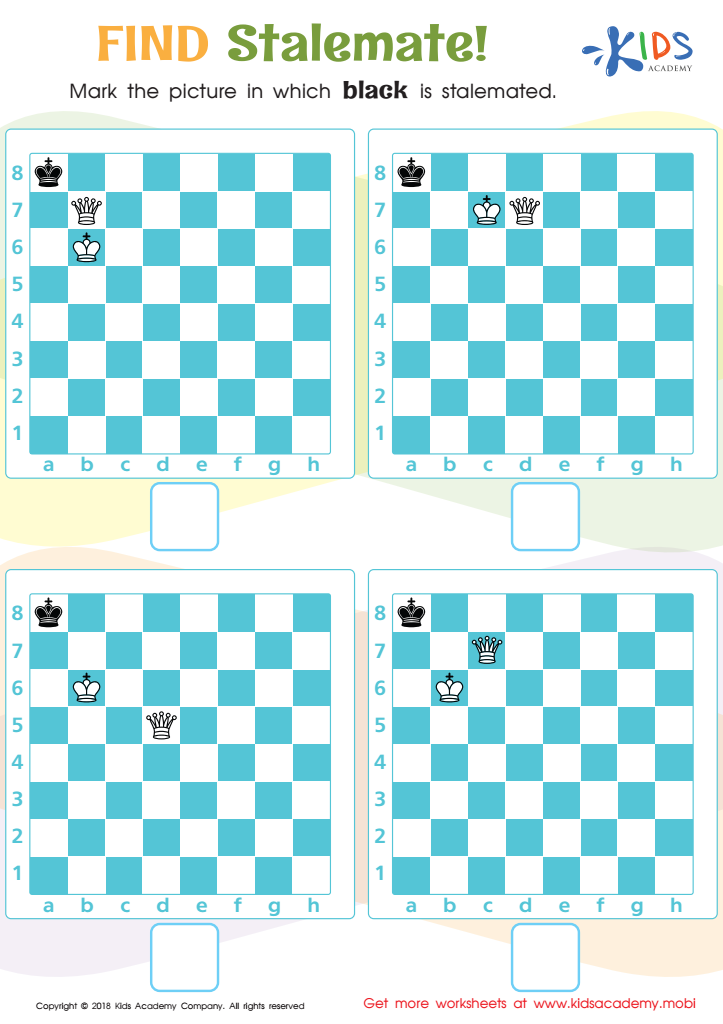
Find Stalemate! Worksheet
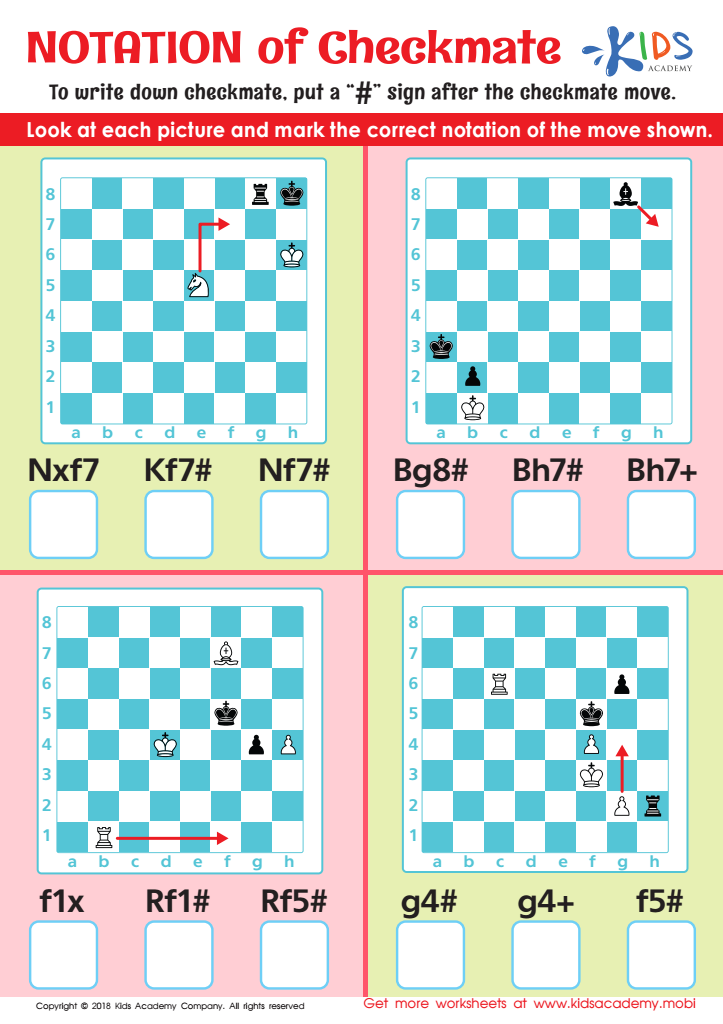
Notation of Checkmate Worksheet







Teaching chess to children ages 4-7 offers numerous developmental advantages that both parents and teachers should prioritize. First, chess enhances cognitive skills, including critical thinking, problem-solving, and decision-making abilities. As children learn to anticipate their opponent's moves and develop strategies, they naturally improve their reasoning skills. Additionally, chess fosters patience and concentration, teaching youngsters to focus on a task for extended periods—a vital skill in any academic setting.
Moreover, chess is an excellent tool for social integration. Playing with peers helps children build communication skills, learn about good sportsmanship, and understand the importance of respect and camaraderie. These interpersonal skills are crucial for harmonious interactions in school and life.
Furthermore, chess promotes creativity; by thinking outside the box and developing unique strategies, children can express themselves in new, imaginative ways. It also instills a sense of achievement and boosts confidence as they master skills and win games.
Incorporating chess into early education can create a fun and engaging way to learn while laying a strong foundation for academic perseverance and social skills. Thus, supporting chess programs can greatly benefit children as they develop essential cognitive, social, and emotional capacities.








