Community awareness Worksheets for Ages 4-7
5 filtered results
-
From - To
Explore our engaging Community Awareness Worksheets designed specifically for children aged 4-7! These fun and interactive resources foster understanding of their surroundings, encouraging little learners to recognize community helpers, safety signs, and local landmarks. Each worksheet is crafted to develop critical thinking and social awareness through colorful illustrations and age-appropriate activities. Kids will enjoy identifying different community roles and discussing the importance of cooperation and respect within their environment. Perfect for parents and educators, our worksheets provide an excellent way to inspire curiosity and empower young minds while promoting teamwork and community spirit. Start cultivating community awareness today!
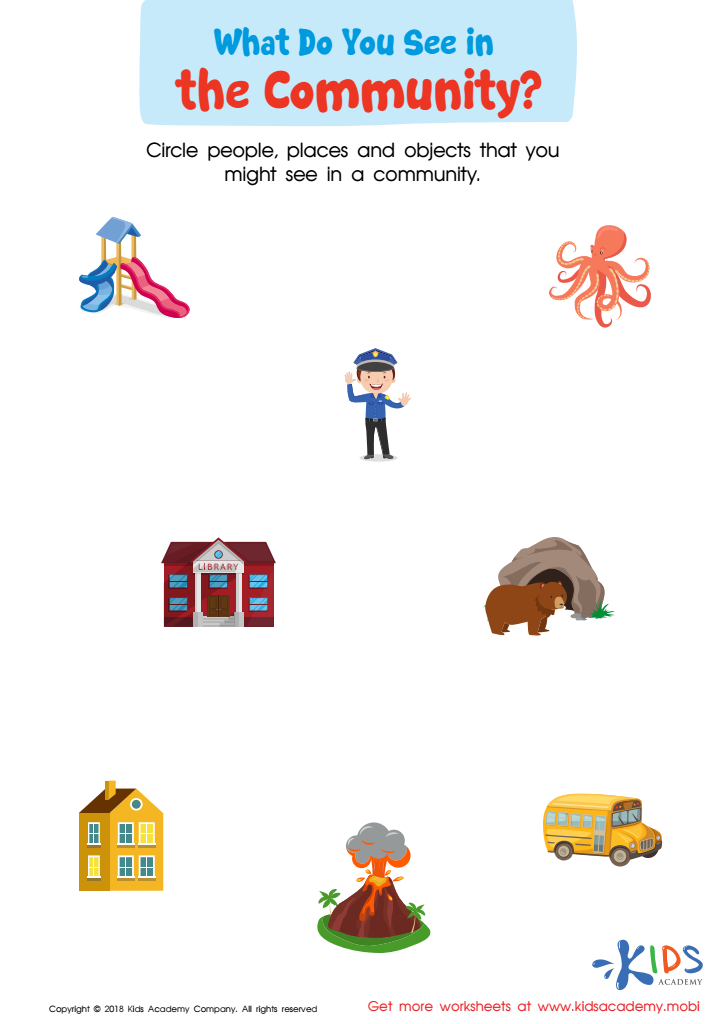
What Do You See in the Community Worksheet
 Assign to My Students
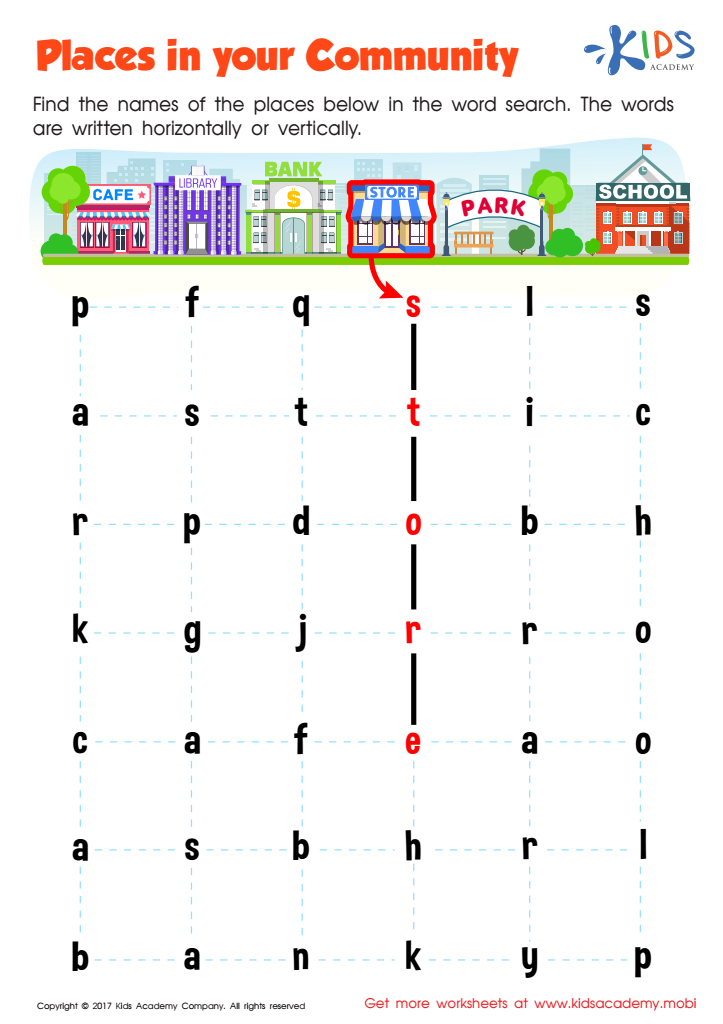
Places in Your Community Worksheet
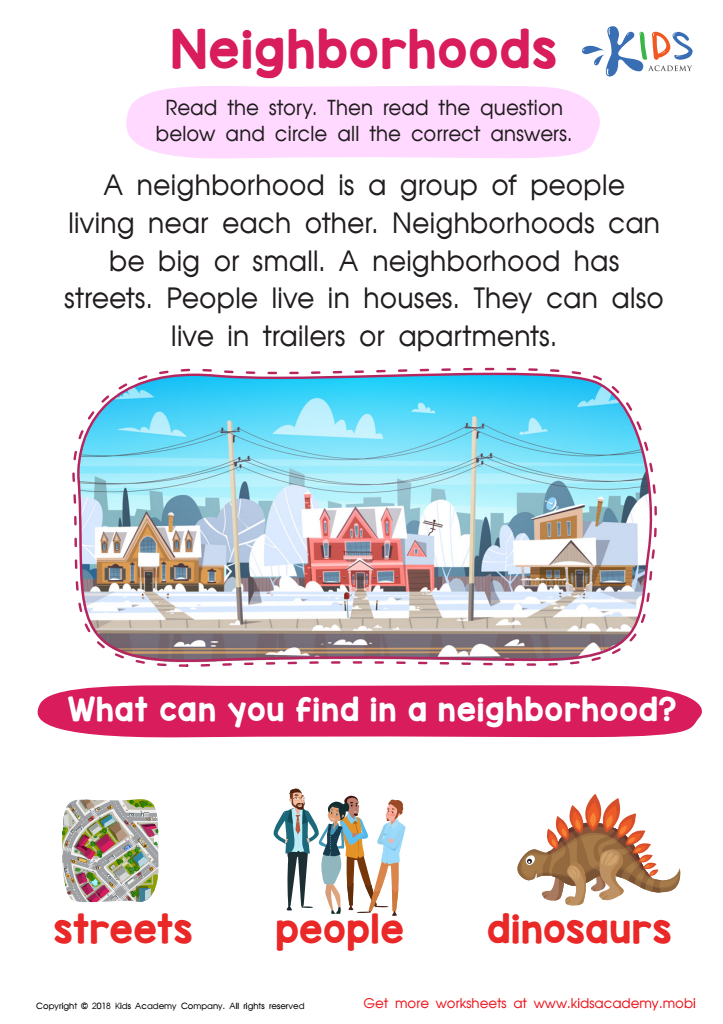
Neighborhoods Worksheet
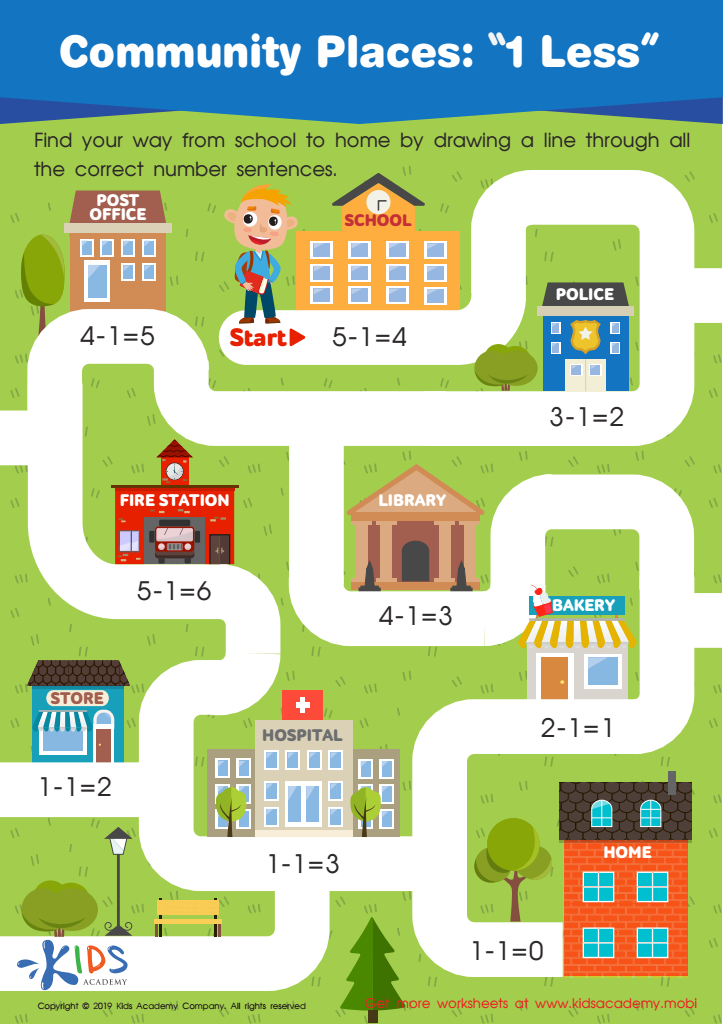
Community Places: 1 Less Worksheet
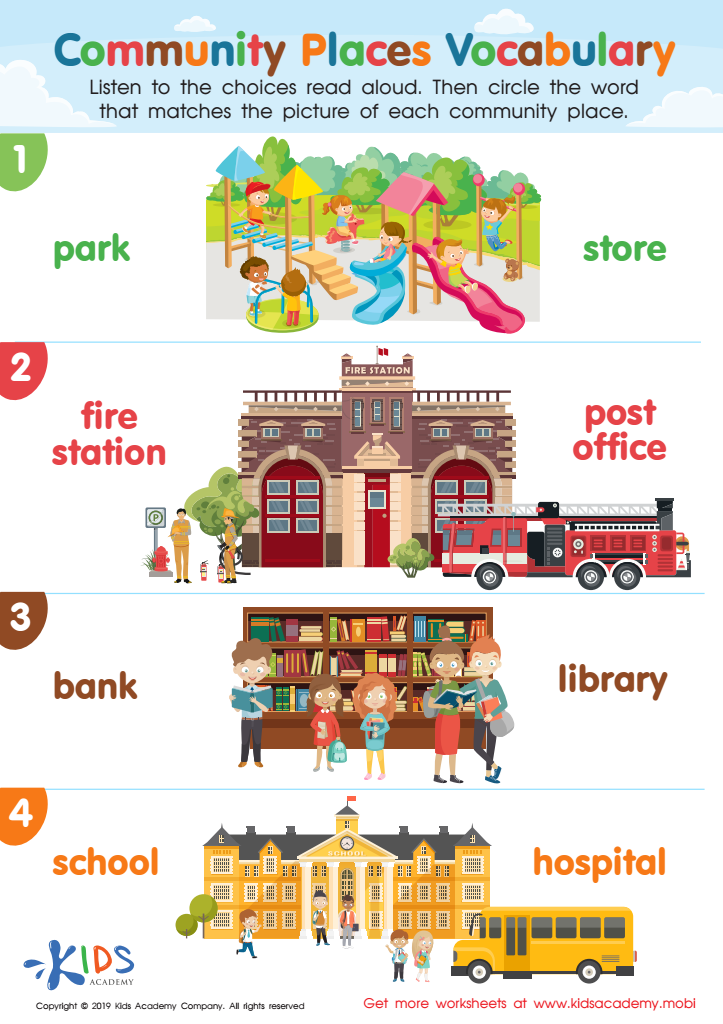
Community Places Vocabulary Worksheet



.jpg)




Community awareness is essential for children aged 4-7 because it lays the foundation for their understanding of the world around them. By nurturing this awareness, parents and teachers can help children recognize that they are part of a larger community, fostering a sense of belonging and social responsibility.
Engaging children in discussions about community—its people, values, and challenges—encourages empathy and collaboration from an early age. When students learn about different cultures, roles, and community services, they develop respect for diversity and an appreciation for the contribution of others.
Furthermore, community awareness enhances children's critical thinking and problem-solving skills by prompting them to consider interconnected issues that affect their surroundings. Through activities like neighborhood clean-ups or visits to local organizations, children not only apply their learning in real-world contexts but also strengthen their social skills.
Ultimately, informed and engaged young individuals are likely to become proactive community members in the future. By instilling community awareness now, parents and teachers cultivate socially conscious citizens who are equipped to create positive change in their communities as they grow. This foundation is pivotal for developing informed and compassionate leaders for tomorrow.








