Comparing weights Worksheets for Ages 4-7
3 filtered results
-
From - To
Explore our engaging "Comparing Weights Worksheets" designed specifically for children ages 4-7. These interactive resources help young learners develop essential skills in measurement and comparison. Through colorful visuals and hands-on activities, students will practice determining which objects are heavier or lighter, enhancing their understanding of weight concepts. Perfect for classroom use or home learning, these worksheets cater to various learning styles, ensuring every child can grasp the fundamentals of weighing objects. Empower your child’s math skills with fun, educational activities that make learning about weights both enjoyable and effective! Start downloading our worksheets today and watch your child’s confidence grow!
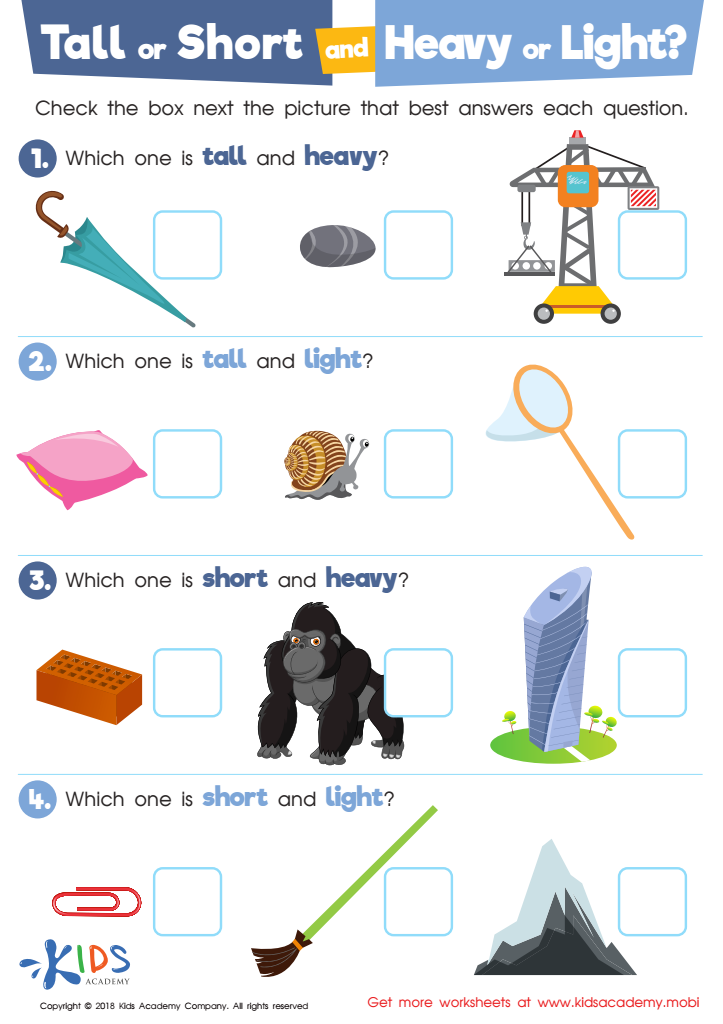
Tall or Short and Heavy or Light? Worksheet
 Assign to My Students
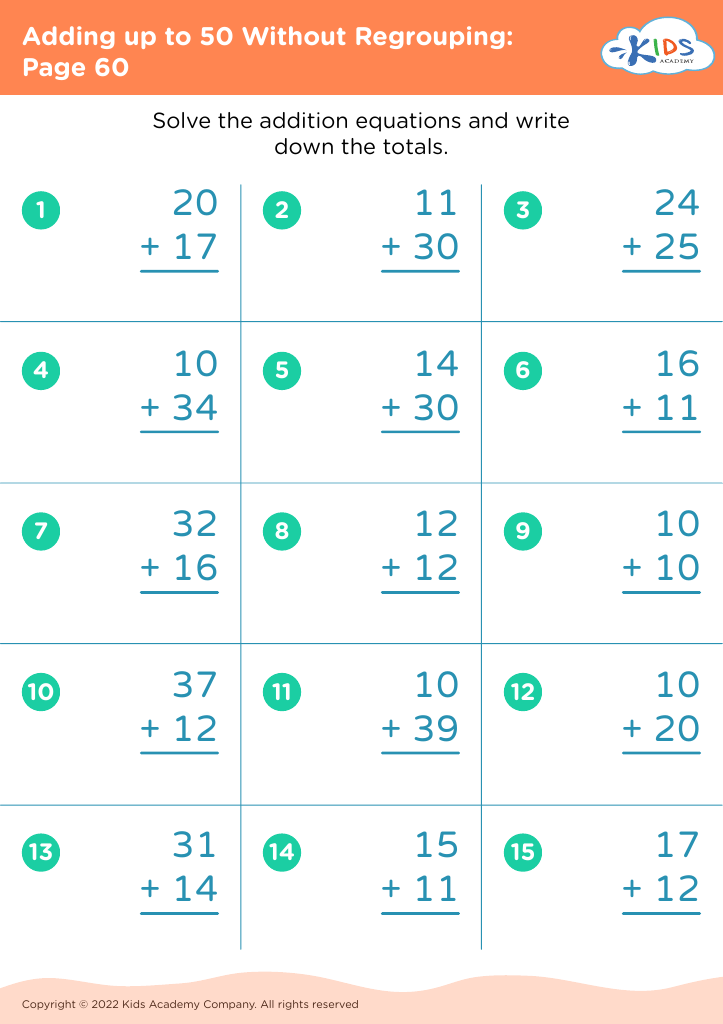
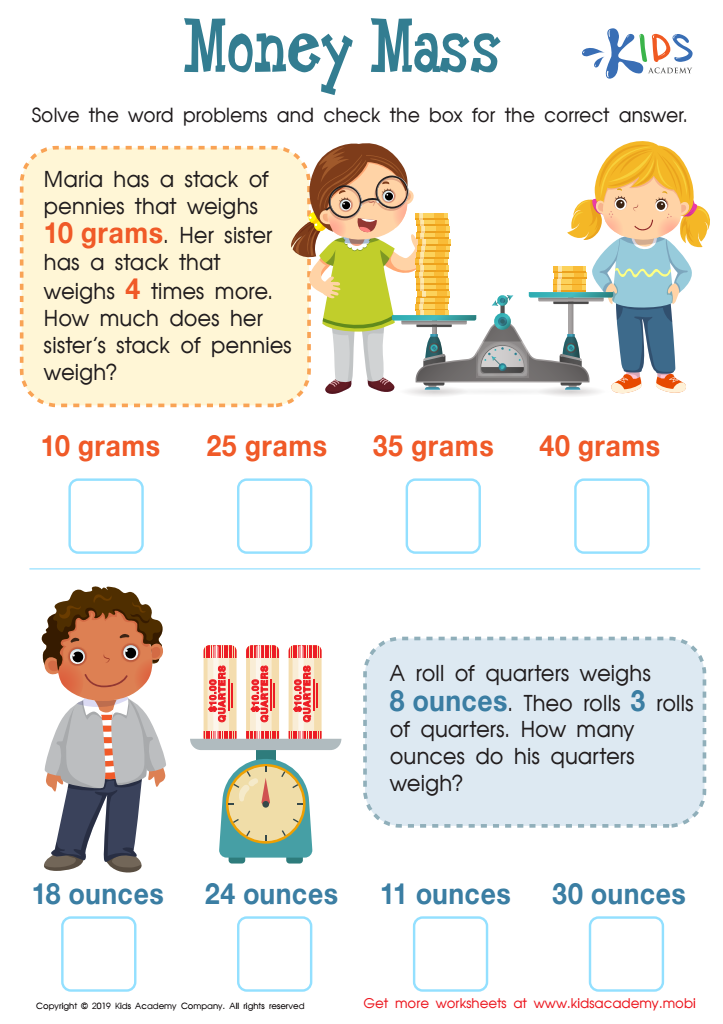
Money Mass Worksheet






Comparing weights is an important foundational skill for children aged 4-7, as it lays the groundwork for mathematical understanding and critical thinking. During this developmental stage, children are naturally curious about the world around them, and engaging in activities that involve comparing weights can enhance their learning experience.
Firstly, understanding weight helps children grasp basic concepts of measurement, which is essential for later math skills. When children compare the weights of different objects, they learn to identify heavier and lighter items, promoting their ability to categorize and quantify.
Secondly, activities involving weights can enhance fine motor skills and hand-eye coordination, especially through hands-on experiments using scales or balance beams. This interactive approach keeps young learners engaged and makes abstract concepts tangible.
Moreover, comparing weights can foster cooperative play and teamwork as children work together to solve problems or conduct experiments. It encourages communication skills, as they describe their observations and reasoning.
Lastly, instilling a sense of curiosity and inquiry in children about weight can promote a lifelong love of learning and science. Both parents and teachers should prioritize these activities to cultivate a well-rounded educational experience that supports children's cognitive and social development.








