Conversion skills Worksheets for Ages 4-7
5 filtered results
-
From - To
Enhance foundational learning with our conversion skills worksheets tailored for kids aged 4-7. These printables from Kids Academy provide an engaging way to introduce basic conversion concepts. Children will practice understanding measurements, comparing units, and converting between different forms. Activities range from simple exercises to more interactive challenges, promoting critical thinking and problem-solving abilities. Perfect for classroom or home learning, our worksheets ensure young learners grasp essential math principles in a fun, colorful, and supportive environment. Set your child up for success in their educational journey with our comprehensive conversion skill resources.
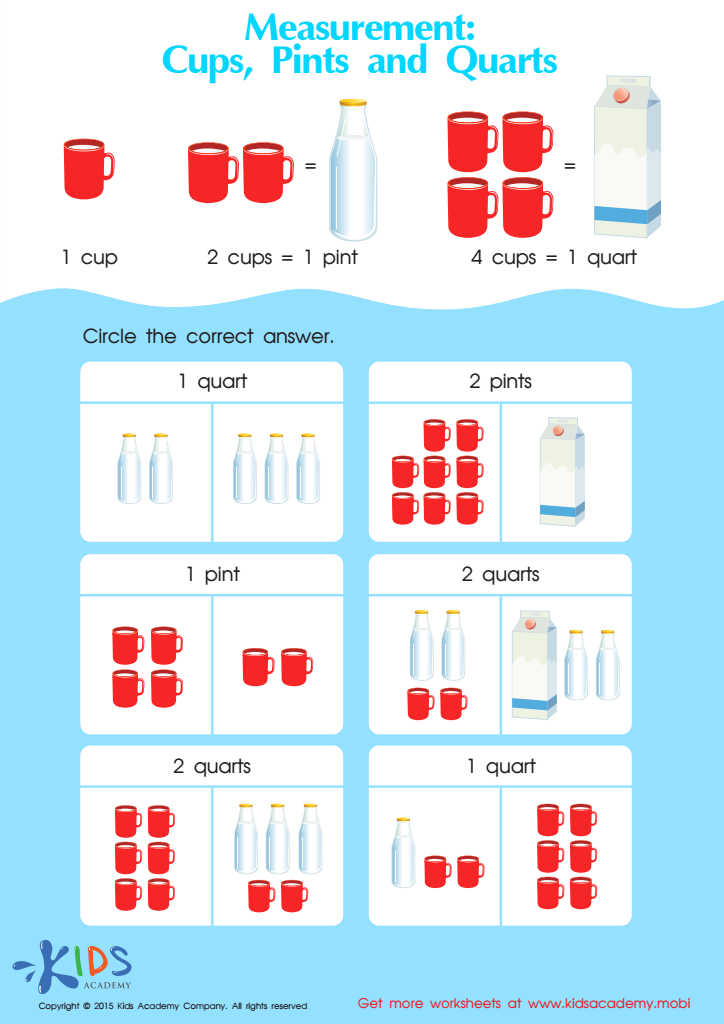
Cups, Pints and Quarts Worksheet
 Assign to My Students
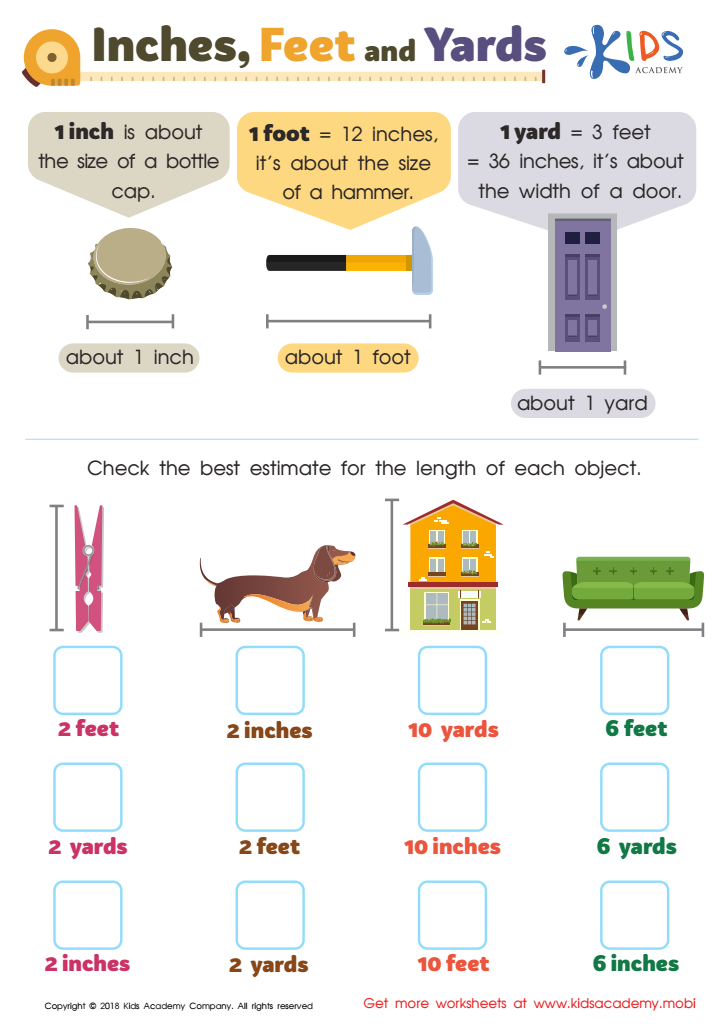
Inches, Feet and Yards Worksheet
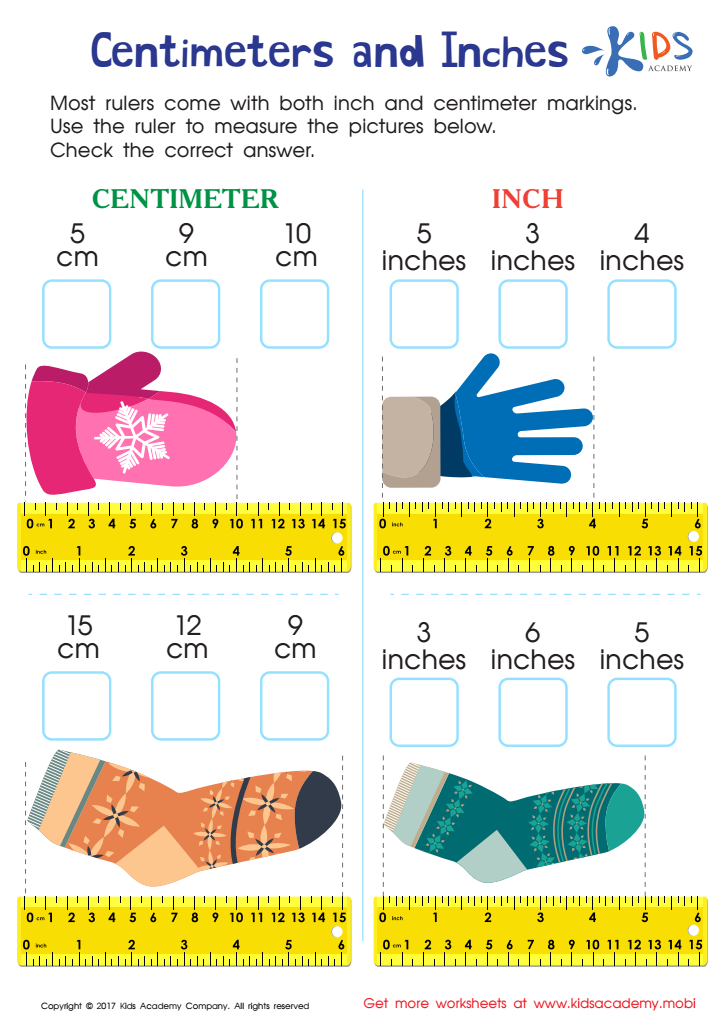
Centimeters and Inches Worksheet
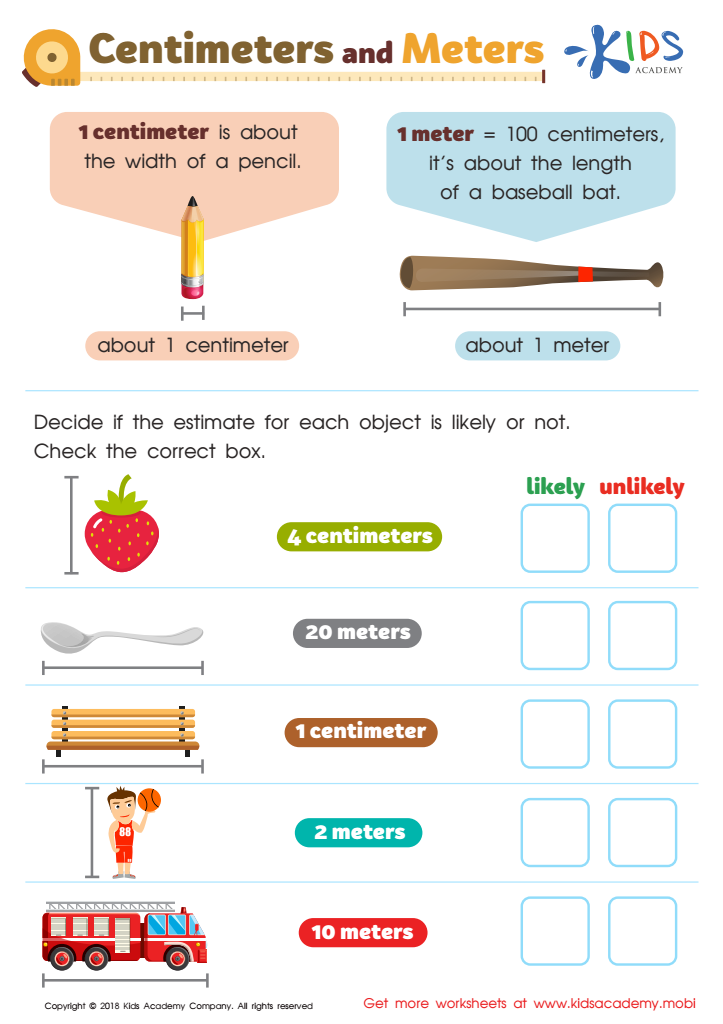
Centimeters and Meters Worksheet
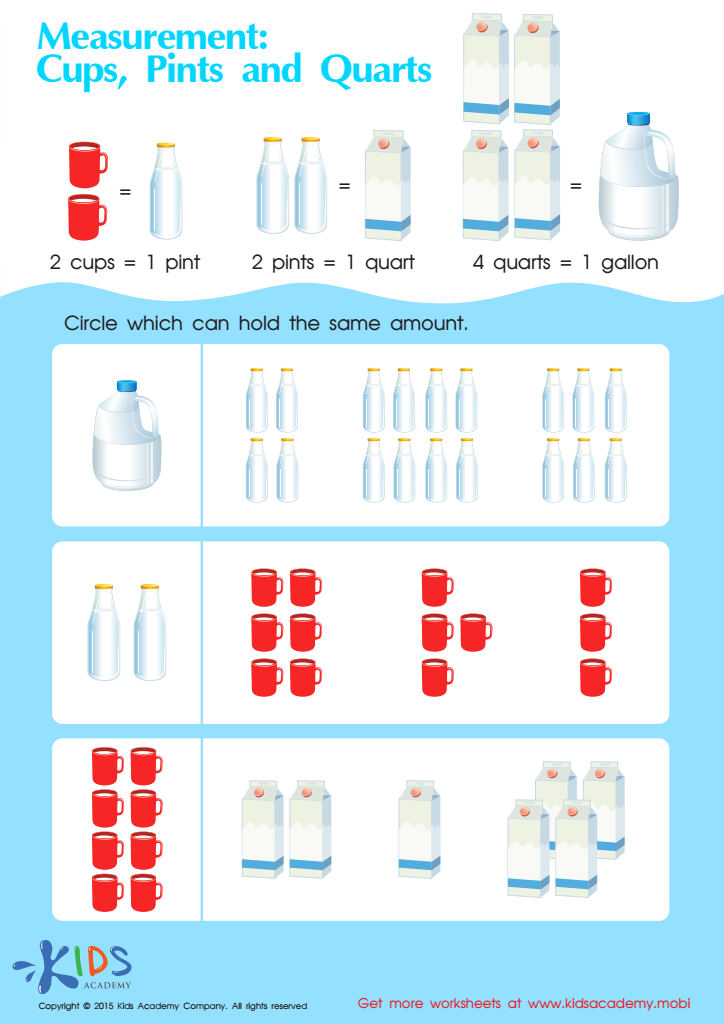
Cups, Pints and Quarts 2 Worksheet








Parents and teachers should care about conversion skills for children aged 4-7 because these skills lay the foundation for essential mathematical and cognitive development. Conversion skills involve understanding how to change one form of measurement or quantity to another, such as converting inches to feet or minutes to hours. This aspect of learning nurtures a child's ability to quantify and adapt information, fostering both logical thinking and problem-solving abilities.
During the ages of 4-7, children are in a crucial developmental stage where their brains are highly receptive to new information and learning patterns. Introducing conversion skills at this age supports a deeper understanding of numbers, measures, and spatial reasoning. For instance, converting units can start with simple concepts like understanding how two half-cups make a whole cup, which gradually evolves into more complex arithmetic and mathematical operations.
Furthermore, mastering these skills boosts confidence and lays the groundwork for future academic subjects such as science, engineering, and economics. By engaging in activities that develop conversion skills, such as practical measuring tasks in cooking or playful learning exercises with lengths in arts and crafts, children can seamlessly integrate these concepts into their everyday thinking. Therefore, prioritizing conversion skills helps cultivate a solid analytical foundation that the child will benefit from throughout their educational journey and beyond.








