Counting money Worksheets for Ages 4-7
3 filtered results
-
From - To
Discover engaging Counting Money Worksheets for ages 4-7 on our website! Designed to build essential math skills, these resources introduce young learners to the concept of money through interactive and fun activities. Our worksheets feature colorful images of coins and bills, helping children recognize different denominations while enhancing their counting abilities. Each exercise encourages hands-on learning, perfect for boosting confidence in early math skills. Whether at home or in the classroom, our Counting Money Worksheets provide an enjoyable way for kids to explore money-related concepts. Help your child develop important financial literacy skills early with our printable worksheets today!
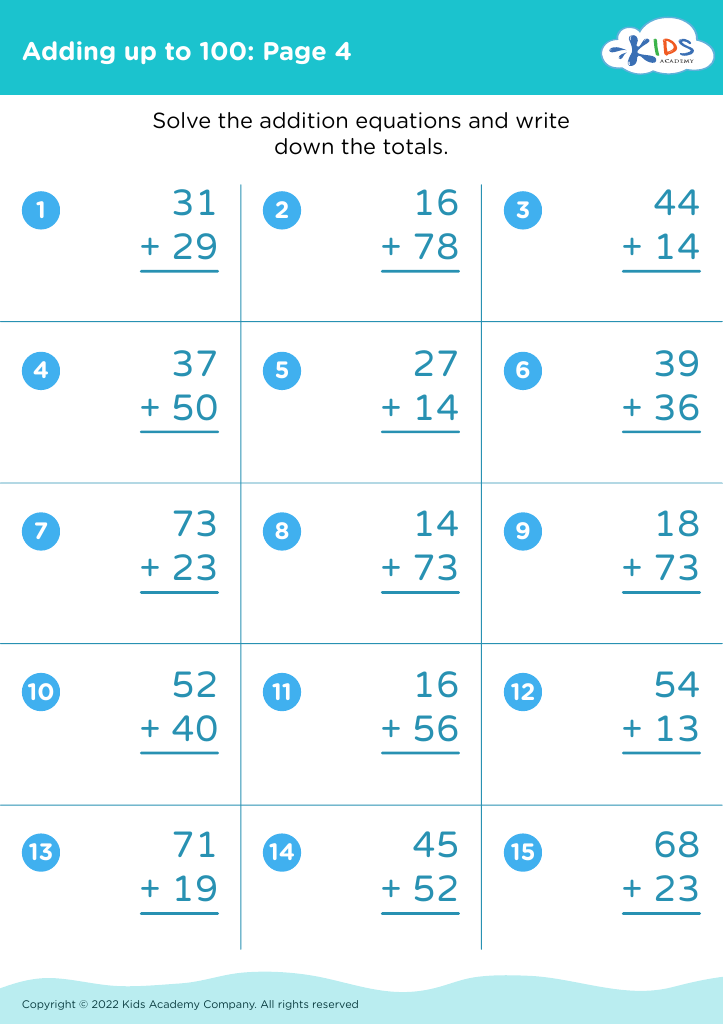
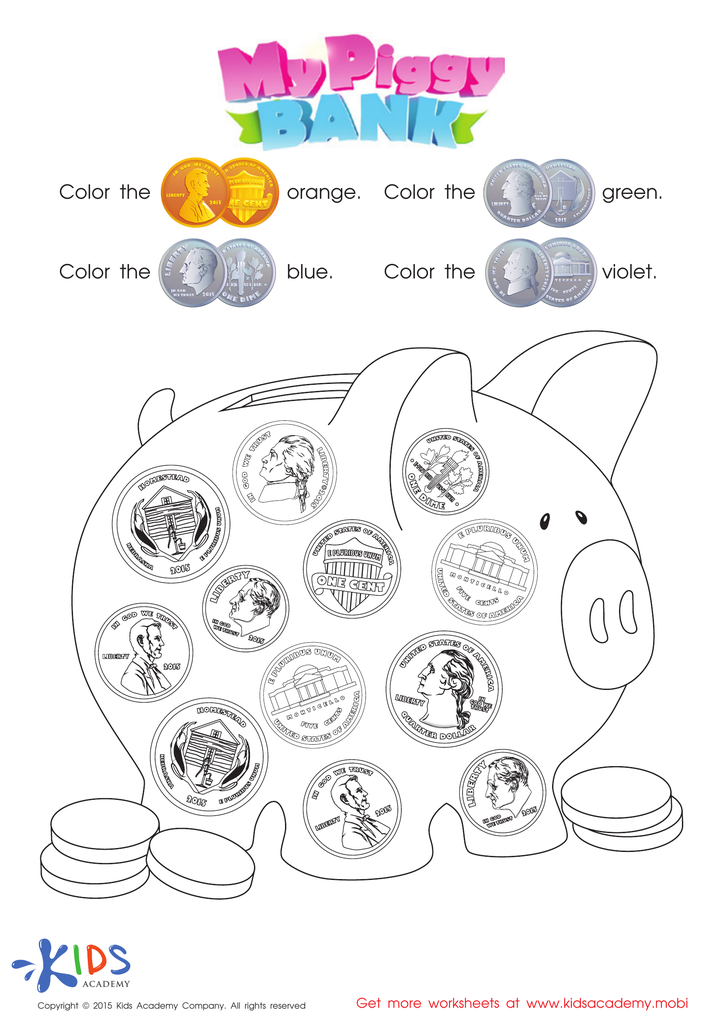
Recognizing Money Money Worksheet
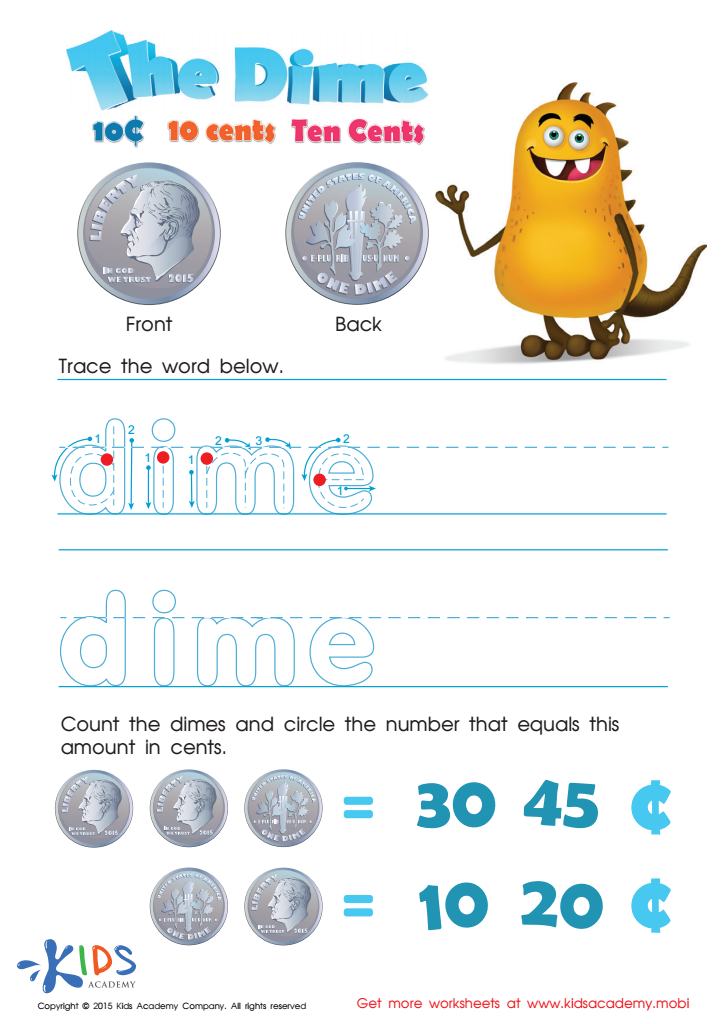
Ten Cents or the Dime Money Worksheet
 Assign to My Students







Teaching young children, ages 4 to 7, about counting money is crucial for several reasons. First, it lays the groundwork for essential math skills. Understanding money introduces concepts like counting, addition, and subtraction in a practical context. This hands-on experience makes math more relatable and engaging.
Second, counting money enhances financial literacy from an early age. As children learn about the value of coins and bills, they gain an understanding of the importance of saving, spending wisely, and making choices about their resources. This knowledge prepares them for real-life situations, empowering them to navigate financial concepts as they grow.
Additionally, counting money promotes the development of fine motor skills as children handle coins and bills. It fosters critical thinking as they solve problems related to making change or determining how much more they need to buy something.
Finally, these activities can serve as bonding experiences between parents, teachers, and children. Playing games that involve money allows for interactive learning, encouraging curiosity and discussion about values associated with money, sharing, and responsibility. Overall, early exposure to counting money equips young children with invaluable skills for life.








