Develop sequencing skills Worksheets for Ages 4-7
3 filtered results
-
From - To
Enhance your child's cognitive development with our "Develop Sequencing Skills Worksheets" for ages 4-7. These expertly crafted worksheets from Kids Academy are designed to improve logical thinking, story comprehension, and order recognition. Children will enjoy engaging activities that challenge them to arrange pictures or events sequentially, fostering their understanding of patterns and cause-and-effect relationships. Perfect for at-home learning or classroom use, each worksheet is tailored to encourage active participation and build foundational skills crucial for academic success. Inspire your young learner’s growth with a fun and interactive approach to mastering sequencing skills. Visit Kids Academy today!
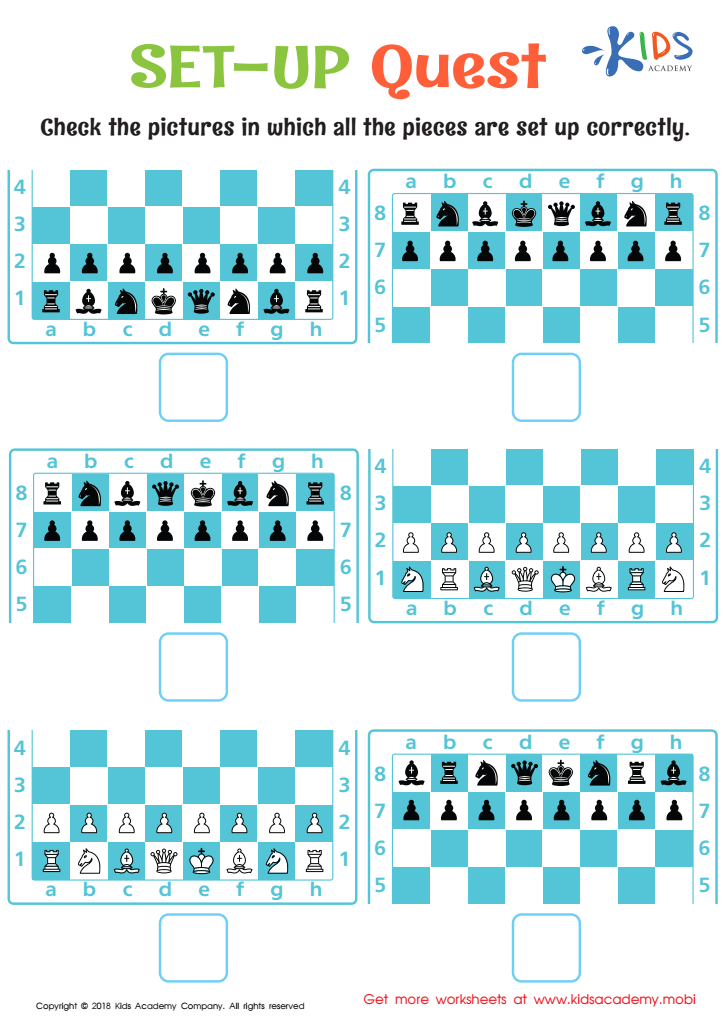
Set-up Quest Worksheet
 Assign to My Students
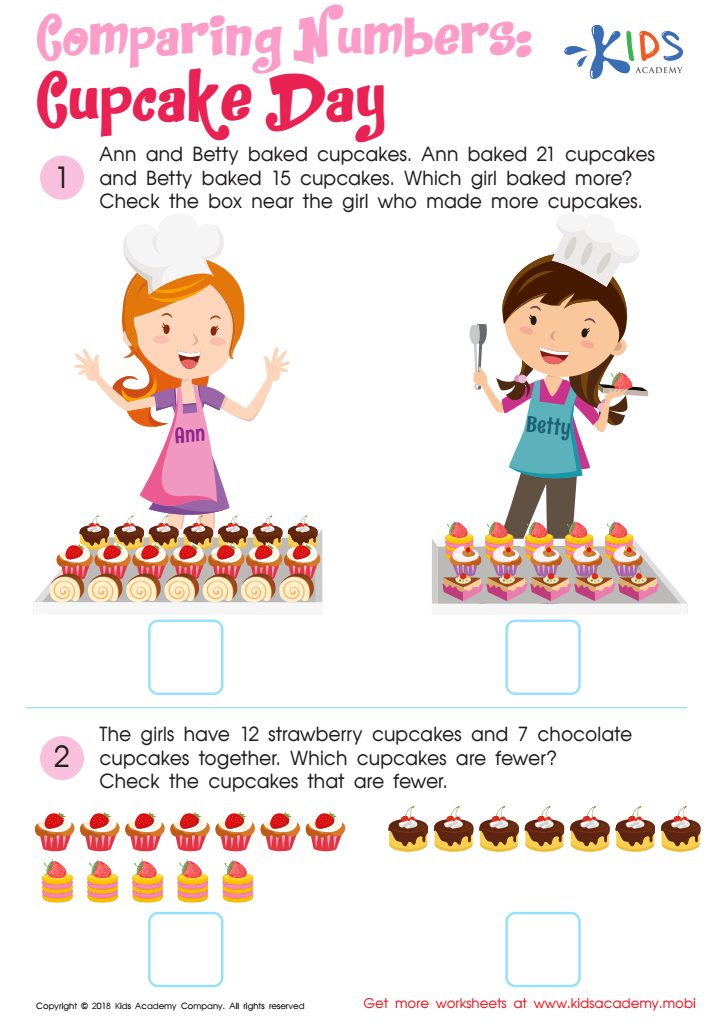
Cupcake Day Worksheet
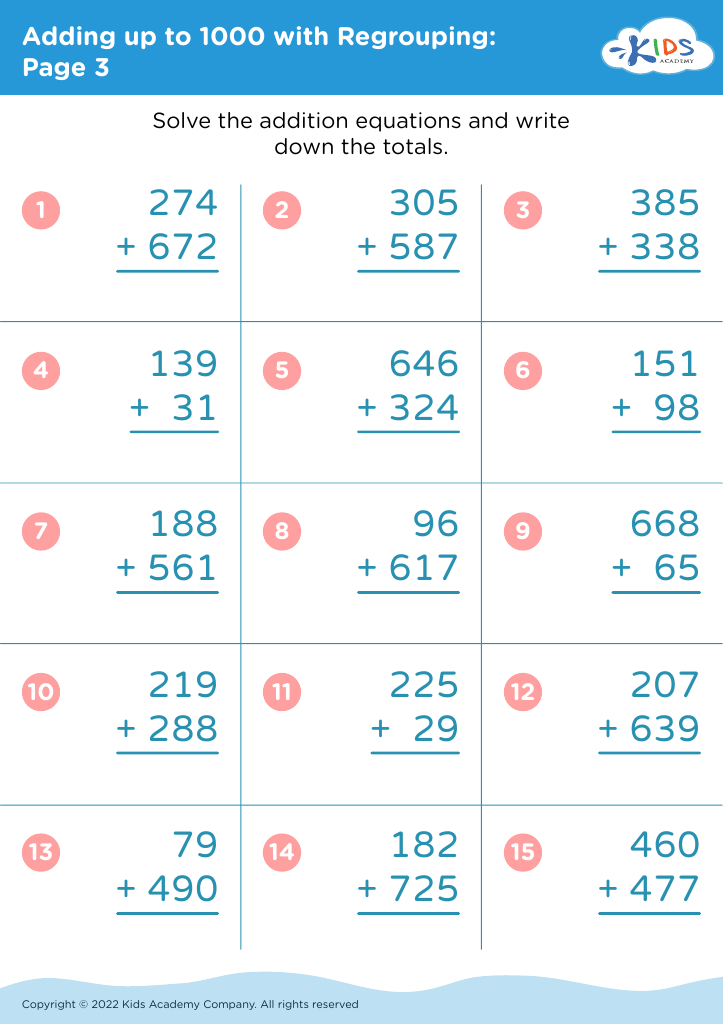






Developing sequencing skills in children aged 4-7 is paramount for fostering their cognitive and academic growth. Sequencing—the ability to arrange events, ideas, and actions in a specific, logical order—forms the bedrock of vital skills such as reading comprehension, mathematics, and problem-solving.
First, for reading comprehension, students need to understand the beginning, middle, and end of a story. Sequencing helps them grasp the narrative structure, predict outcomes, and make sense of cause-and-effect relationships within the text. These abilities are crucial for academic success in all subjects.
Math skills also benefit significantly from sequencing. Early mathematical concepts like counting, pattern recognition, and understanding daily routines (e.g., days of the week, seasons) are all sequenced-based. A good grasp of sequencing translate to more advanced concepts such as operations and algebraic thinking later on.
Social and life skills are equally impacted. Sequencing is used in daily activities such as following a recipe, dressing appropriately, and organizing play. It teaches children structure, order, and the ability to complete tasks independently.
In conclusion, fostering sequencing skills in young children enrich early literacy, numeracy, and practical life skills. Investing time in activities that promote sequencing—through games, storytelling, and routines—paves the way for more competent, engaged, and independent learners.








