Directional skills Worksheets for Ages 4-7
6 filtered results
-
From - To
Enhance your child's spatial awareness and fundamental navigation abilities with our "Directional Skills Worksheets for Ages 4-7" from Kids Academy. Designed specifically for early learners, these engaging activities help young minds grasp essential positional concepts such as left, right, up, down, and compass directions. Our expertly crafted worksheets feature vibrant illustrations and fun tasks to make learning interactive and enjoyable. Perfect for kids aged 4 to 7, these worksheets aim to boost confidence and improve directional skills critical for their academic growth. Equip your child with the tools they need to succeed—explore our collection today!
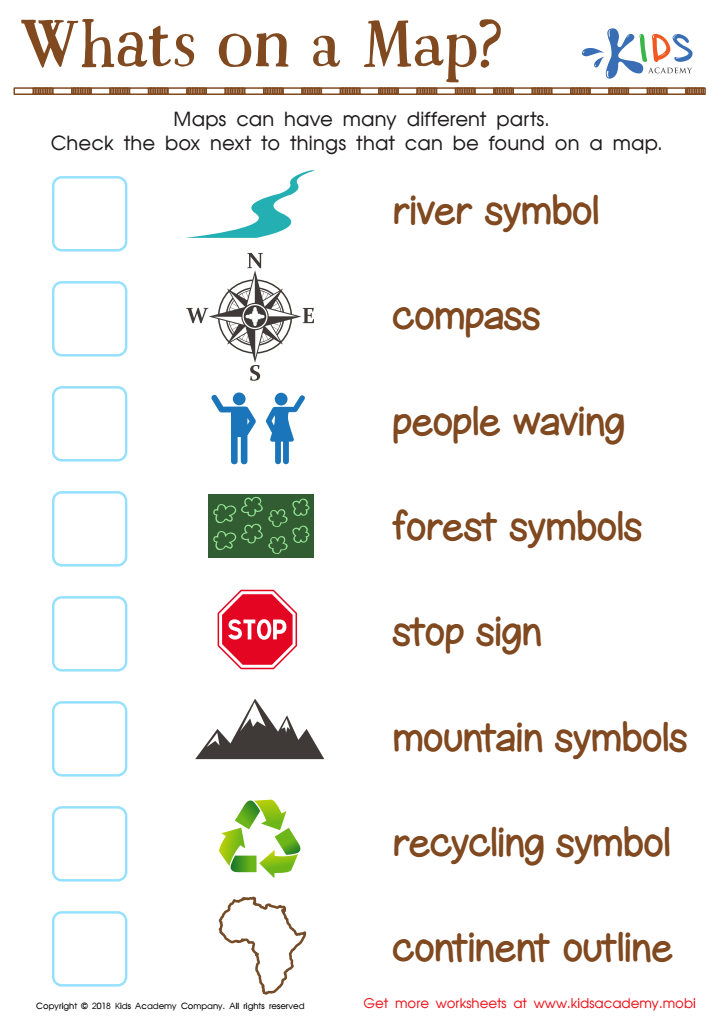
Whats on a Map? Worksheet
 Assign to My Students
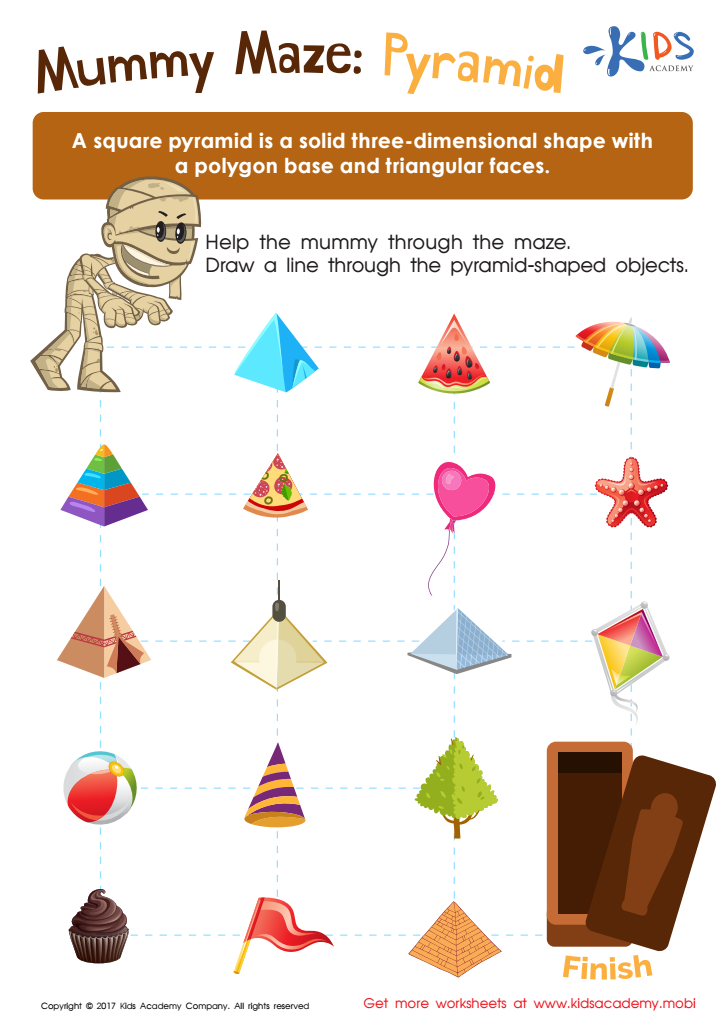
Mummy Maze: Pyramid Printable
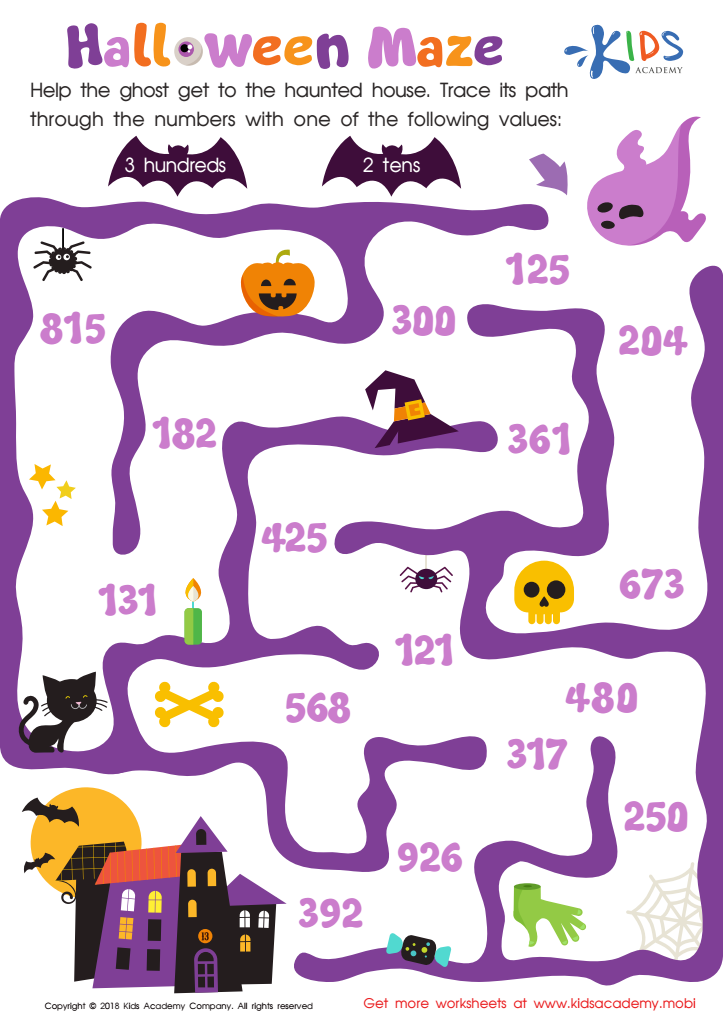
Place Value: Halloween Maze Worksheet
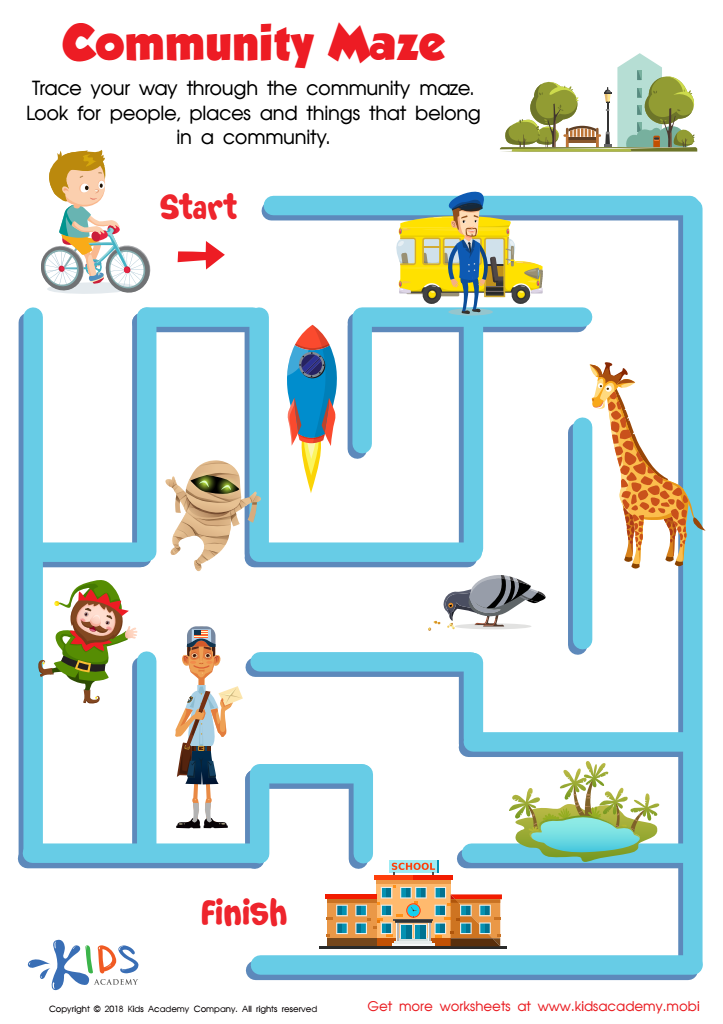
Community Maze Worksheet
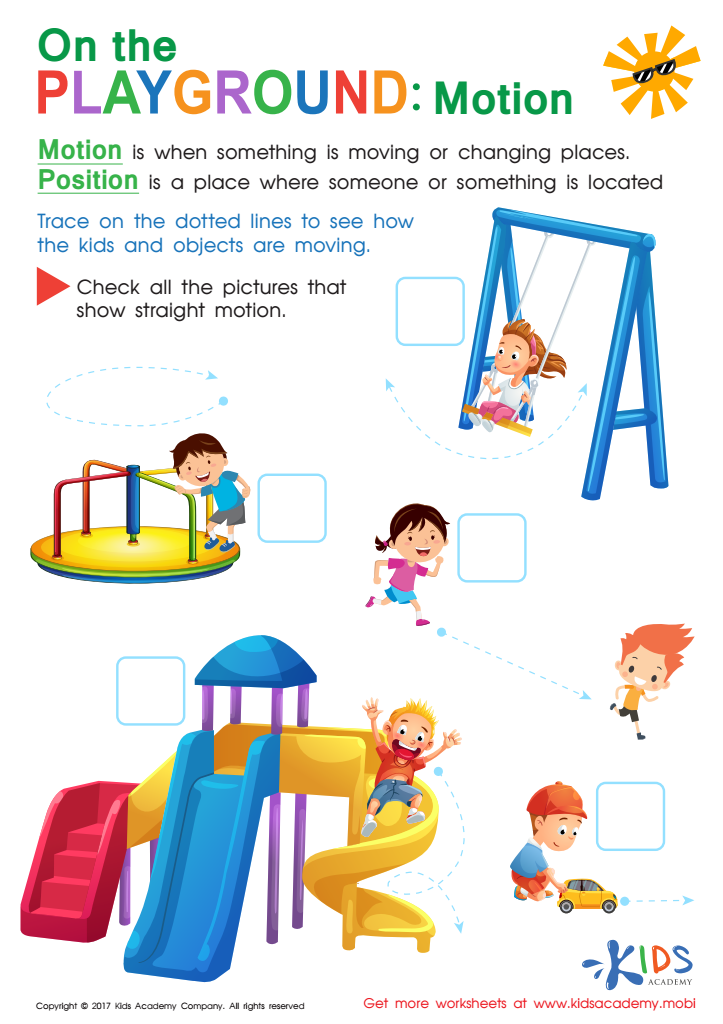
Position and Motion Worksheet
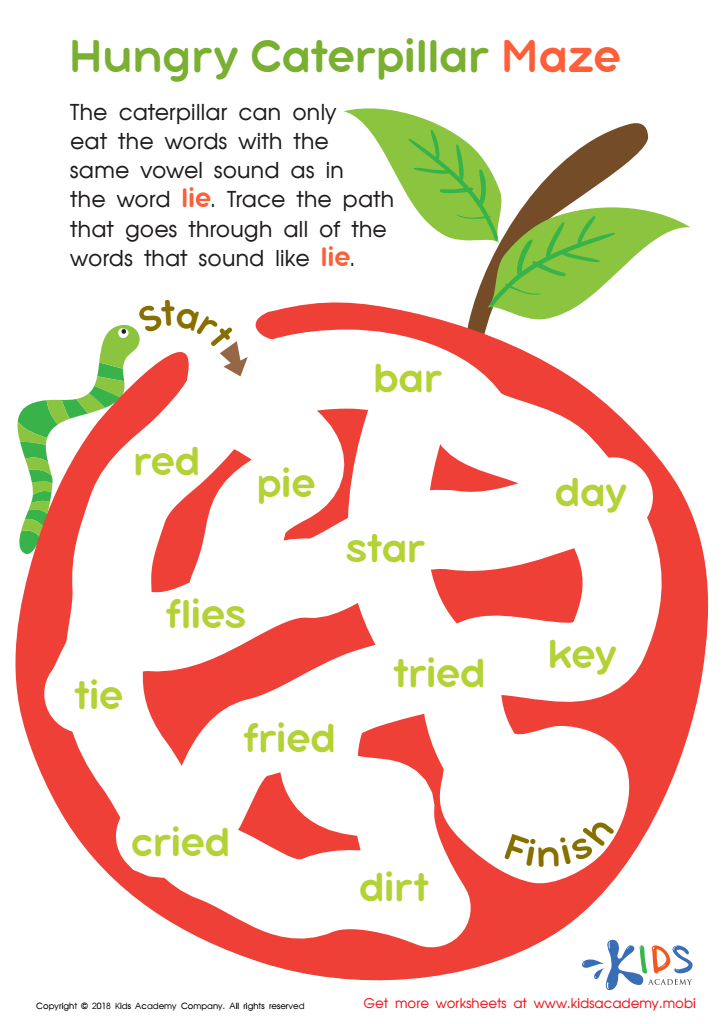
Hungry Caterpillar Maze Worksheet






Directional skills are a crucial aspect of a child's early development, significantly impacting their cognitive, physical, and social growth. For children ages 4-7, learning directional skills—understanding concepts such as left, right, up, down, and cardinal directions—forms a foundational part of their learning process.
Firstly, directional skills are essential for spatial awareness, a key component of mathematics and geometry. Understanding directions helps children grasp mathematical concepts such as symmetry, patterns, and sequences, which are fundamental to more complex problem-solving and logical reasoning later in life.
Secondly, these skills are indispensable in daily activities and safety. Children who grasp directional cues can better navigate their environments, follow instructions, and avoid dangers such as traffic or getting lost. This fosters independence and confidence in exploring the world around them.
Furthermore, developing directional skills enhances coordination and motor skills. Activities that involve movement, such as playing sports or dancing, require an understanding of direction to execute movements accurately and participate effectively with peers, boosting their physical fitness and social interactions.
Lastly, reinforcing directional skills aids in building communication skills. Being able to give and follow directions enriches a child’s vocabulary and ability to interact effectively, laying the groundwork for academic success and meaningful relationships.
Thus, parents and teachers should prioritize nurturing directional skills as they serve as building blocks for a well-rounded and capable individual.








