
Enhances strategic thinking Worksheets for Ages 4-7
3 filtered results
Difficulty Level
Grade
Age
-
From - To
Subject
Activity
Standards
Discover our engaging "Enhances Strategic Thinking Worksheets" designed specifically for children ages 4-7! These thoughtfully crafted activities stimulate critical thinking and problem-solving skills through fun and interactive exercises. Kids will enjoy puzzles, games, and challenges that encourage them to think strategically, develop their reasoning abilities, and enhance their cognitive skills. Each worksheet is tailored to ensure that foundational concepts are introduced in a playful manner, fostering a love for learning. Perfect for home or classroom use, our worksheets are an excellent resource for nurturing young minds. Unlock your child's potential today and make learning an exciting adventure!
Favorites
With answer key
Interactive
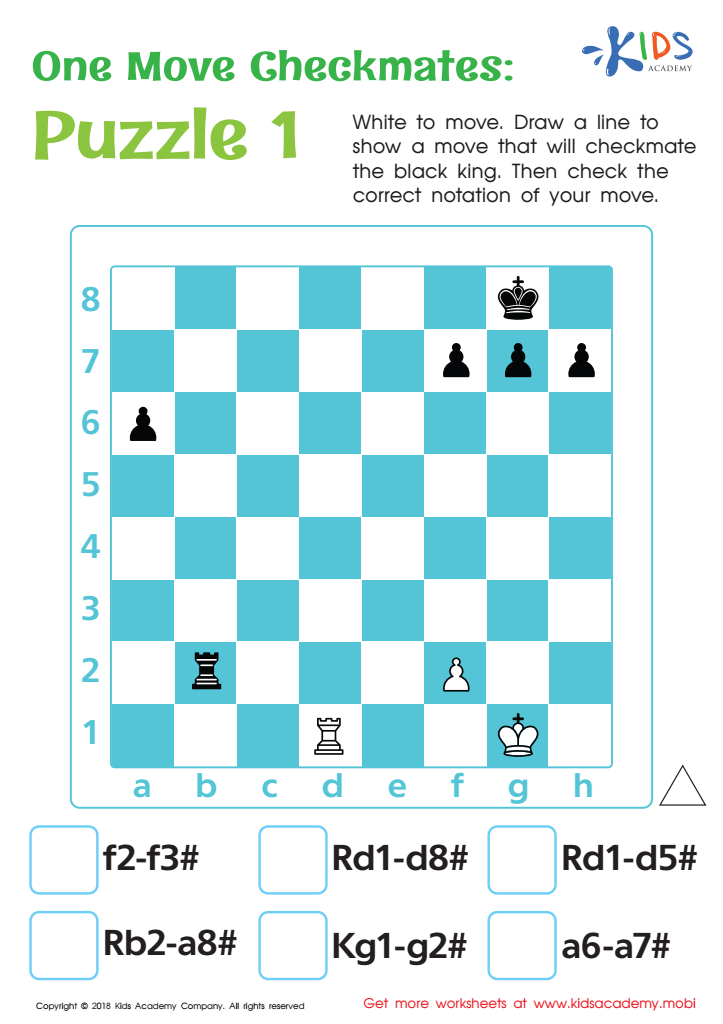
One Move Checkmates: Puzzle 1 Worksheet
Checkmate your opponent with this age-appropriate PDF worksheet! It'll challenge your budding mathematician to use strategy, visual-spatial skills, logic and critical thinking. While solving, they'll also work on fine motor skills and tracking, which are essential reading skills. It's a great way to strengthen math and literacy skills.
 Assign to My Students
One Move Checkmates: Puzzle 1 Worksheet
Worksheet
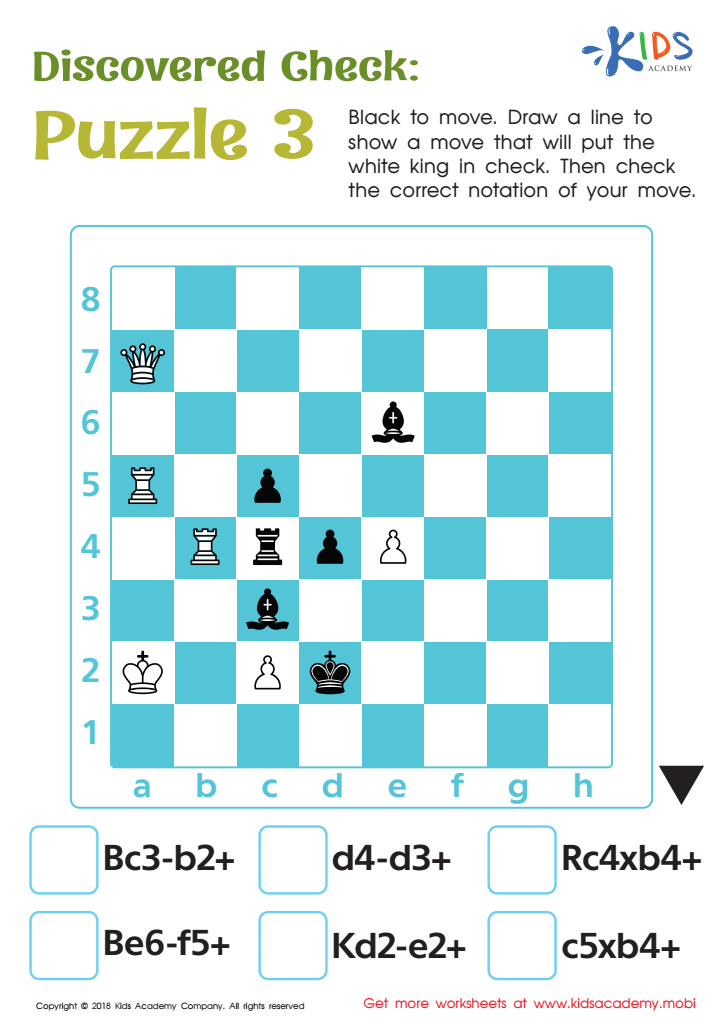
Discovered Check: Puzzle 3 Worksheet
Parents often encourage their children to play chess to sharpen their thinking skills. Using the black pieces, your child must strategically move the piece to place the white king in check. Draw the line, examine the options and check the correct move.
Discovered Check: Puzzle 3 Worksheet
Worksheet
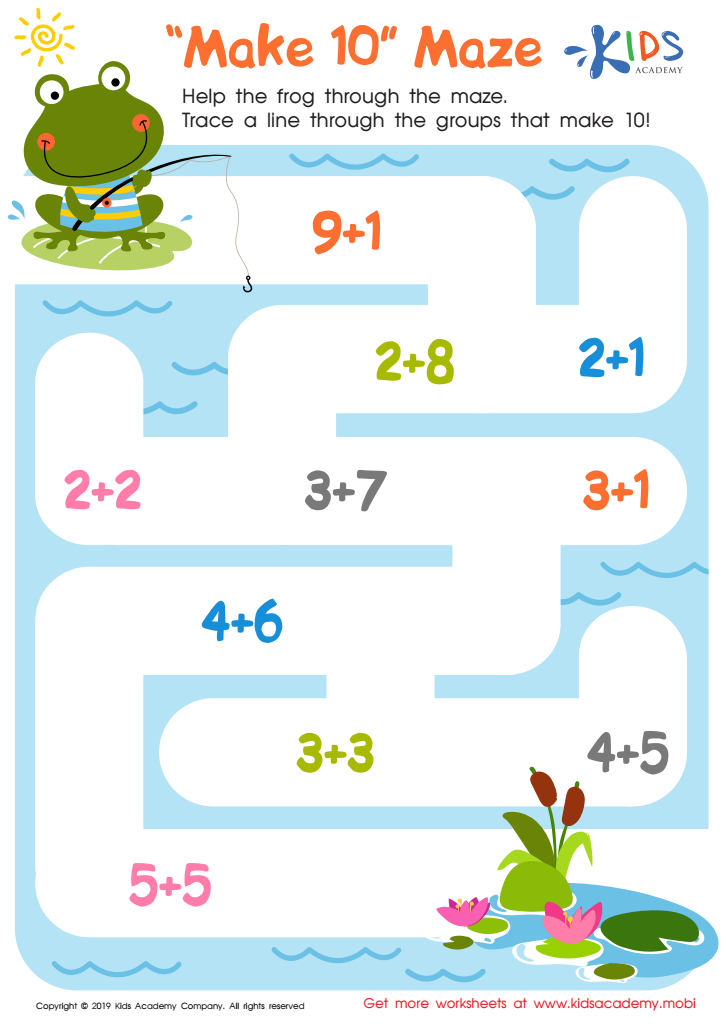
Make 10 Maze Worksheet
Help your child's frog friend make its way out of the maze! Mazes are an enjoyable way to get your kids to learn and can be a challenge. Have your kids take a look at this tracing sheet and help the frog make its way through the maze by tracing a line through the groups of equations that make 10. It’ll be a fun time for everyone!
Make 10 Maze Worksheet
Worksheet
Learning Skills
Join Kids Academy for Free
Who is primarily going to use this learning content?





.jpg)
.jpg)
.jpg)
Strategic thinking is a crucial skill that can profoundly impact a child’s cognitive, social, and emotional development, especially for ages 4-7. This developmental stage is critical, as children begin to form their understanding of the world and how to navigate it. By encouraging strategic thinking, parents and teachers help foster skills such as problem-solving, decision-making, and goal-setting.
For young children, engaging in strategic thinking activities promotes creativity and adaptability, encouraging them to think beyond the immediate problems in front of them. These activities can include games, puzzles, and collaborative tasks that require planning and foresight. As kids learn to anticipate the outcomes of their actions, they develop resilience, learning that setbacks are a part of the process.
Moreover, teaching strategic thinking cultivates cooperation and communication skills, essential for teamwork and building friendships. Children learn to listen to different perspectives and share their ideas, creating a cooperative spirit.
Ultimately, fostering strategic thinking equips children with invaluable skills applicable in both academic pursuits and everyday life, contributing to their long-term success and well-being. Parents and teachers, as facilitators of growth during these formative years, should prioritize strategies that cultivate these skills in engaging and age-appropriate ways.








