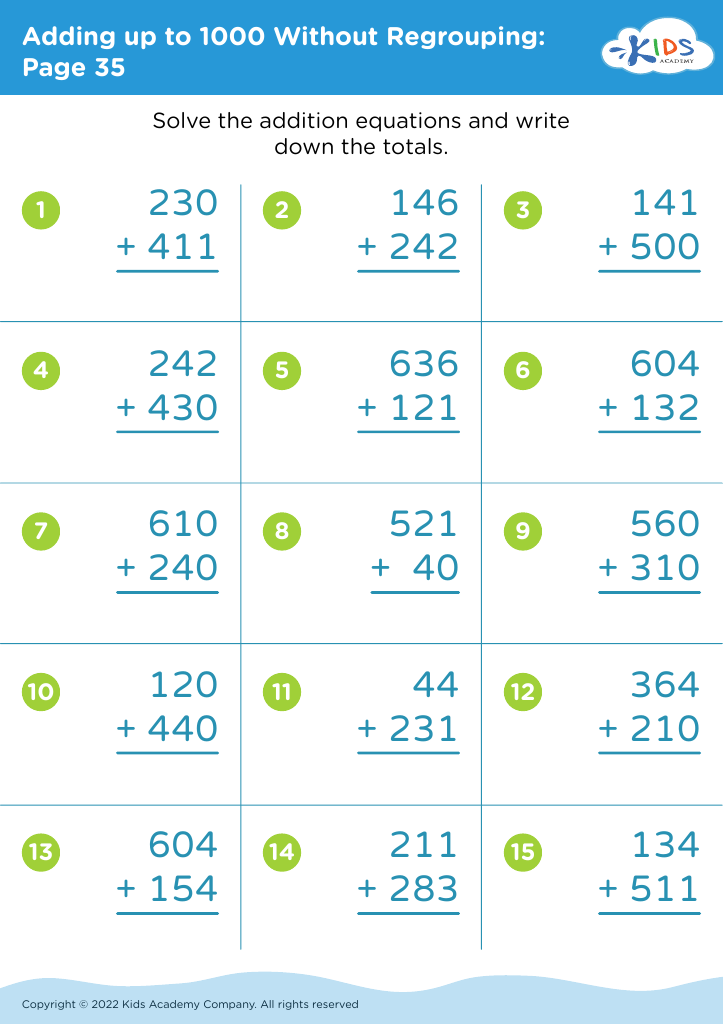







Enhancing counting skills for children aged 4 to 7 is crucial for their overall cognitive development and later academic success. During these formative years, children develop foundational math skills that lay the groundwork for future learning. Mastery of counting not only builds numeracy skills but also enhances spatial awareness, logical thinking, and problem-solving abilities.
Parents and teachers play a pivotal role in this development. Engaging young children in counting activities fosters curiosity and makes learning fun, stimulating their interest in numbers. It aids in developing both fine and gross motor skills through hands-on activities like sorting, grouping, and using counting manipulatives.
Moreover, strong counting skills directly correlate to success in more complex mathematics in later years, impacting not just math performance but also confidence in problem-solving situations. Early counting experiences teach children how to work with quantities, which is essential in everyday life, from managing allowances to measuring ingredients in cooking.
By prioritizing counting skills through interactive games, songs, and playful learning scenarios, adults can help ensure that children build a solid mathematical foundation. This investment in early learning ultimately supports lifelong critical thinking and aptitude in mathematics, empowering children for future academic endeavors.








