Financial literacy Worksheets for Ages 4-7
6 filtered results
-
From - To
At Kids Academy, we offer engaging Financial Literacy Worksheets designed for ages 4-7. Our worksheets introduce young learners to fundamental money concepts, such as identifying coins and understanding value. Through fun, interactive activities, children build essential financial skills, setting a strong foundation for future financial responsibility. Our age-appropriate content ensures that kids grasp basic economic principles in an enjoyable and educational manner. Parents and educators can access diverse resources to support early financial education, helping kids become money-smart from a young age. Discover our comprehensive collection of printable worksheets and start your child's financial literacy journey today!

Let's Go to the Store! Worksheet
 Assign to My Students
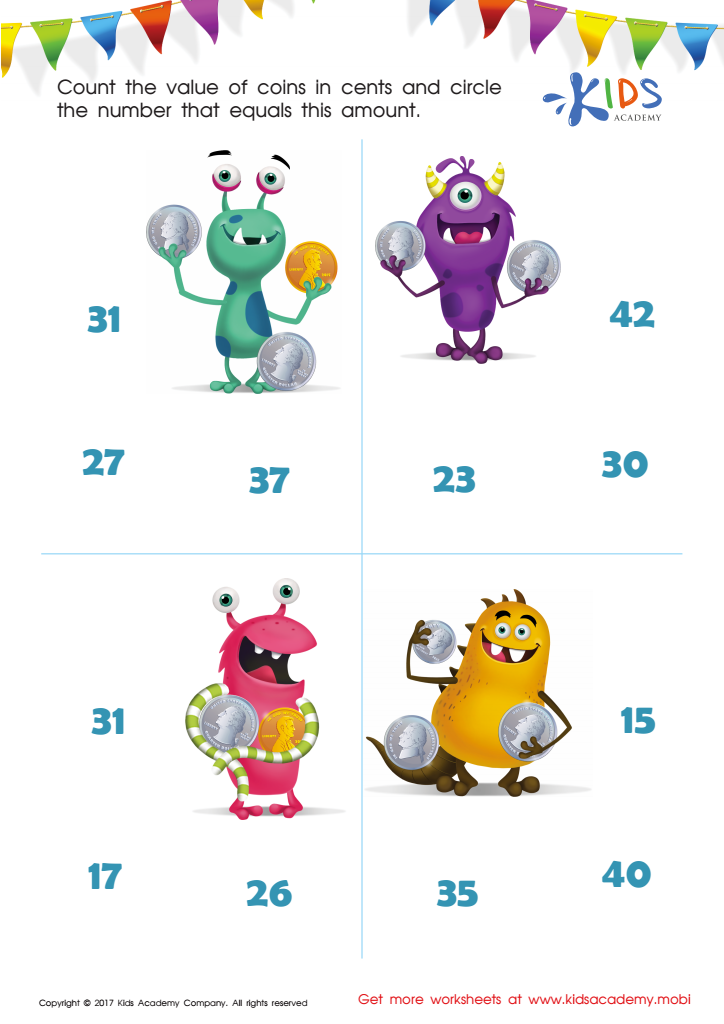
How Many Coins Money Worksheet

Recognizing Money Money Worksheet
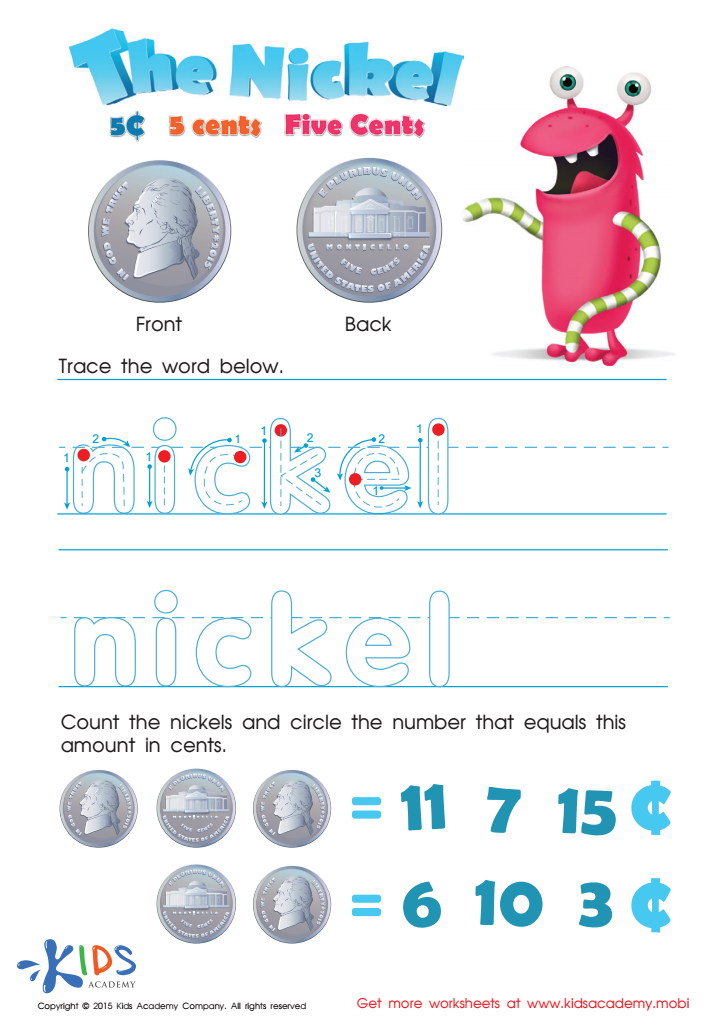
Five Cents or the Nickel Money Worksheet
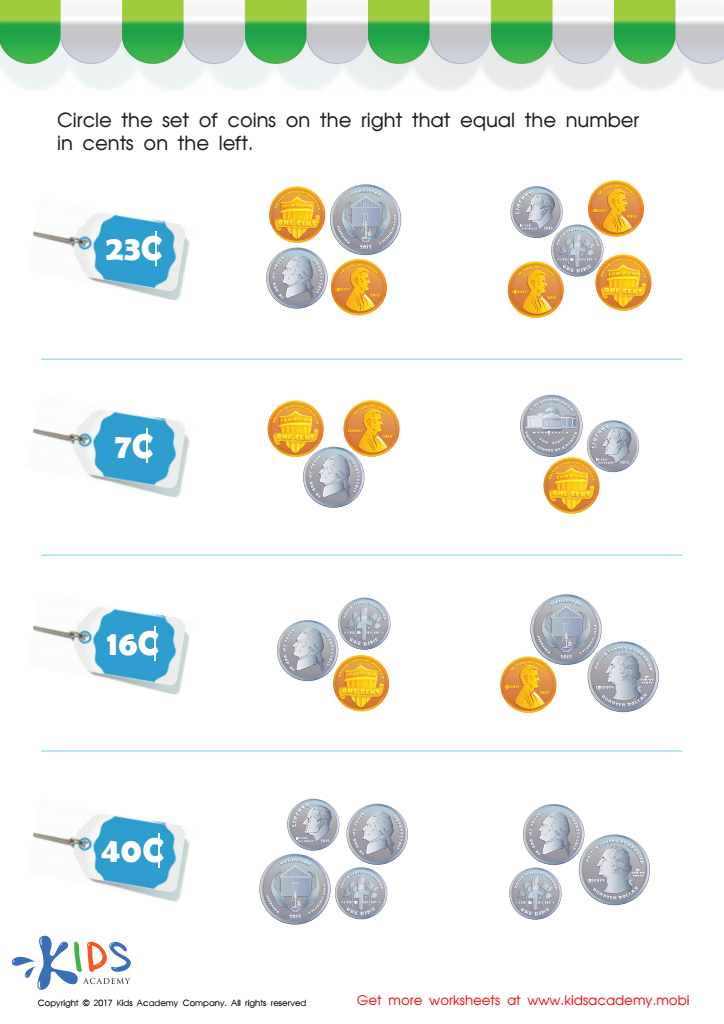
Picking the Coins You Need Money Worksheet








Financial literacy for children aged 4-7 is crucial because it sets the foundation for responsible money management and decision-making later in life. At this early age, children are extremely receptive to learning, and introducing them to basic financial concepts can instill good habits. Understanding simple ideas like saving, spending, earning, and sharing can help children develop a balanced approach to handling money.
By teaching financial literacy early on, we empower kids to make smarter choices and understand the value of money. It helps demystify complex terms and reduces anxiety around money matters as they grow older. Parents and teachers can turn everyday activities, like shopping or playing with pretend money in a game, into educational opportunities that reinforce these concepts.
Moreover, early financial education can foster a sense of responsibility and independence. When children grasp that their choices have financial implications, they become more thoughtful and considerate about spending and saving. This awareness can protect them against pitfalls like debt and impulse buying in adulthood.
In summary, introducing financial literacy at a young age equips children with essential life skills. Parents and teachers play a pivotal role in nurturing these skills, ultimately contributing to the financial well-being and stability of future generations.








