Geographic knowledge Worksheets for Ages 4-7
3 filtered results
-
From - To
Introduce your little explorers to the wonders of the world with our Geographic Knowledge Worksheets for Ages 4-7. These engaging and educational worksheets foster curiosity about different places, cultures, and landscapes. Perfectly tailored for young minds, they enhance critical thinking and social studies skills through fun activities like mapping, landmark identification, and climate exploration. Designed by experts, our worksheets make learning geography an exciting adventure, inspiring kids to discover the diverse world around them. Ideal for preschool to early elementary students, they support classroom learning and beyond. Ignite a lifelong love for geography with our delightful, easy-to-use resources!
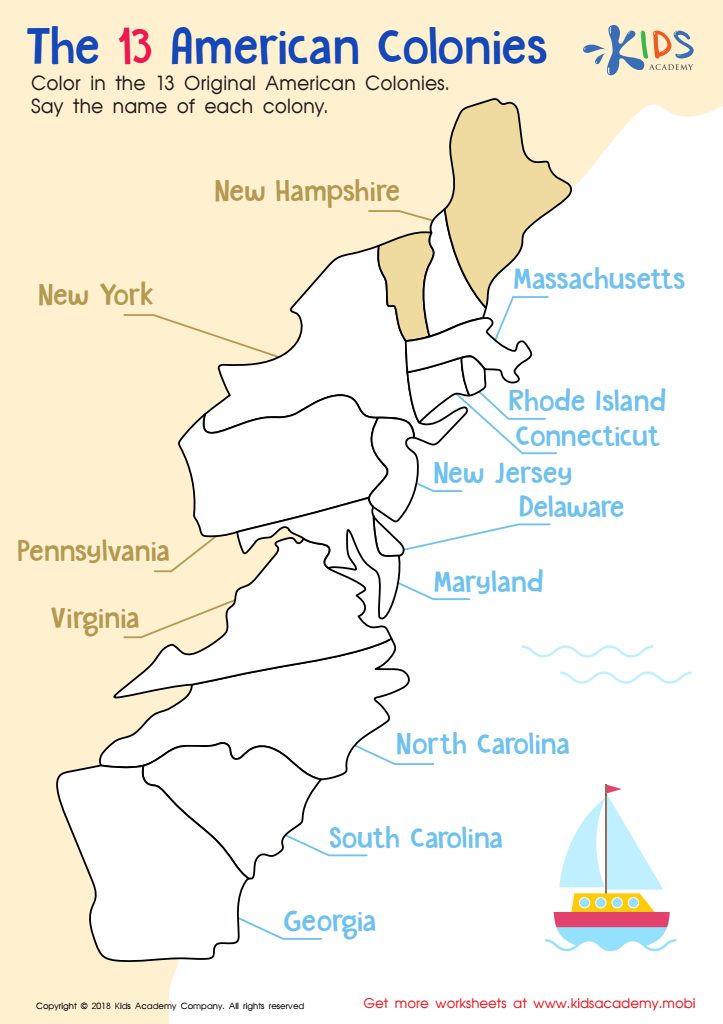
The 13 American Colonies Worksheet
 Assign to My Students
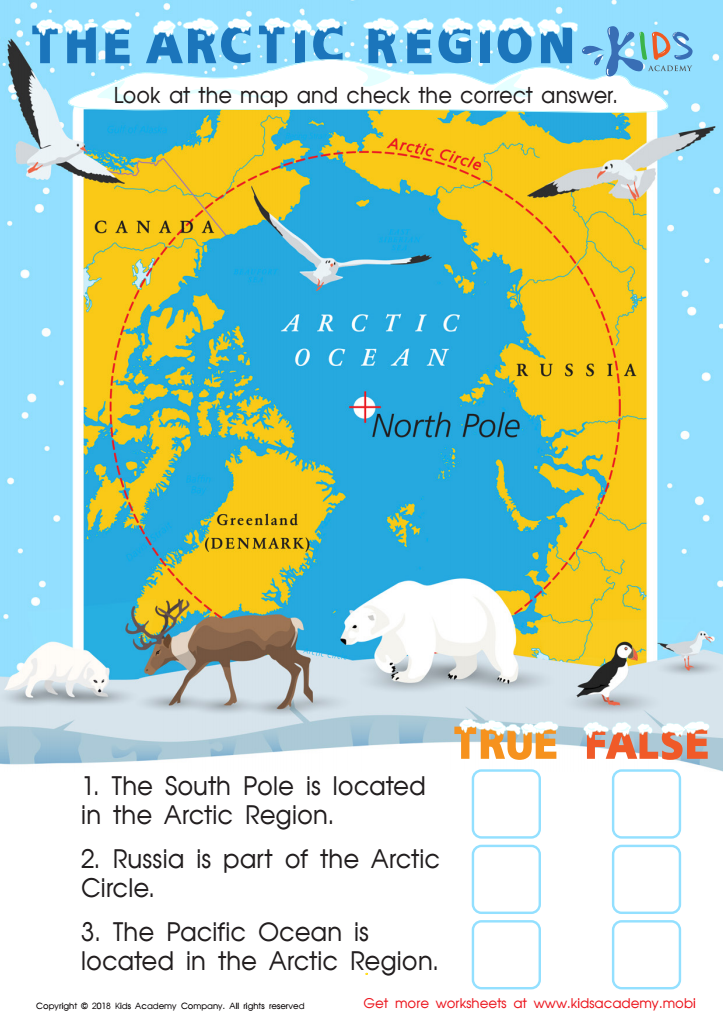
The Arctic Region Worksheet
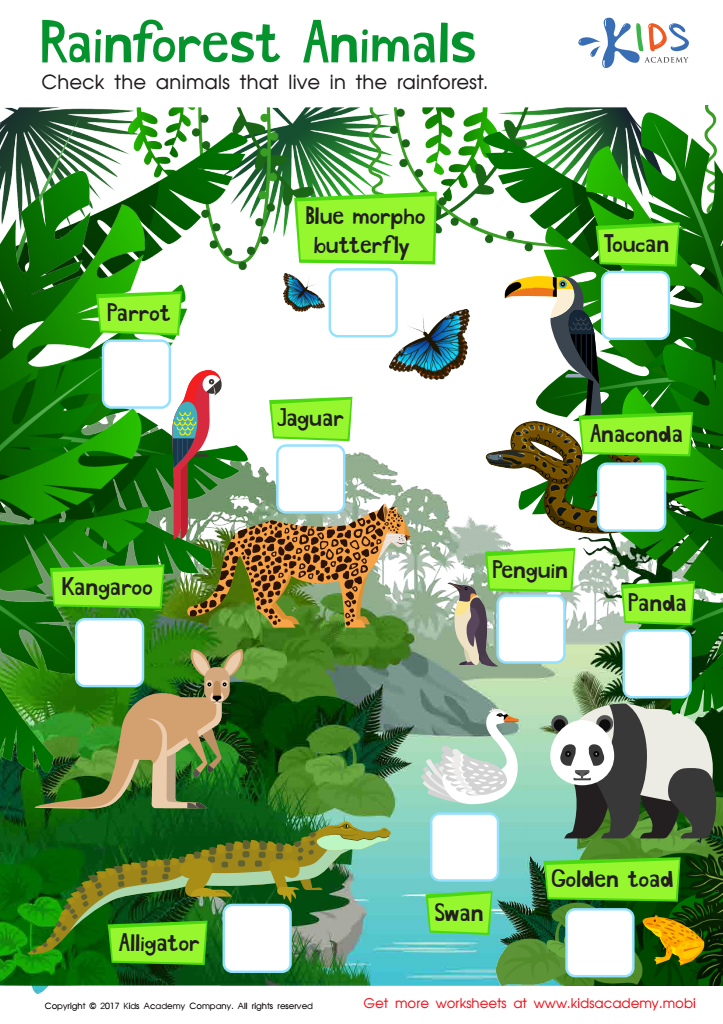
Rainforest Animals Worksheet






Geographic knowledge is foundational for children aged 4-7 as it builds a critical awareness of the world, fostering both cognitive and social development. At this young age, understanding basic geographical concepts helps children grasp spatial relationships—concepts such as near, far, above, below, and around. This spatial awareness enhances their problem-solving skills and aids in the development of math and science abilities, acting as a building block for future academic learning.
Geography education encourages curiosity and exploration, key elements in cognitive development. Learning about different landscapes, cultures, and environments broadens children’s understanding of diversity, promoting empathy and social awareness. They begin to appreciate the interrelated nature of communities and environments, which is crucial for fostering global citizenship from a young age.
Moreover, engaging with maps and globes helps young learners develop fine motor skills, visual literacy, and even language skills through the introduction of new terminologies and concepts. Activities like drawing maps or tracing routes strengthen memory and logical thinking.
In conclusion, nurturing geographic knowledge in early childhood lays a strong foundation for academic achievement, improves cognitive and social skills, and fosters a sense of empathy and responsibility towards our global community. Such early education ensures well-rounded, informed individuals prepared to navigate a complex world.








