
Improve problem-solving abilities Worksheets for Ages 4-7
3 filtered results
Difficulty Level
Grade
Age
-
From - To
Subject
Activity
Standards
Enhance your child's critical thinking and analytical skills with our "Improve Problem-Solving Abilities Worksheets for Ages 4-7." Carefully designed by experts, these engaging worksheets focus on developing essential problem-solving techniques, from identifying patterns and sequences to mastering basic math concepts. Perfect for early learners, the activities are both fun and educational, encouraging kids to think creatively and logically. Whether at home or in the classroom, these printables will help your little one gain confidence and proficiency in solving problems, setting a solid foundation for future academic success. Explore now and empower your child’s learning journey!
Favorites
With answer key
Interactive
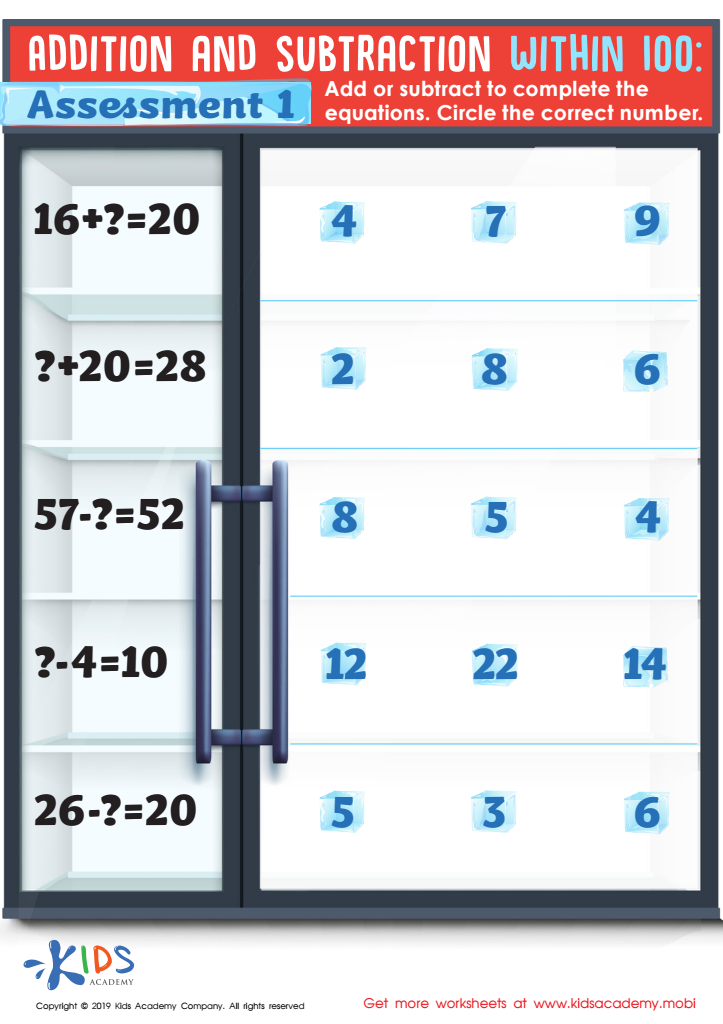
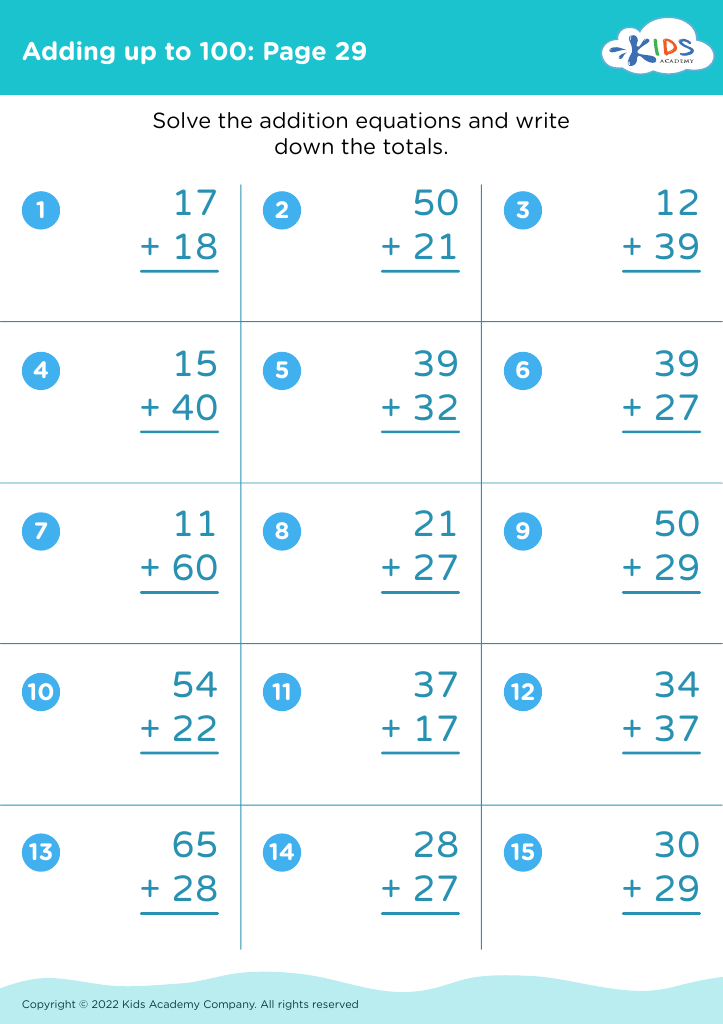
Addition and Subtraction within 100: Assessment 1 Worksheet
Encourage your kids to practice math with determination, diligence and repetition. Give them a worksheet to help develop their addition and subtraction skills. Have them add or subtract equations and circle the right answer. Through this exercise, they'll be able to master math.
 Assign to My Students
Addition and Subtraction within 100: Assessment 1 Worksheet
Worksheet
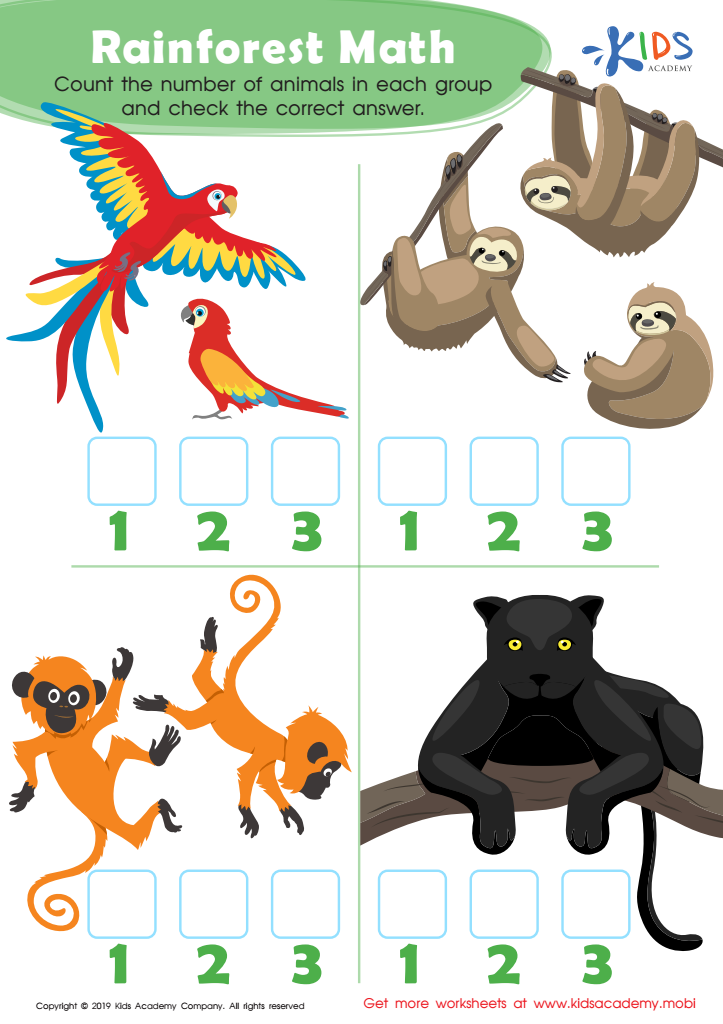
Rainforest Math Worksheet
Kids love learning about rainforest animals! This worksheet helps them with counting and number sense. It features recognizable rainforest animals and asks children to choose the correct number from the answer choices. It's a fun way for children to build their skills - without even knowing it!
Rainforest Math Worksheet
Worksheet
Join Kids Academy for Free
Who is primarily going to use this learning content?








Parents and teachers should care about improving problem-solving abilities for children ages 4-7 because these skills are fundamental for their cognitive development and overall success in life. During this critical developmental period, children are naturally curious and willing to explore solutions to problems they encounter. Cultivating problem-solving skills early on helps them approach challenges with confidence and perseverance, both essential traits for academic and personal success.
Improving problem-solving abilities enhances critical thinking, creativity, and independence. For instance, when children figure out puzzles, navigate social conflicts, or find new ways to accomplish tasks, they develop resilience and adaptability. These experiences build a foundation for higher-order thinking, which is essential for subjects like math, science, and reading comprehension later in their educational journey.
Additionally, fostering problem-solving skills in young children supports their social-emotional development. By working through problems with peers and adults, children learn collaboration, communication, and empathy. These interpersonal skills are vital for creating healthy relationships and functioning effectively in group settings.
In summary, nurturing problem-solving abilities in early childhood sets the stage for lifelong learning and success. It equips children with the tools to tackle complex problems, fosters independence, and supports emotional and social well-being, making it an essential focus for parents and educators alike.








