
Improve spelling skills Worksheets for Ages 4-7
3 filtered results
Difficulty Level
Grade
Age
-
From - To
Subject
Activity
Standards
Boost your child's spelling abilities with our engaging worksheets designed for ages 4-7! Our collection features vibrant, interactive activities that make learning fun and effective. Each worksheet is tailored to support early literacy development, helping young learners recognize letters, sounds, and words while enhancing their vocabulary. From tracing and matching to fill-in-the-blank challenges, these resources cater to various learning styles and help build confidence in spelling. Perfect for classroom use or at-home practice, our worksheets ensure foundational skills are solidified in a playful and stimulating way. Discover the joy of learning with our Improve Spelling Skills worksheets today!
Favorites
With answer key
Interactive
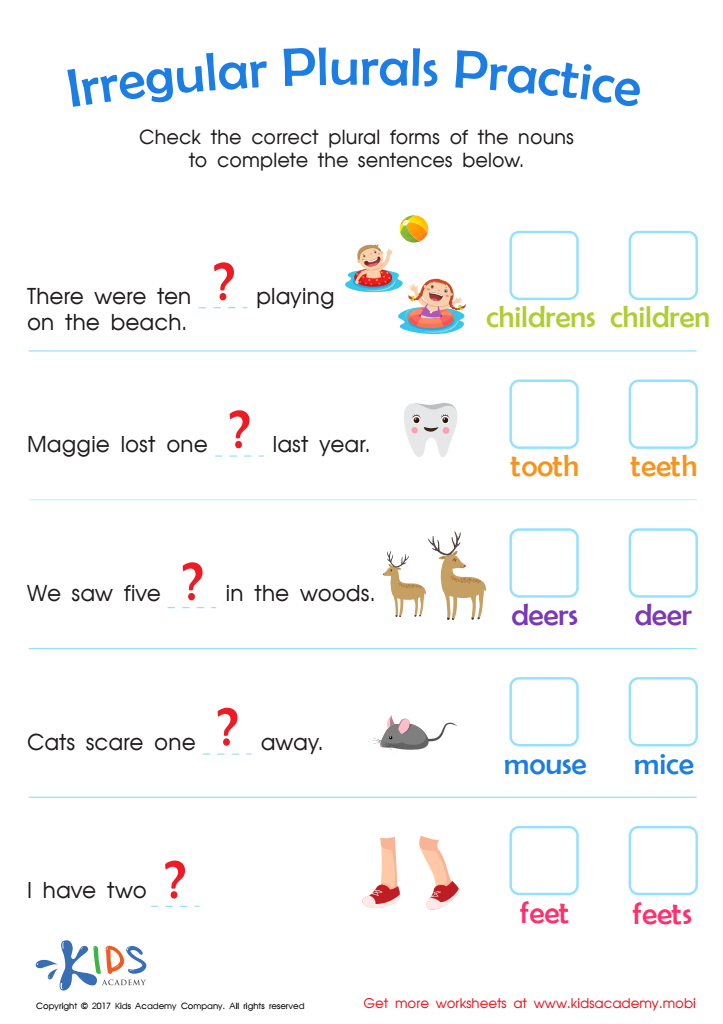
Irregular Plural Nouns Worksheet
This worksheet for 2nd graders offers an engaging activity for practicing irregular nouns by choosing the right option. It covers the most common irregular plurals, making it a quick, easy, and effective way to learn.
Irregular Plural Nouns Worksheet
Worksheet
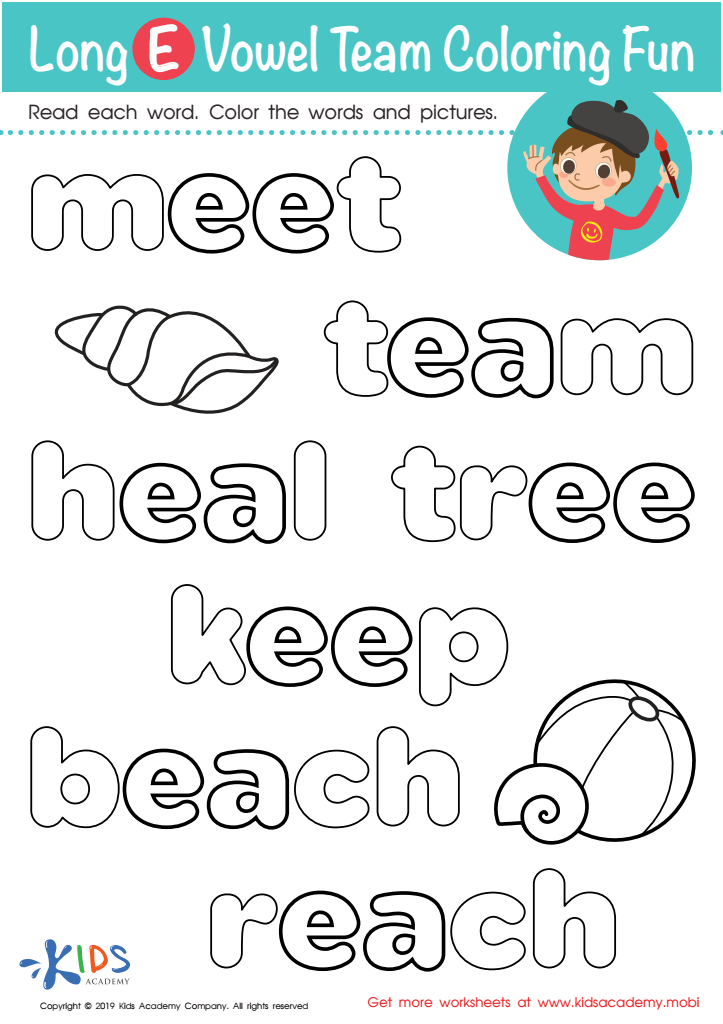
Long E Vowel Team Coloring Worksheet
Divide your students into teams and have them read words with long E sounds, such as "meet" and "team." Let them recognize that the sound can be created with either "ee" or "ea" letter pairings. Then, have the teams color words and pictures with the appropriate letters. This will make your phonics lesson fun and effective.
Download (PDF)
 Assign to My Students
Assign to My Students
Long E Vowel Team Coloring Worksheet
Worksheet
Join Kids Academy for Free
Who is primarily going to use this learning content?








Improving spelling skills for children aged 4-7 is crucial for their overall development and academic success. During these formative years, children are developing essential literacy skills that form the foundation of their reading and writing abilities. Mastering spelling helps them communicate effectively, express their thoughts clearly, and build confidence in their language use.
When children learn to spell, they also enhance their phonetic awareness and understanding of language structure, improving both decoding and encoding skills. This knowledge not only assists in reading comprehension but also promotes a love for reading, as children can confidently tackle new words without fear.
Additionally, strong spelling skills build a sense of accomplishment—encouraging children to write more and explore their creativity. It equips them with the necessary tools to convey ideas and stories, fostering communication skills that are vital for social interaction and academic collaboration.
For teachers and parents, implementing effective spelling instruction—including engaging activities and tools—reinforces these skills. A supportive environment for spelling practice promotes self-esteem and reinforces the importance of literacy in children's lives, ultimately shaping their educational journeys and lifelong learning habits. Investing in spelling education lays a critical groundwork for future academic achievements.








