
Learning subtraction Worksheets for Ages 4-7
4 filtered results
Difficulty Level
Grade
Age
-
From - To
Subject
Activity
Standards
Explore our engaging and free subtraction worksheets designed for children aged 4-7! Perfect for early learners, these printable resources make mastering subtraction fun and interactive. With colorful designs, captivating illustrations, and varied activities, our worksheets encourage young students to develop foundational math skills at their own pace. From simple visual aids to more challenging problems, each activity helps reinforce the concept of subtraction through hands-on practice. These resources are ideal for both classroom settings and at-home learning. Start your child’s math journey today, and watch their confidence grow as they conquer subtraction!"
Favorites
With answer key
Interactive
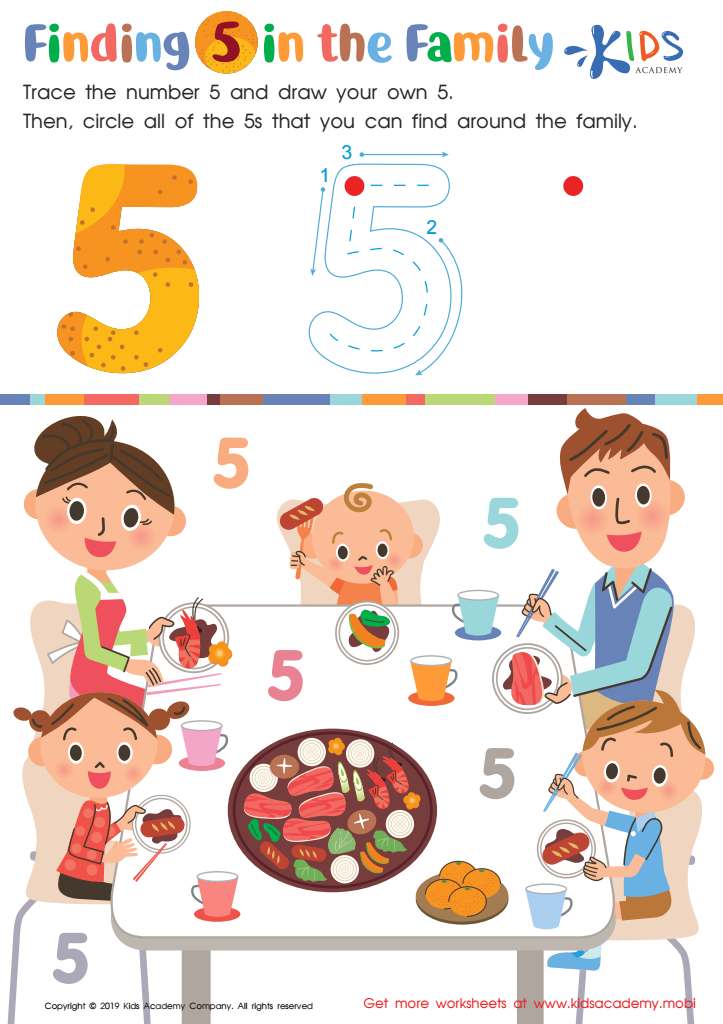
Finding 5 in the Family Worksheet
This worksheet helps kids identify and write the number 5. Ask what the family is doing and who the family members are. Help them trace and draw the 5, then have them circle all 5s in the picture.
 Assign to My Students
Finding 5 in the Family Worksheet
Worksheet
Join Kids Academy for Free
Who is primarily going to use this learning content?







Learning subtraction is a crucial skill for children aged 4-7 as it lays the foundation for their mathematical understanding and overall cognitive development. At this age, children's brains are highly receptive to new concepts, making it an ideal time to introduce foundational math skills. Subtraction helps them understand the concept of taking away, which is essential for everyday situations, such as sharing, problem-solving, and making decisions.
Fostering an ability to subtract not only enhances numeracy but also boosts critical thinking and logical reasoning. Engaging in subtraction activities can improve fine motor skills through the use of manipulatives, such as counters or blocks, making math tangible and relatable. Additionally, mastering subtraction promotes confidence in young learners, as they begin to see themselves as capable mathematicians.
Parents and teachers should recognize that subtraction is not just a standalone skill; it connects to addition, place value, and more complex math in the future. By supporting children in this early stage, they can set up a positive attitude toward math, which is vital for academic success in later years. Ultimately, caring about subtraction means investing in a child's overall educational journey and equipping them with essential tools for life's challenges.








