Long vowel recognition Worksheets for Ages 4-7
3 filtered results
-
From - To
Help your child master essential reading skills with our Long Vowel Recognition Worksheets for Ages 4-7 at Kids Academy! These educator-designed worksheets make learning fun and effective by incorporating engaging activities and colorful illustrations. Perfect for preschoolers and early elementary students, our worksheets focus on identifying and pronouncing long vowels through playful exercises like matching, tracing, and filling in the blanks. Boost your child's phonemic awareness, enhance their reading abilities, and build a strong literacy foundation with our comprehensive long vowel worksheets. Explore our collection today and set your child on the path to reading success!
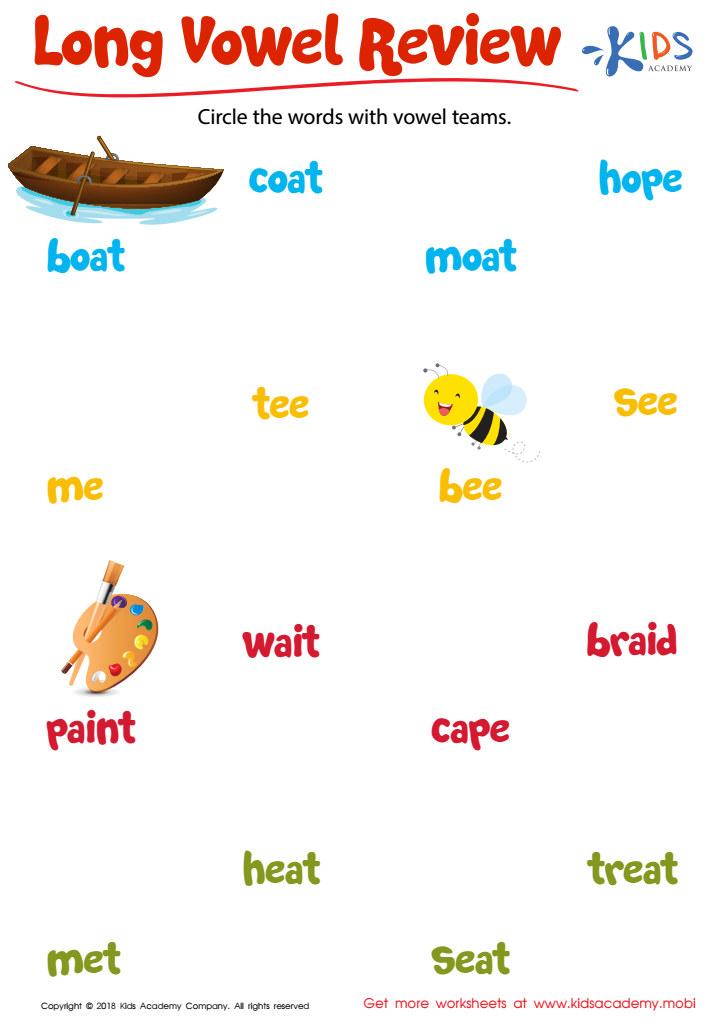
Long Vowel Review Worksheet
 Assign to My Students
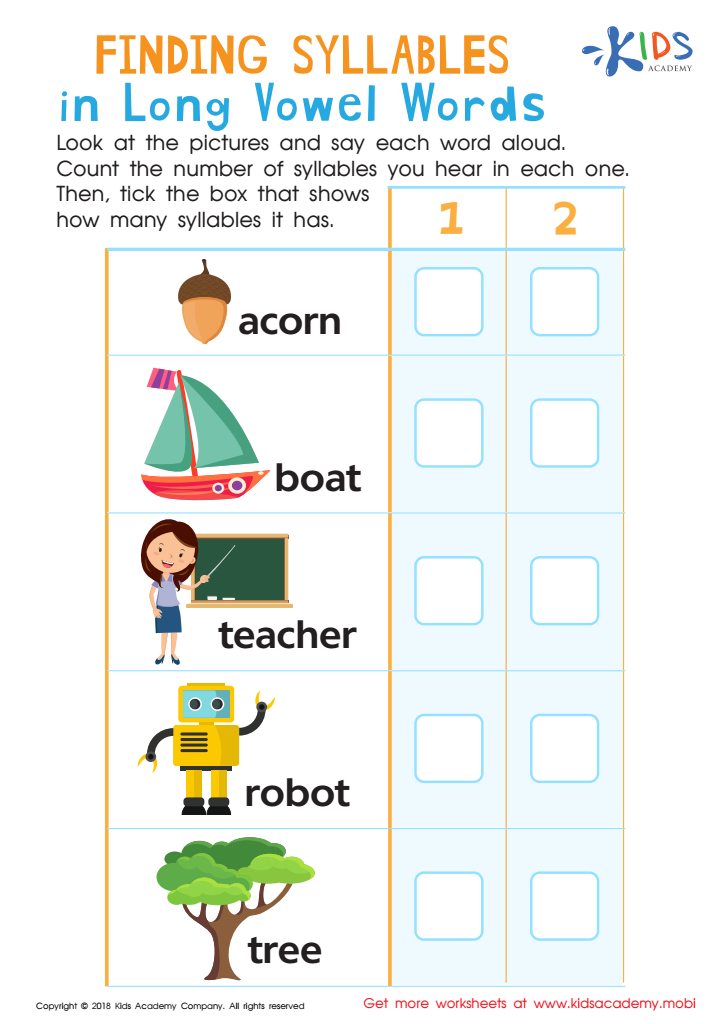
Finding Syllables in Long Vowel Words Worksheet
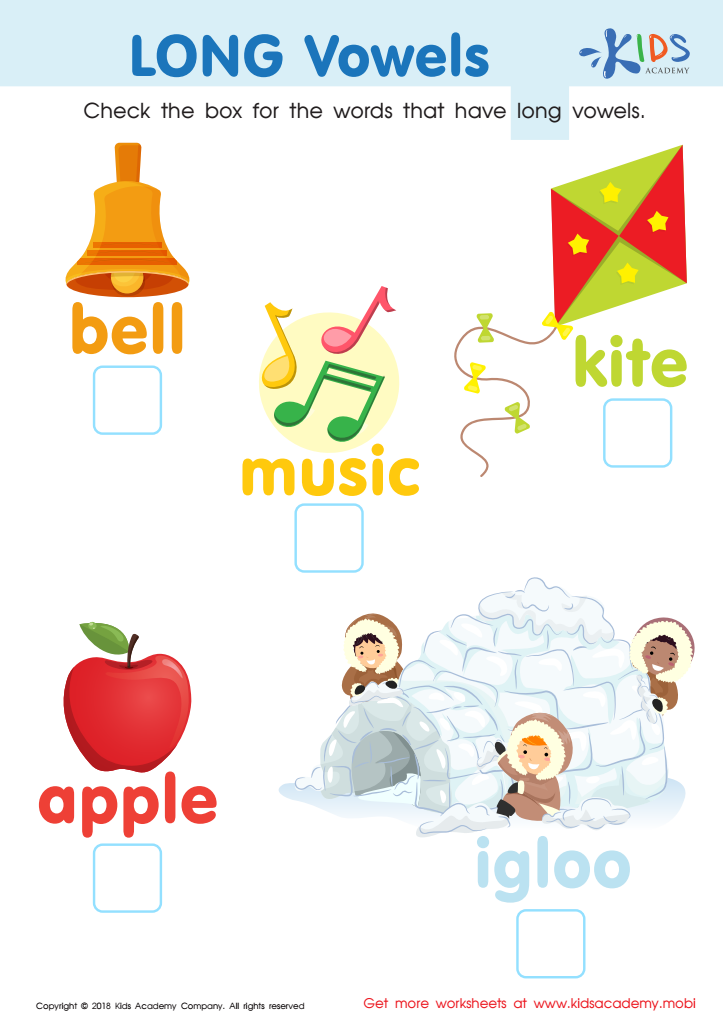
long vowels Worksheet







Long vowel recognition is a crucial building block in early literacy for children ages 4-7. Recognizing long vowels, which say their name, helps children distinguish between different sounds in words, enabling accurate pronunciation, reading, and spelling. This early phonemic awareness lays the foundation for fluent reading skills, essential for academic success across all subjects.
When children recognize long vowels, they gain confidence in decoding new words, enhancing their reading speed and comprehension. Misunderstanding vowel sounds can lead to reading difficulties, where children might guess words based on initial consonants rather than actually reading them. This can cause issues as texts become more complex. Understanding long vowels helps children grasp spelling patterns as well, making it easier to write accurately.
For parents and teachers, investing time in teaching long vowel sounds means guiding children towards literacy independence. Engaging in practices like phonics games, repetitive reading, and reinforced learning through writing, supports children's ability to connect spoken language with written text. Early success in reading fosters a positive attitude towards learning and school, engenders curiosity, and establishes a strong mental framework for absorbing new information. Therefore, focusing on long vowel recognition during these formative years is instrumental in creating confident, competent readers and lifelong learners.








