Mental math development Worksheets for Ages 4-7
3 filtered results
-
From - To
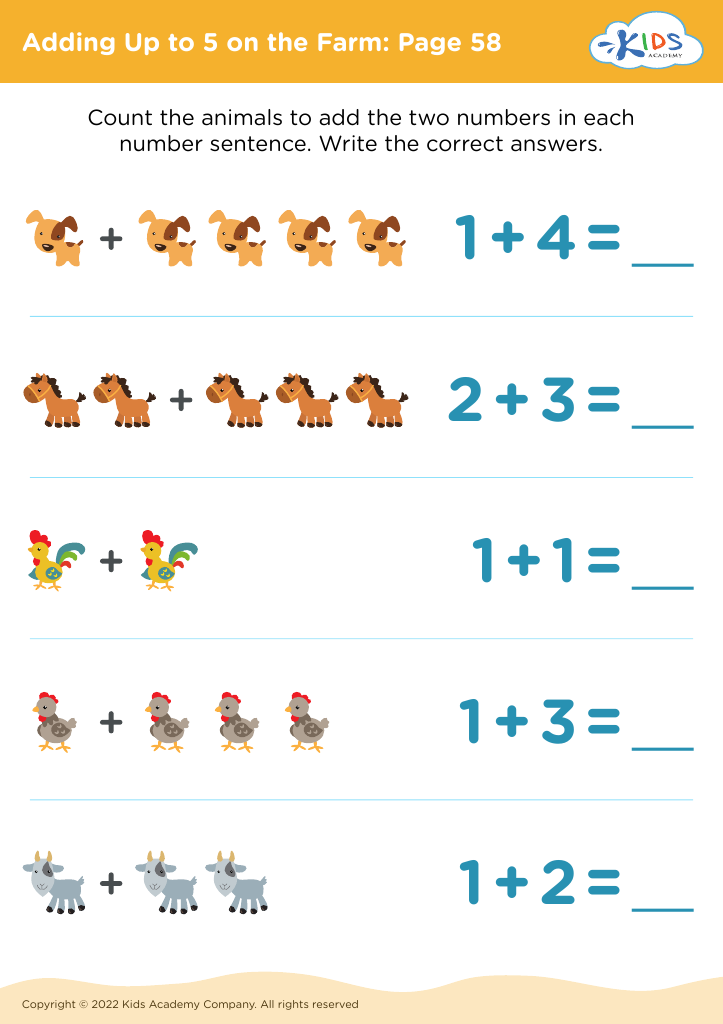
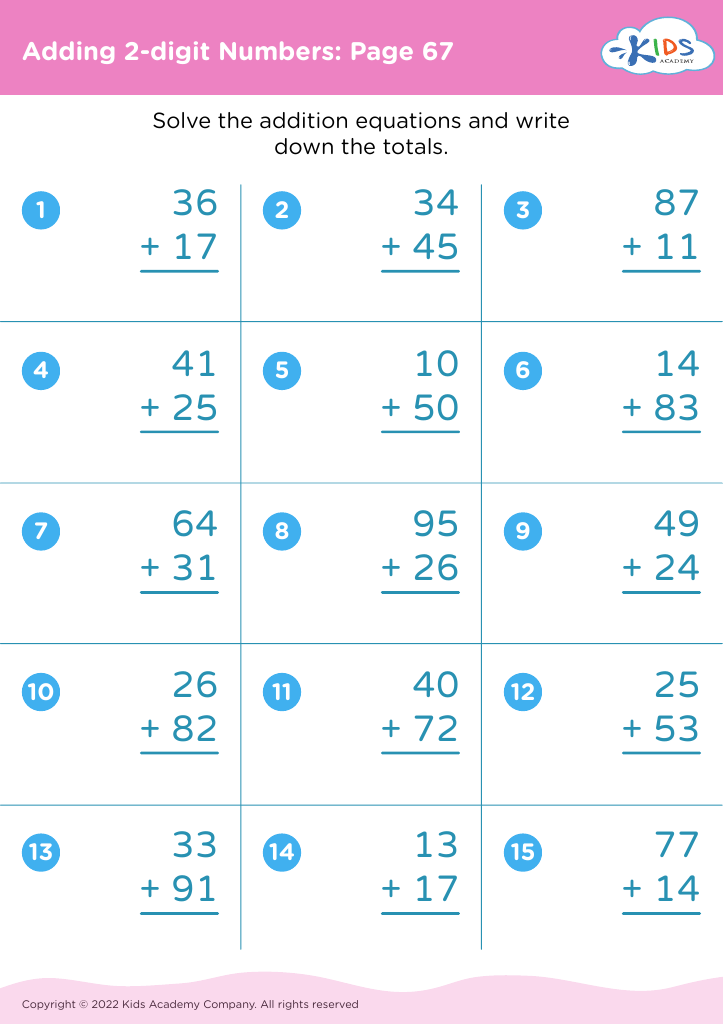
Unlock your child's mathematical potential with our engaging Mental Math Development Worksheets, tailored for ages 4-7! These worksheets are designed to strengthen early arithmetic skills through fun and interactive activities. Young learners will explore addition, subtraction, counting, and number recognition, all while building confidence in their math abilities. Each worksheet promotes critical thinking and enhances problem-solving skills, catering to varied learning styles. Ideal for at-home learning or classroom use, these resources provide a solid foundation for future math success. Download our Mental Math Development Worksheets today and watch your child shine in their mathematical journey! Perfect for parents and educators alike!
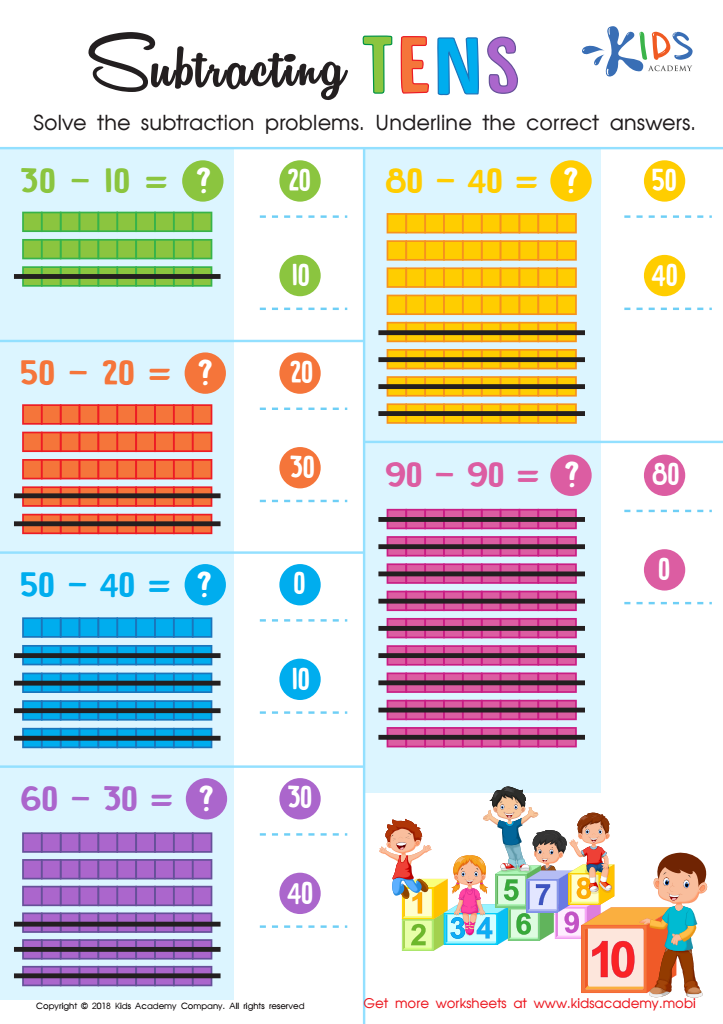
Subtracting Tens Worksheet
 Assign to My Students







Mental math development is crucial for children aged 4-7 as it lays the foundation for their future mathematical understanding and problem-solving skills. During these formative years, children are naturally curious and capable of learning abstract concepts. Mental math enhances their cognitive abilities, allowing them to grasp numbers and relationships without relying on calculators or written methods.
By fostering mental math skills, parents and teachers help children build confidence in their mathematical abilities, which can translate into better performance in school. Engaging in mental math encourages number sense, allowing children to see patterns and make connections, which supports overall mathematical literacy.
Additionally, developing these skills at an early age can prepare children for future academic challenges, as mental arithmetic is essential for real-world applications, such as budgeting and measurement. Introducing fun mental math activities, such as games and daily life situations, makes learning enjoyable and encourages a positive attitude towards math.
Ultimately, prioritizing mental math development equips children with critical thinking skills, enhances their ability to tackle complex problems later in life, and instills a lifelong love for learning. Investing time and effort into this area can yield significant benefits for children’s psychological and academic growth.








