Phonemic awareness Worksheets for Ages 4-7
3 filtered results
-
From - To
Enhance your child's phonemic awareness with our engaging worksheets designed for ages 4-7! Our comprehensive resources focus on critical skills such as sound recognition, segmentation, blending, and manipulation. Each worksheet features fun, age-appropriate activities that captivate young learners while fostering essential literacy skills. Perfect for both classroom settings and at-home learning, these printable worksheets support your child's reading journey and boost their confidence in language. With colorful illustrations and interactive exercises, our phonemic awareness worksheets ensure that learning is enjoyable and effective. Help your child build a strong foundation in reading with our expertly crafted educational tools today!
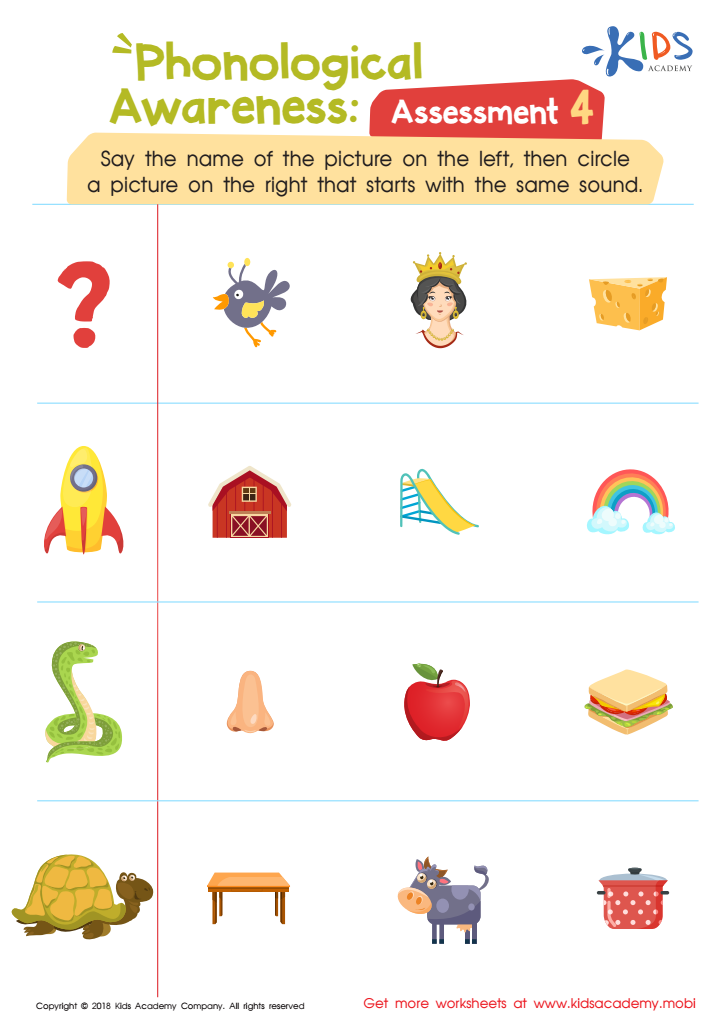
Phonological Awareness: Assessment 4 Worksheet
 Assign to My Students
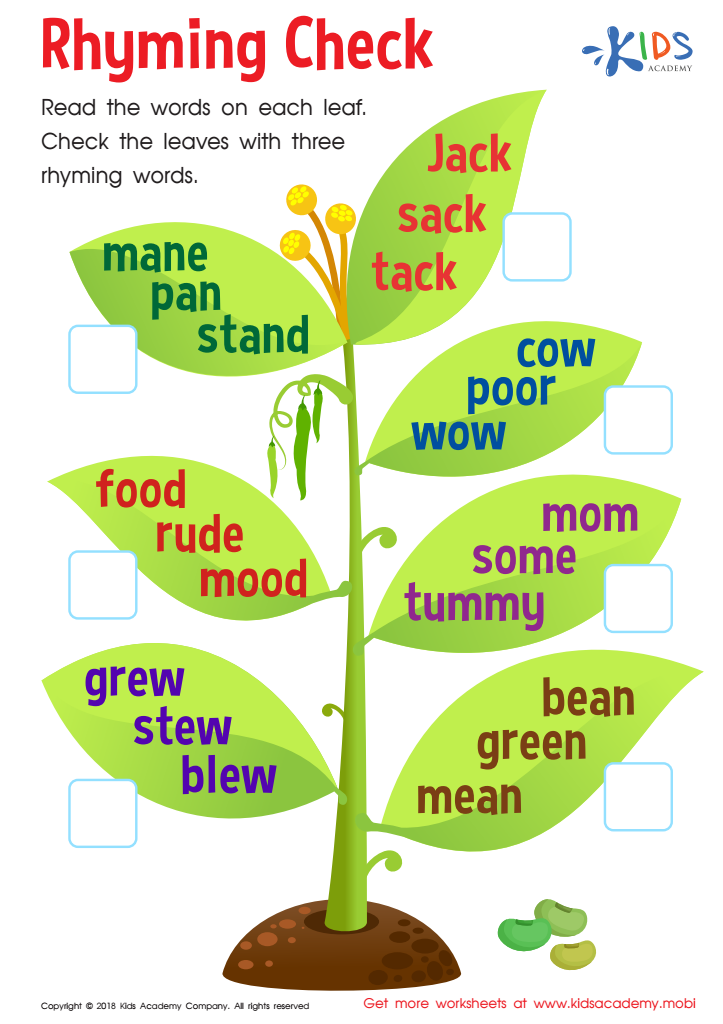
Rhyming Check Worksheet
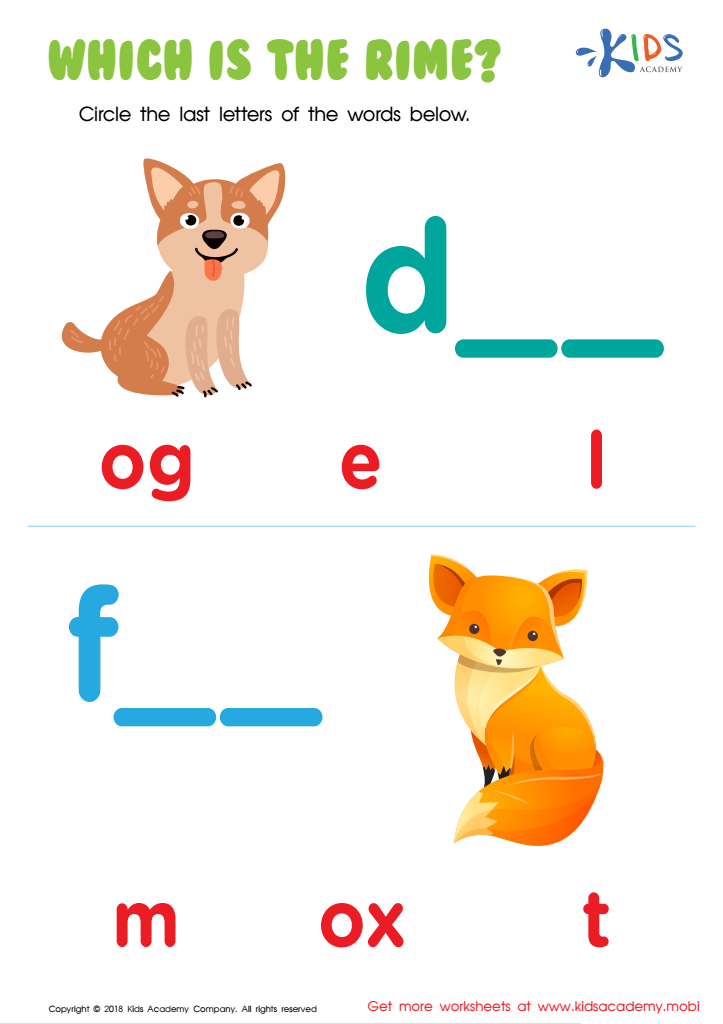
Which Is the Rime? Worksheet







Phonemic awareness is a crucial building block in early literacy development for children aged 4-7. As the ability to hear, identify, and manipulate individual sounds in spoken words, it lays the foundation for reading skills. Parents and teachers should care about phonemic awareness because it significantly impacts children’s future academic success.
Children with strong phonemic awareness are better equipped to decode words, which helps them become proficient readers. This skill unlocks a love for reading and enhances vocabulary development, comprehension, and writing abilities. When children can break down words into their constituent sounds, they gain confidence, making reading a less daunting task and fostering a lifelong enthusiasm for learning.
Early focus on phonemic awareness prepares children for more complex literacy skills and reduces the risk of reading difficulties later on. Engaging in phonemic activities—such as rhyming, sound games, and-letter blending—can be both fun and educational, promoting positive parent-child or teacher-student interactions.
Ultimately, by prioritizing phonemic awareness, parents and teachers are investing in children’s futures, establishing essential skills that not only benefit literacy but also overall cognitive development and language proficiency.








