Recognizing equivalent fractions Worksheets for Ages 4-7
5 filtered results
-
From - To
Welcome to our "Recognizing Equivalent Fractions" worksheets designed specifically for children ages 4-7! These engaging and interactive worksheets help young learners grasp the concept of equivalent fractions in a fun and accessible way. With colorful visuals and guided exercises, your child will develop critical math skills while enhancing their understanding of fractions. These resources are perfect for both classroom use and at-home learning, encouraging independent practice and boosting confidence. Explore our diverse activities that cater to different learning styles and ensure your child enjoys mastering equivalent fractions. Dive into a world of math fun today! Perfect for early math learners!
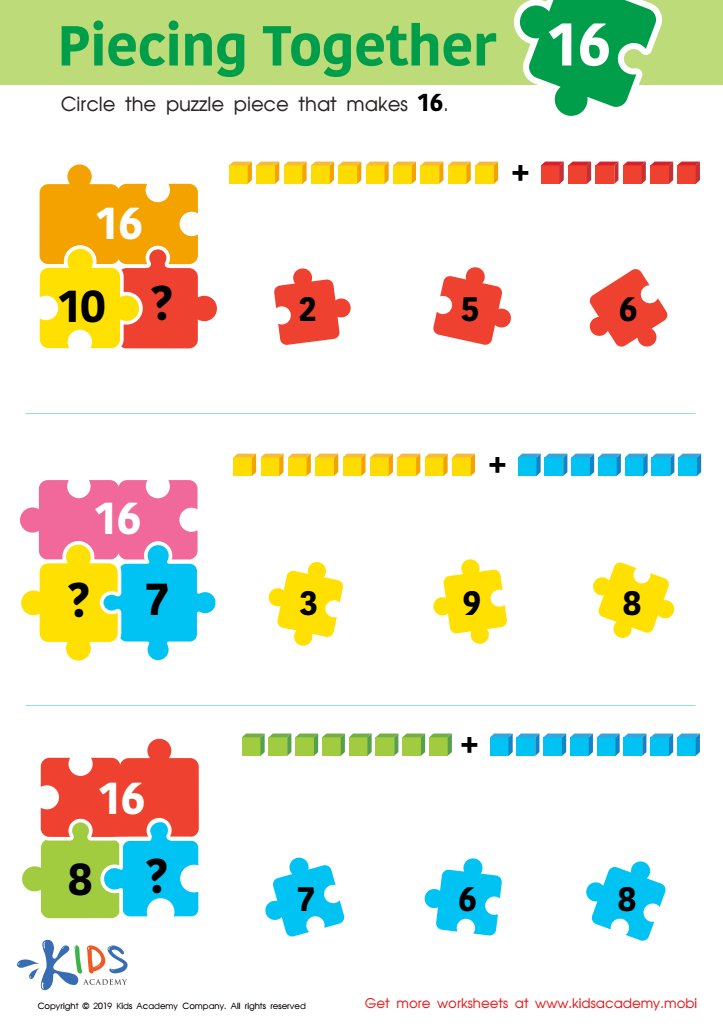
Piecing Together 16 Worksheet
 Assign to My Students




Recognizing equivalent fractions is a foundational skill for young learners aged 4 to 7, as it lays the groundwork for more complex mathematical concepts later on. Understanding equivalent fractions helps children grasp the idea that different representations can denote the same quantity. This concept encourages flexibility in thinking and problem-solving skills, essential for success in mathematics and everyday life.
Parents and teachers should care about this developmental stage because fostering an early understanding of equivalence nurtures confidence in children as they encounter math challenges. This skill not only supports their arithmetic abilities but also encourages logical reasoning, pattern recognition, and critical thinking.
By incorporating activities such as visual aids, concrete manipulatives like pizza slices or pie charts, and engaging games, educators and parents can make learning about fractions enjoyable and relatable. Recognizing equivalent fractions builds a bridge between simple counting and more complex arithmetic operations, ensuring that students stay interested and knowledgeable. Ultimately, a strong grasp of equivalence will empower young learners to approach fractions, ratios, and proportional reasoning with confidence as they progress in their educational journey.








