
Rhythm understanding Worksheets for Ages 4-7
3 filtered results
Difficulty Level
Grade
Age
-
From - To
Subject
Activity
Standards
Boost your child’s musical foundation with our Rhythm Understanding Worksheets for Ages 4-7! Designed to engage young learners, these worksheets introduce essential rhythm concepts through fun and interactive activities. Your child will explore patterns, beats, and musical notes, helping to enhance their auditory skills and promote an early love for music. Each worksheet is crafted to encourage creativity and foster an appreciation for rhythm through playful exercises and vibrant graphics. Ideal for home or classroom use, our resources make learning rhythmic patterns enjoyable and effective. Nurture your child's musical talent and set them on a path to rhythmic mastery today!
Favorites
With answer key
Interactive
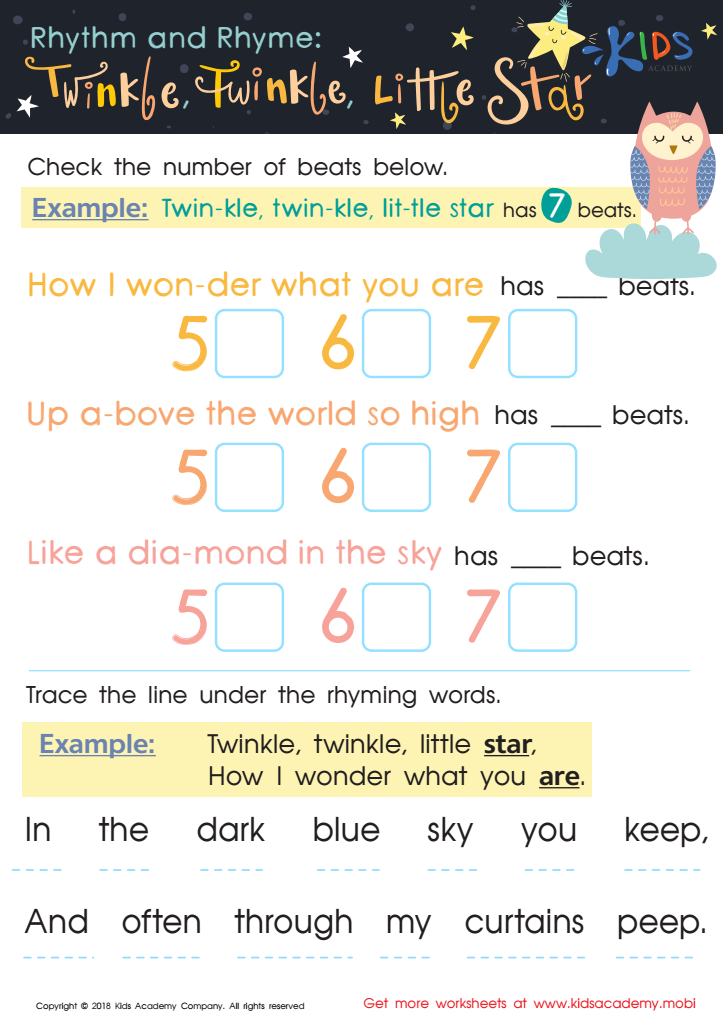
Rhythm and Rhyme: Twinkle, Twinkle, Little Star Worksheet
Kids will love learning about syllables in words with a fun children's song! Use the song Twinkle, Twinkle, Little Star to explain that each word has at least one beat. Have them clap out the beats in each word and check the boxes on this cute worksheet to identify the syllables.
 Assign to My Students
Rhythm and Rhyme: Twinkle, Twinkle, Little Star Worksheet
Worksheet
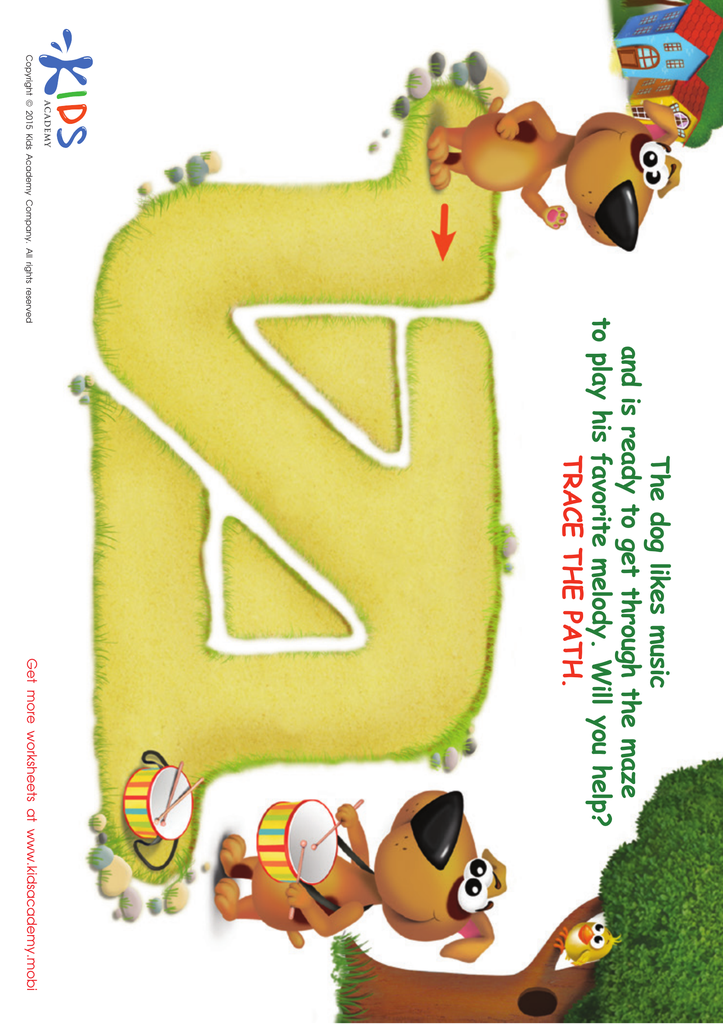
Drummer Maze Worksheet
Enjoy!
Kids Academy's new maze games are perfect for you and your little learners. Help the dog find the drum at the end of the maze! Once they reach it, you can play music together. Visit Kids Academy's website to find free printable mazes and other worksheets. Have fun!
Drummer Maze Worksheet
Worksheet
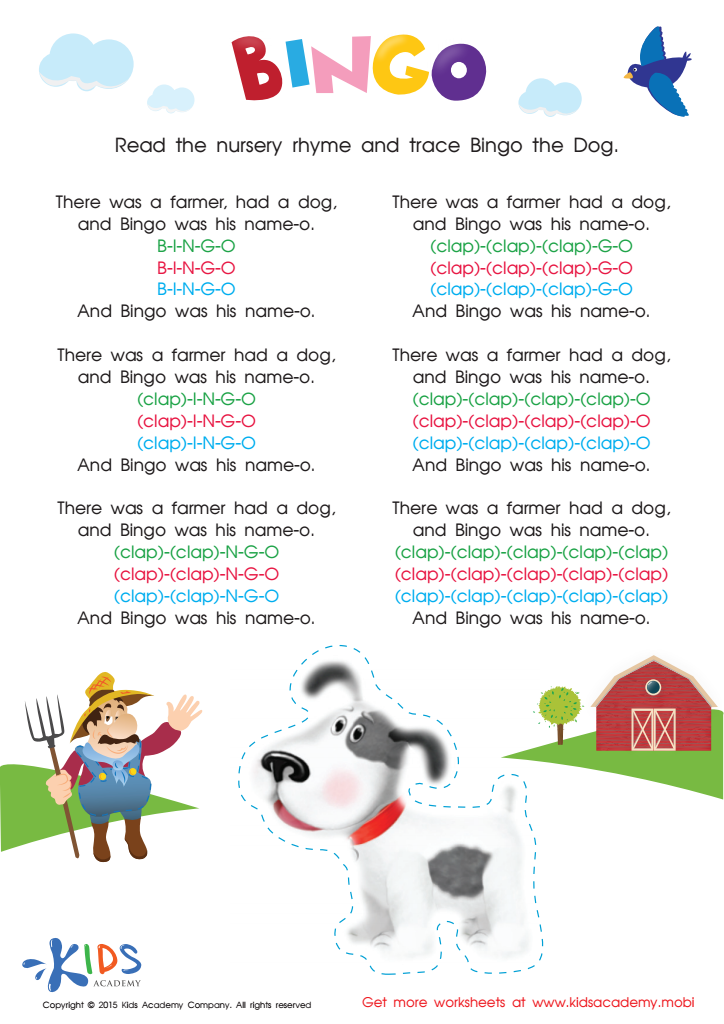
Nursery Rhymes: The Bingo Song Worksheet
Introduce The Bingo Song to your little ones. Have your kids sing some words and lines aloud, while you replace letters with claps. Add other activities: tapping, patting, jumping, and use your imagination. Print our free Bingo Song Coloring Pages and let your kids color them. Get more free worksheets at our website Kids Academy.
Nursery Rhymes: The Bingo Song Worksheet
Worksheet
Join Kids Academy for Free
Who is primarily going to use this learning content?








Understanding rhythm is crucial for children aged 4-7, as it plays a significant role in their overall development. At this age, children are in a critical stage for acquiring fundamental auditory and motor skills. Rhythm is not only a component of music but also influences language development, reading skills, and cognitive processing. Engaging with rhythm helps children enhance their listening abilities and phonemic awareness, which are essential for learning to read and write.
Moreover, rhythm activities, including clapping, dancing, and playing instruments, promote physical coordination and motor skills. These activities encourage body awareness and spatial orientation, essential for later skills in sports and other physical activities. Rhythm also promotes social skills, as group participation in musical activities fosters teamwork and communication.
For parents and teachers, nurturing rhythm understanding can create a joyful learning environment that encourages creativity and self-expression. By integrating rhythm into daily routines and educational practices, caregivers can help children build confidence and lay the groundwork for lifelong enjoyment and appreciation of music and movement. In summary, enhancing rhythm understanding in young children contributes significantly to their emotional, cognitive, and social development, making it a vital focus for parents and educators alike.








