Solve word problems Worksheets for Ages 4-7
3 filtered results
-
From - To
Welcome to our Solve Word Problems Worksheets for Ages 4-7! Designed to engage young learners, these worksheets help children develop critical thinking and problem-solving skills through age-appropriate, fun scenarios. From simple addition and subtraction to real-life problems involving objects and numbers, these activities promote mathematical understanding in a playful way. Our worksheets align with early education standards, ensuring that your child grasp essential concepts while enjoying the learning process. Ideal for classroom use or at-home practice, you'll find a variety of problems to challenge and inspire young minds. Let’s make math exciting and enjoyable for your little ones!
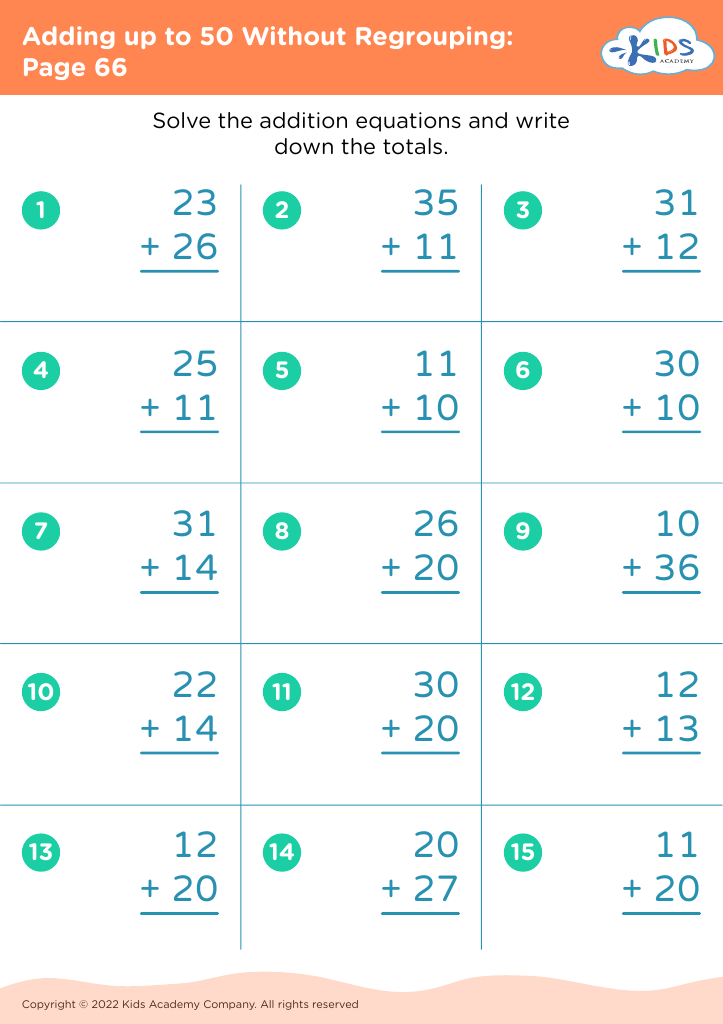
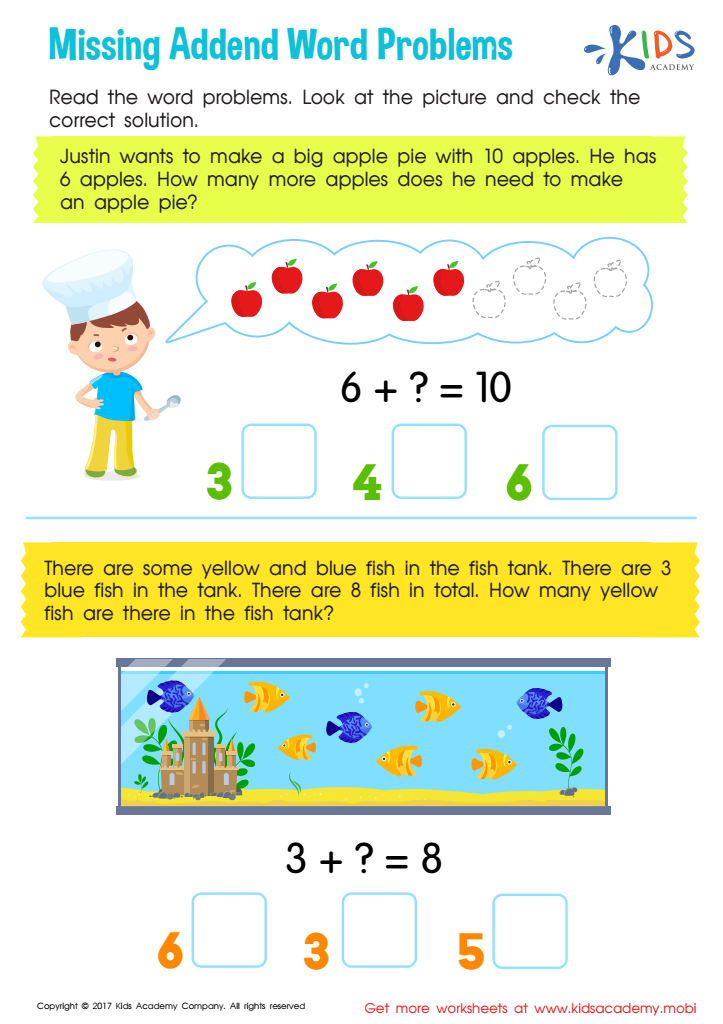
Missing Addend Word Problems Worksheet
 Assign to My Students
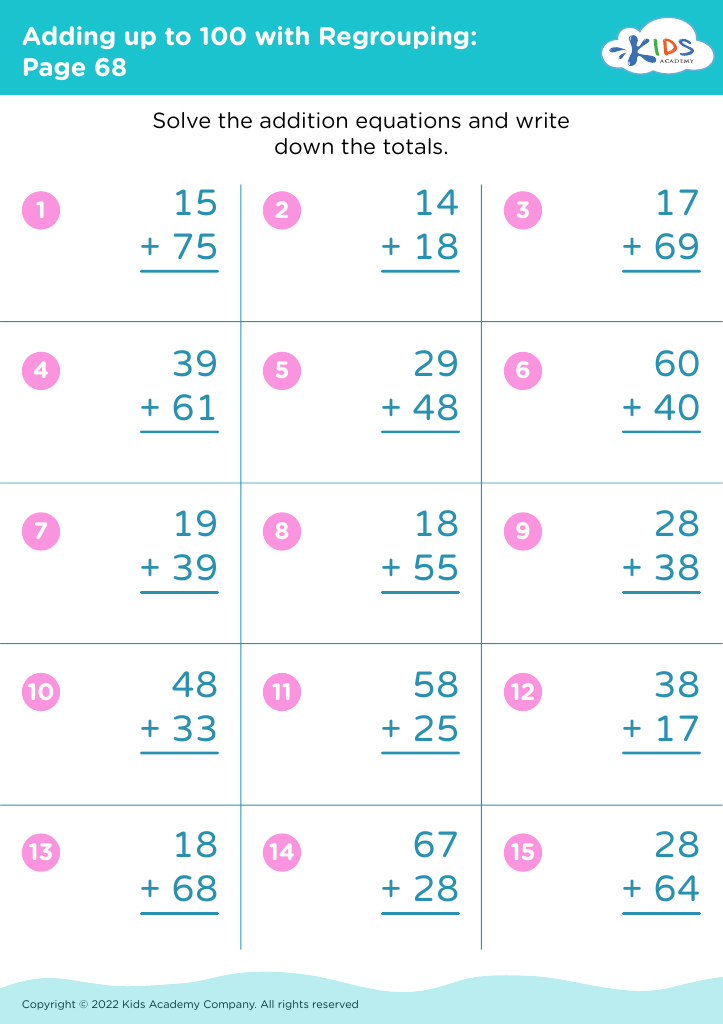







Parents and teachers should care about solving word problems for children aged 4-7 because these skills are foundational for a child's overall cognitive development and future academic success. At this age, children are transitioning from concrete to abstract thinking. Engaging with word problems allows them to practice critical thinking, reasoning, and problem-solving skills in a context that fosters comprehension.
Word problems also enhance literacy skills, as understanding the language and context is crucial to finding solutions. By encouraging children to dissect the problem, they learn to identify key information and operation, whether it involves addition, subtraction, or basic logic. This practice not only aids their mathematical understanding but also boosts reading comprehension.
Additionally, tackling word problems cultivates perseverance and resilience. Children learn that not every solution comes easily, helping them develop a positive attitude toward challenges. When parents and teachers emphasize the importance of word problems, they also promote collaboration and communication skills, whether through discussions or peer interactions.
Ultimately, fostering these skills at a young age sets the groundwork for more complex mathematical concepts and helps create a well-rounded learner who approaches challenges with confidence and creativity.








