
Sound discrimination Worksheets for Ages 4-7
3 filtered results
Difficulty Level
Grade
Age
-
From - To
Subject
Activity
Standards
Explore our Sound Discrimination Worksheets for Ages 4-7, designed to enhance your child's auditory skills. Our engaging activities help kids distinguish between various sounds and improve their phonemic awareness, which is essential for early reading success. With colorful illustrations and fun exercises, these worksheets make learning enjoyable and effective. Children will practice identifying, matching, and differentiating sounds in words, providing a solid foundation for future literacy skills. Perfect for preschoolers and early elementary students, these worksheets will support your child’s journey towards becoming a confident, skilled reader. Download now to transform learning into an auditory adventure!
Favorites
With answer key
Interactive
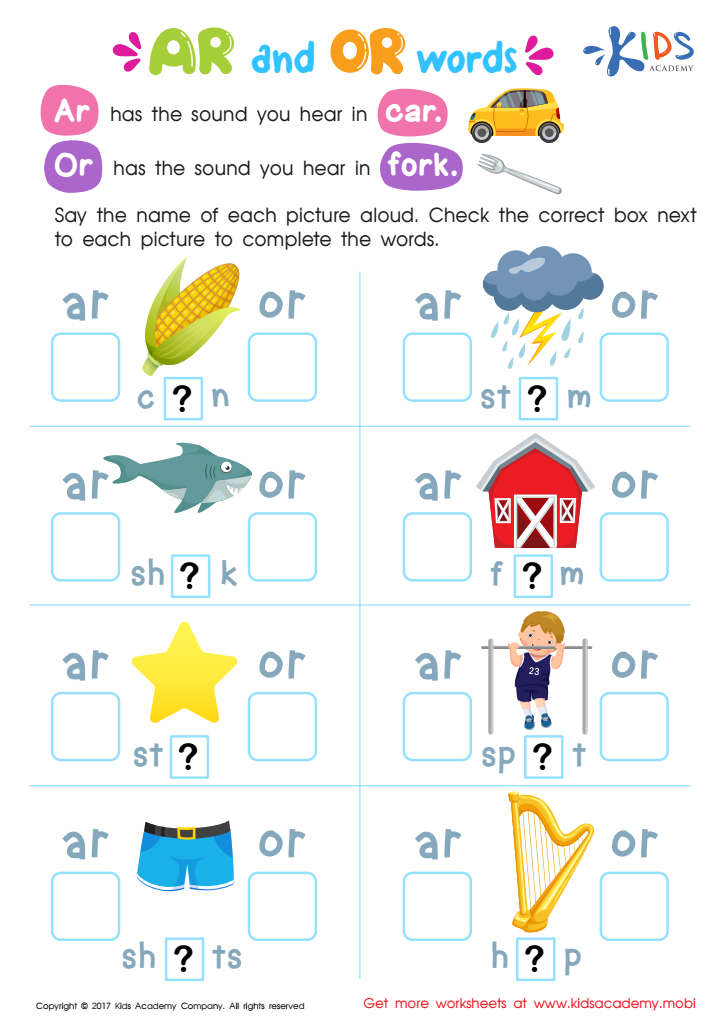
Ar and Or Words Phonics Worksheet
Master the distinct digraphs 'ar' and 'or' with this fun phonics worksheet from Kids Academy! With meaningful illustrations, it'll guide your child to choose the right one. Get ready for the great results!
 Assign to My Students
Ar and Or Words Phonics Worksheet
Worksheet
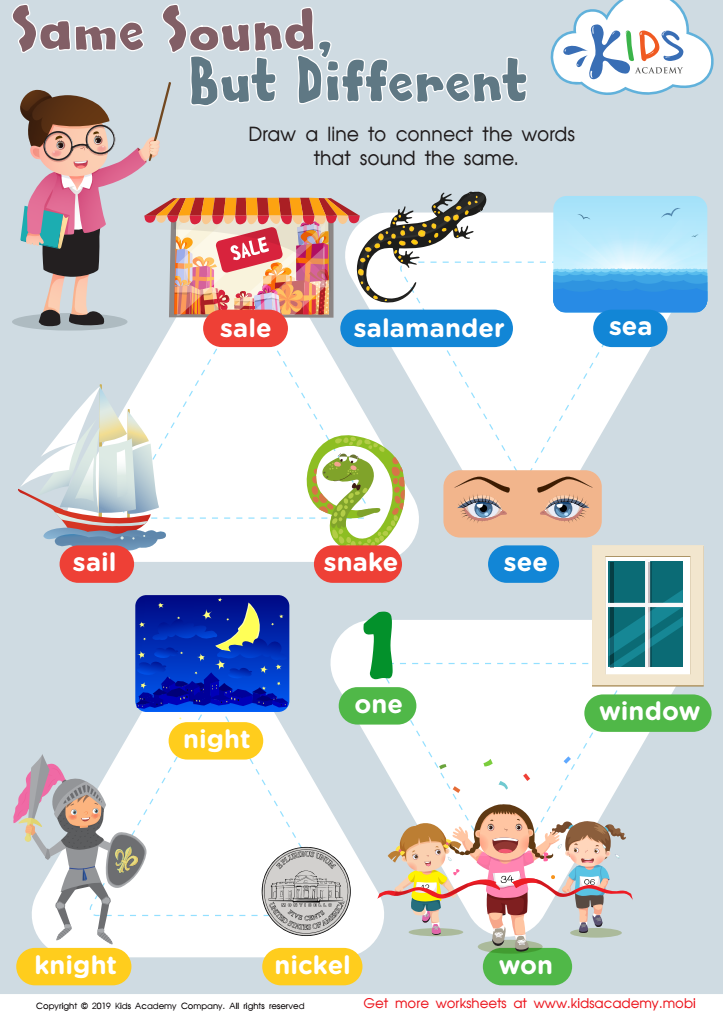
Sound Different Worksheet
Homophones can be tricky for new readers and writers. This PDF worksheet helps kids understand the differences using pictures. It asks them to draw lines to connect the homophones and provides concrete imagery for reference. It's a great way to learn the right definition and spelling of words that sound the same.
Sound Different Worksheet
Worksheet
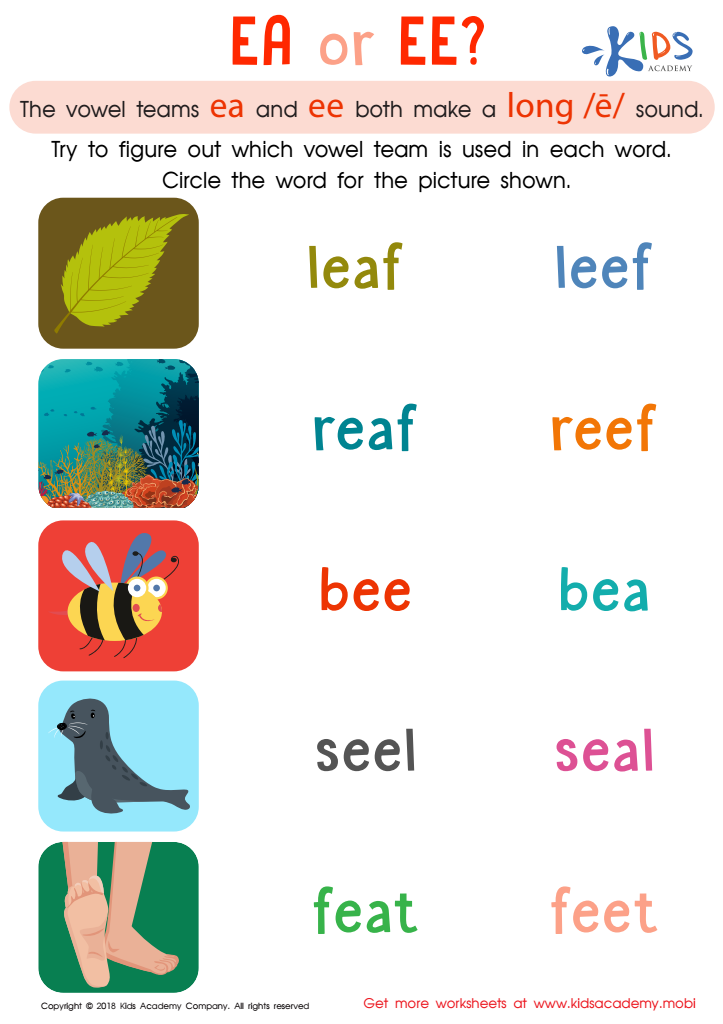
Reading: EA and EE Worksheet
Confused by the long E sound's varying spellings? Give students practice with this printable. It will improve their reading and spelling skills by helping them identify the correct spellings for words with the /ee/ and /ea/ vowel teams. Clear up the confusion and sharpen their skills.
Reading: EA and EE Worksheet
Worksheet
Join Kids Academy for Free
Who is primarily going to use this learning content?



.jpg)


Sound discrimination is a crucial skill for children aged 4-7 as it forms the foundation for learning language, reading, and communication. This developmental stage is critical because young brains are highly receptive to auditory inputs, making it the perfect time to strengthen their sound discrimination abilities.
For parents and teachers, enhancing sound discrimination in children can significantly impact their future academic success. When children can effectively distinguish between different sounds, they develop better phonemic awareness, which is the understanding that words are made up of individual sounds. This ability to detect and manipulate these sounds is vital for learning to read and spell, as it directly influences their ability to blend sounds into words and segment words into individual sounds.
Moreover, strong sound discrimination skills can improve listening comprehension and following directions, essential for classroom learning and everyday life. Children who struggle with this skill may experience difficulties in academic areas, social interactions, and overall communication, potentially leading to frustration and a lack of confidence.
Incorporating fun and engaging activities that target sound discrimination can make a big difference. By emphasizing its importance, parents and teachers help set the stage for a child's successful language and literacy development, fostering a positive attitude towards learning and communication.








