Sound-letter correlation Worksheets for Ages 4-7
4 filtered results
-
From - To
Discover our engaging Sound-Letter Correlation Worksheets designed for ages 4-7, available at Kids Academy. These exercises make learning phonics fun and interactive, helping young learners recognize and match sounds with corresponding letters. Through colorful illustrations and engaging activities, children will develop essential reading and spelling skills, building a strong foundation for literacy. Our worksheets cater to different learning styles, ensuring every child can progress at their own pace. Enhance your child's early education with our expertly crafted resources that make mastering the alphabet an enjoyable adventure. Visit Kids Academy to explore our full range of phonics worksheets.
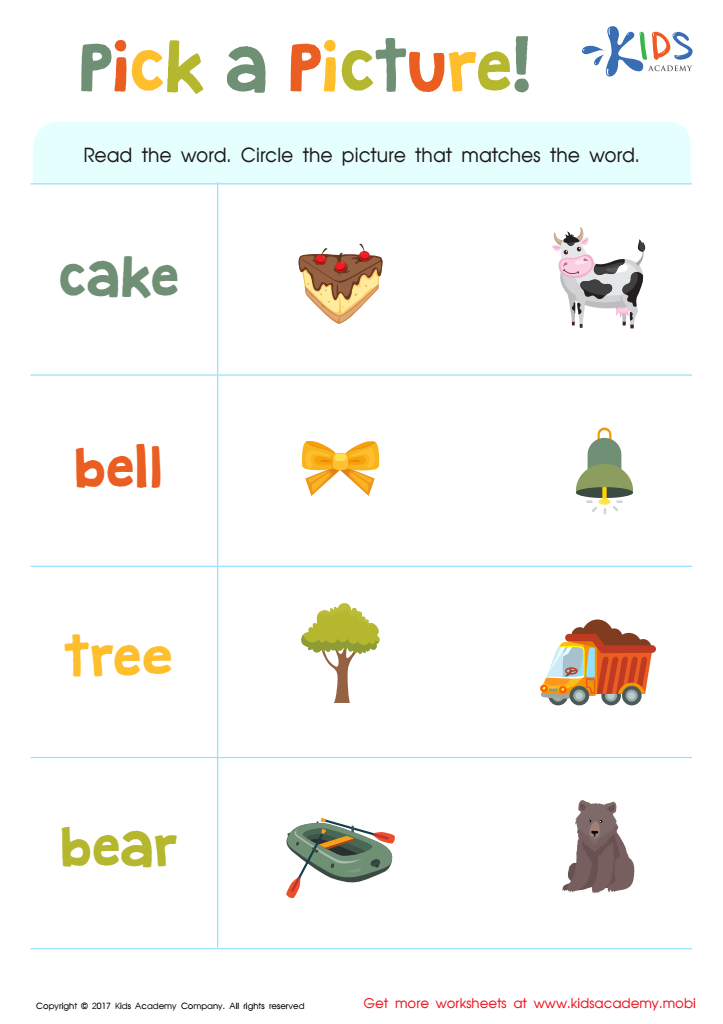
Pick a Picture Word Recognition Worksheet
 Assign to My Students
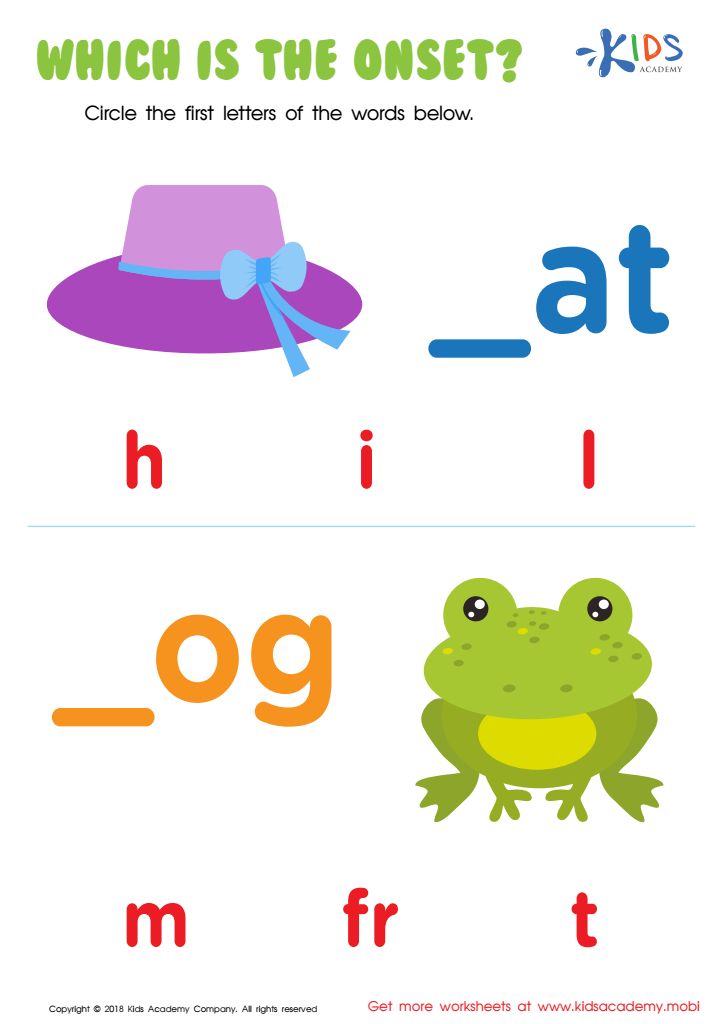
Which Is the Onset? Worksheet
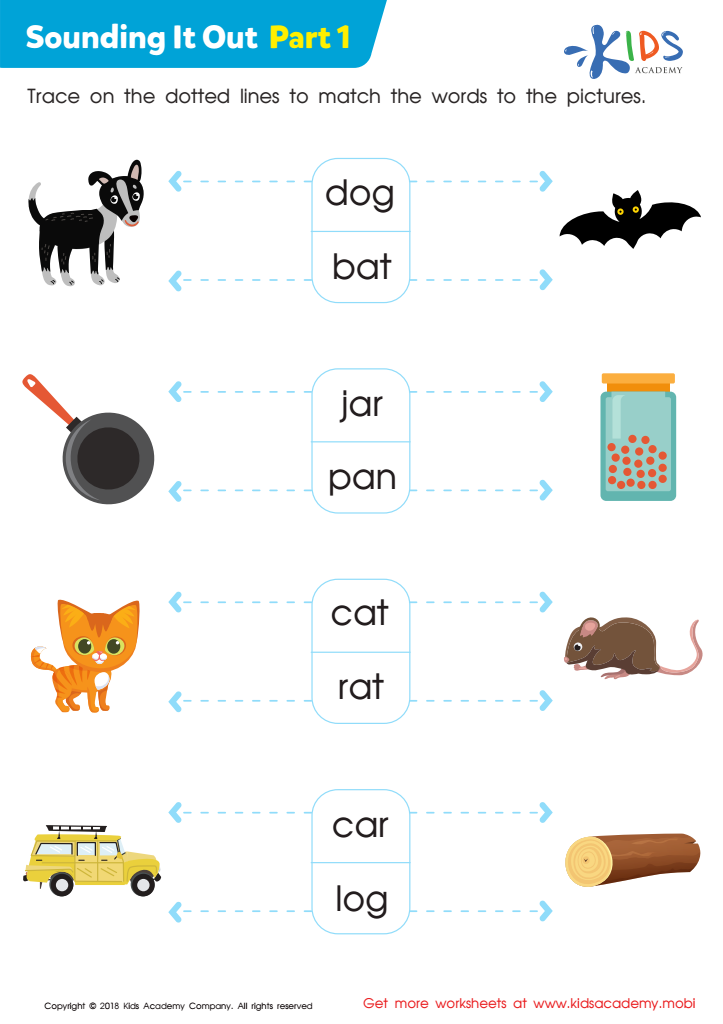
Sounding it Out: Part 1 Worksheet
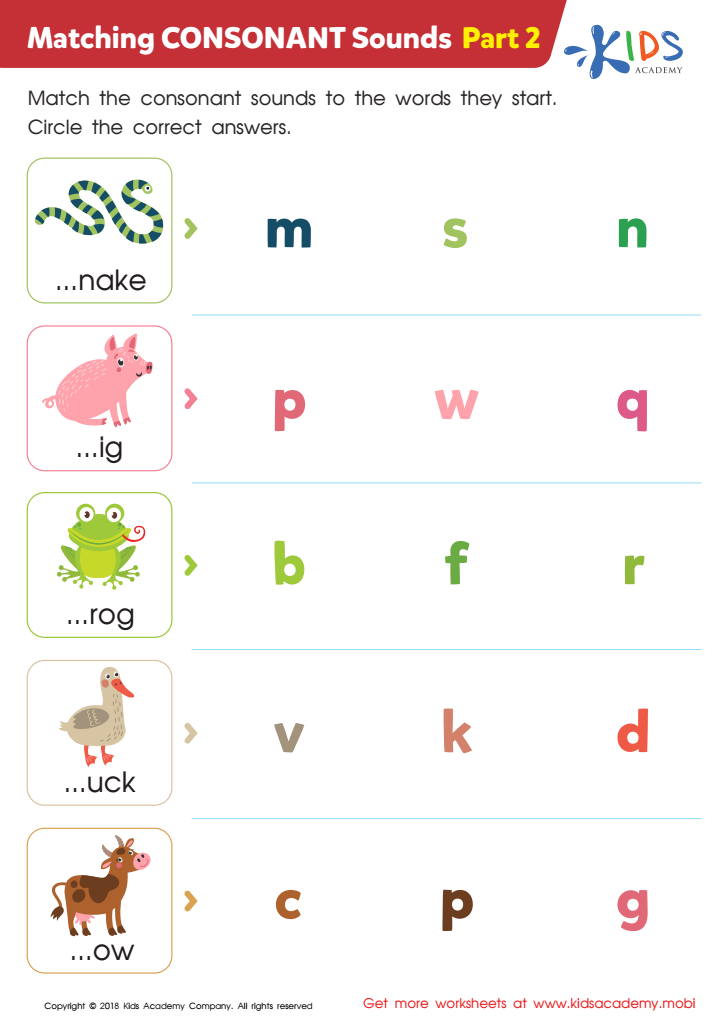
Matching Consonant Sounds: Part 2 Worksheet






Parents and teachers should care about sound-letter correlation for children ages 4-7 because it serves as the foundation for reading and writing skills, which are crucial for their academic success and lifelong learning. In this critical developmental window, children’s brains are highly receptive to learning these correlations, allowing them to decode words rapidly and establish fluency.
Understanding the relationship between sounds (phonemes) and letters (graphemes) enables children to decipher new words independently and with confidence. This foundational phonics knowledge helps prevent struggles in reading, which can lead to frustration and a negative attitude towards learning.
Moreover, mastering sound-letter correlations enhances spelling and pronunciation, facilitating clearer communication. As children recognize patterns and structures in words, their vocabulary expands, which is essential for better comprehension. A firm grasp of these basics paves the way for advanced literacy skills, like sentence construction, comprehension, and critical thinking.
Investing time and resources in phonics instruction during these formative years ensures that children gain the essential tools they need for literacy. This positive early start in education fosters a love for reading and learning, which benefits their overall cognitive development and academic trajectory.








