
Story sequencing skills Worksheets for Ages 4-7
3 filtered results
Difficulty Level
Grade
Age
-
From - To
Subject
Activity
Standards
Boost your child's storytelling abilities with our engaging Story Sequencing Skills Worksheets for Ages 4-7! These thoughtfully designed worksheets help young learners develop crucial sequencing skills by arranging story events in the correct order. Through vibrant illustrations and simple, relatable stories, children will enhance their comprehension and critical thinking while enjoying the creative aspect of storytelling. Ideal for both classroom and home use, these worksheets promote language development and improve narrative skills. Your little ones will gain confidence in their abilities as they master the art of sequencing. Dive into the adventure of stories today and watch their imaginations flourish!
Favorites
With answer key
Interactive
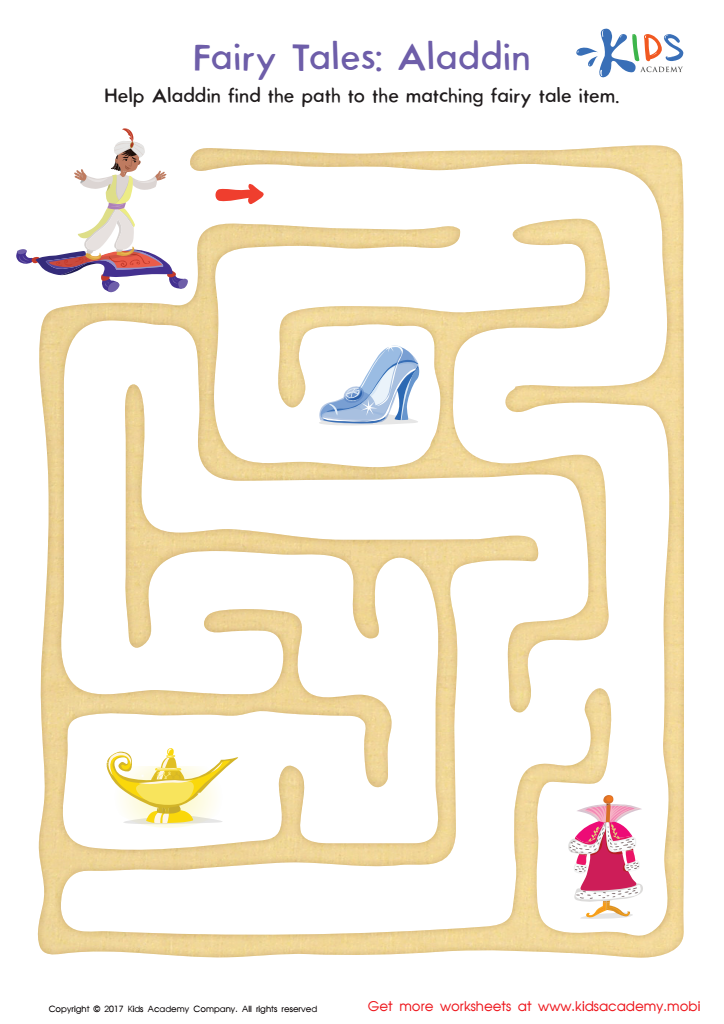
Fairy Tales Aladdin Printable
Test your child's reading recall with this challenge: the Aladdin maze worksheet! Guide your learner to identify objects linked to the story, then ask them to retell it afterwards. Hone those memory skills while having fun!
 Assign to My Students
Fairy Tales Aladdin Printable
Worksheet
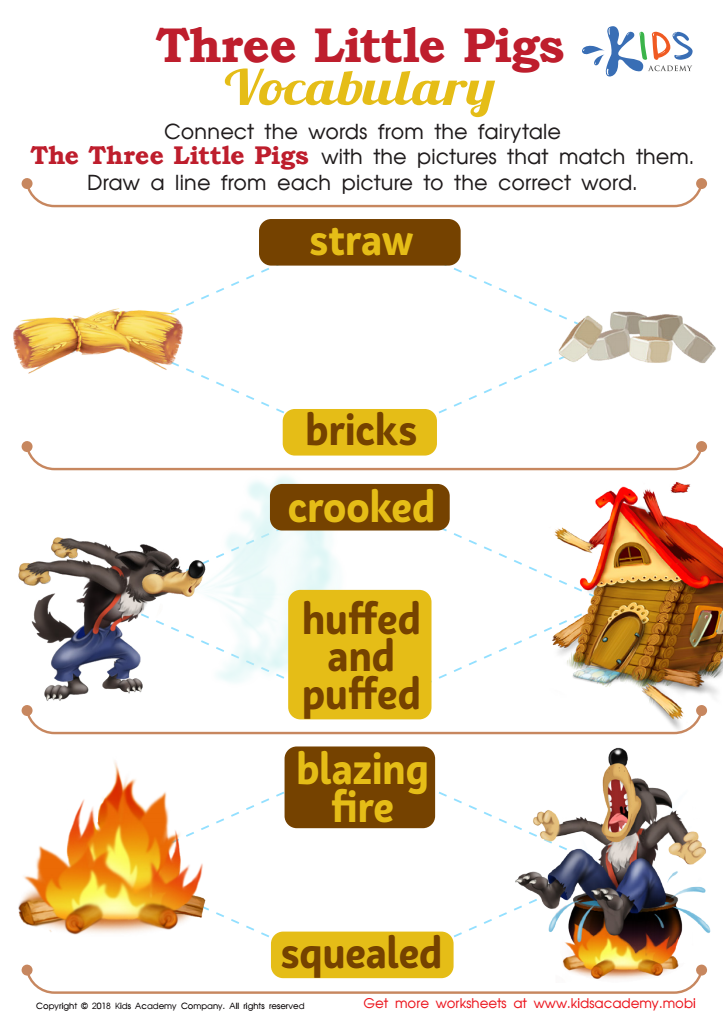
Three Little Pigs Vocabulary Worksheet
Read the Three Little Pigs to your children. Have them use the tracing sheet to connect the story words with the pictures. This is a fun and educational way to help them build their vocabulary.
Three Little Pigs Vocabulary Worksheet
Worksheet
Join Kids Academy for Free
Who is primarily going to use this learning content?








Story sequencing skills are crucial for children ages 4-7 as they lay the foundation for literacy, comprehension, and cognitive development. Understanding the structure of stories—beginning, middle, and end—enables young learners to make sense of what they read and hear. When children recognize the sequence of events, they can retell stories, predict outcomes, and connect ideas, fostering deeper comprehension and engagement.
In addition, story sequencing enhances critical thinking and problem-solving abilities. Children learn to identify cause-and-effect relationships and understand how actions lead to various outcomes, which is essential not only in reading but also in everyday situations. Moreover, these skills encourage creativity, as children can invent their own stories with coherent plots.
For parents and teachers, promoting story sequencing skills can lead to improved communication and language skills. Engaging in story-based activities helps children expand their vocabulary and develop narrative skills, preparing them for academic success in later grades. By prioritizing story sequencing, caregivers and educators not only support literacy development but also nurture a love for storytelling and reading, vital components of lifelong learning. Therefore, investing time in these skills is beneficial for the overall growth and development of young children.








