Telling time Worksheets for Ages 4-7
4 filtered results
-
From - To
Discover our engaging Telling Time Worksheets designed specifically for children aged 4 to 7! These colorful and interactive resources help young learners grasp the fundamentals of telling time on both digital and analog clocks. Each worksheet offers a variety of activities, including matching times, drawing hands on clocks, and solving time-related puzzles, ensuring a fun and comprehensive learning experience. Perfect for home or classroom use, our worksheets encourage kids to practice essential skills at their own pace. Download our Telling Time Worksheets today and watch your child develop confidence and mastery in telling time while having fun!
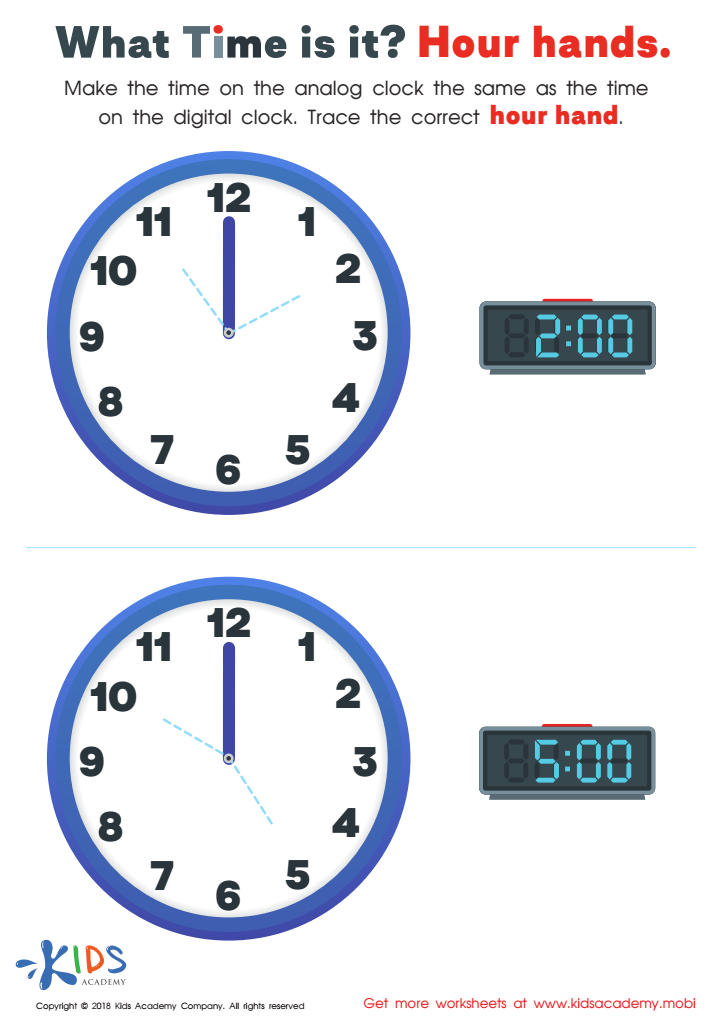
What Time Is it? Hour Hands Worksheet
 Assign to My Students





.jpg)

Teaching children to tell time is crucial for their development and can have lasting impacts on their lives. For children aged 4 to 7, understanding time provides a sense of structure and predictability. It helps them navigate daily routines, from knowing when it's time for food, play, or sleep. This familiarity fosters independence and encourages responsibility.
Moreover, learning to tell time strengthens numerical and cognitive skills. It involves counting, measuring, and grasping concepts of past, present, and future, essential elements in early math education. Additionally, it enhances memory, as children must remember when events occur and their sequence throughout the day.
For parents and teachers, instilling a sense of time can also promote discipline and time management skills. These are foundational for academic success and later life challenges. Engaging children in conversations about clocks and schedules cultivates their curiosity and ensures they comprehend shared societal cues, like understanding periods for school or play.
Overall, teaching time not only serves practical purposes but also encourages emotional and social skills, laying groundwork for lifelong learning. By prioritizing this skill, parents and teachers equip youngsters for the responsibilities they'll encounter as they grow.








