
Understanding community roles Worksheets for Ages 4-7
3 filtered results
Difficulty Level
Grade
Age
-
From - To
Subject
Activity
Standards
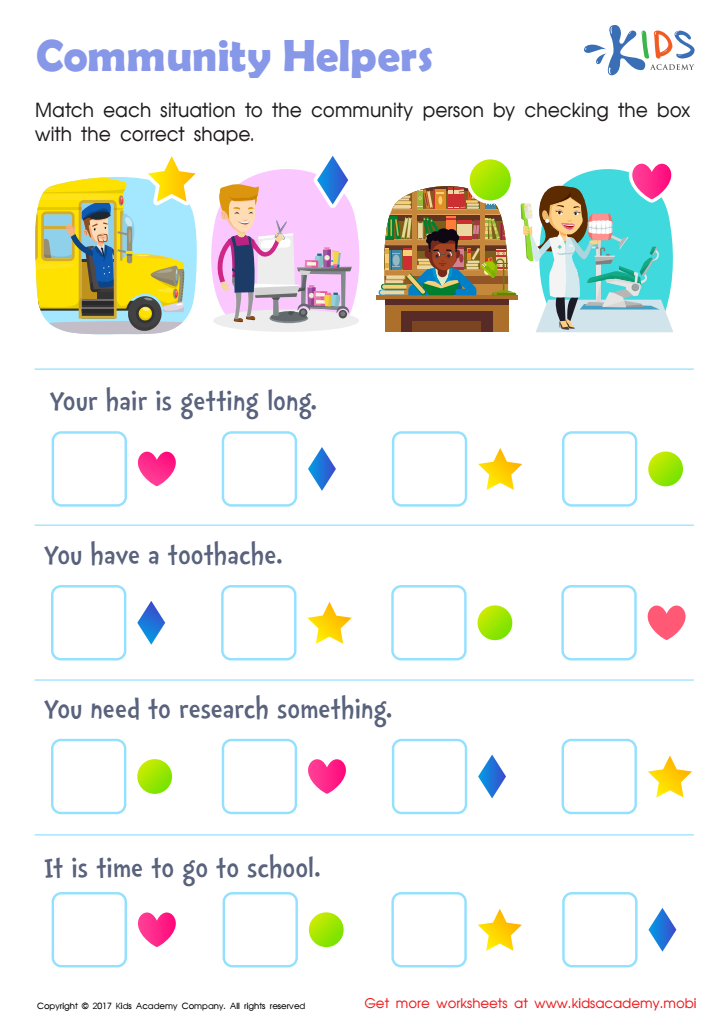
Discover our engaging "Understanding Community Roles Worksheets" designed specifically for children aged 4-7. These worksheets introduce young learners to various community roles, fostering an appreciation for the diverse contributions of individuals within their neighborhoods. Through fun illustrations and interactive activities, children will explore the roles of doctors, teachers, firefighters, and more, encouraging them to reflect on how each person helps the community thrive. Perfect for home or classroom use, these worksheets not only enhance early literacy skills but also promote social awareness and empathy. Join your child on a delightful journey of learning about their community and the important roles within it!
Favorites
With answer key
Interactive
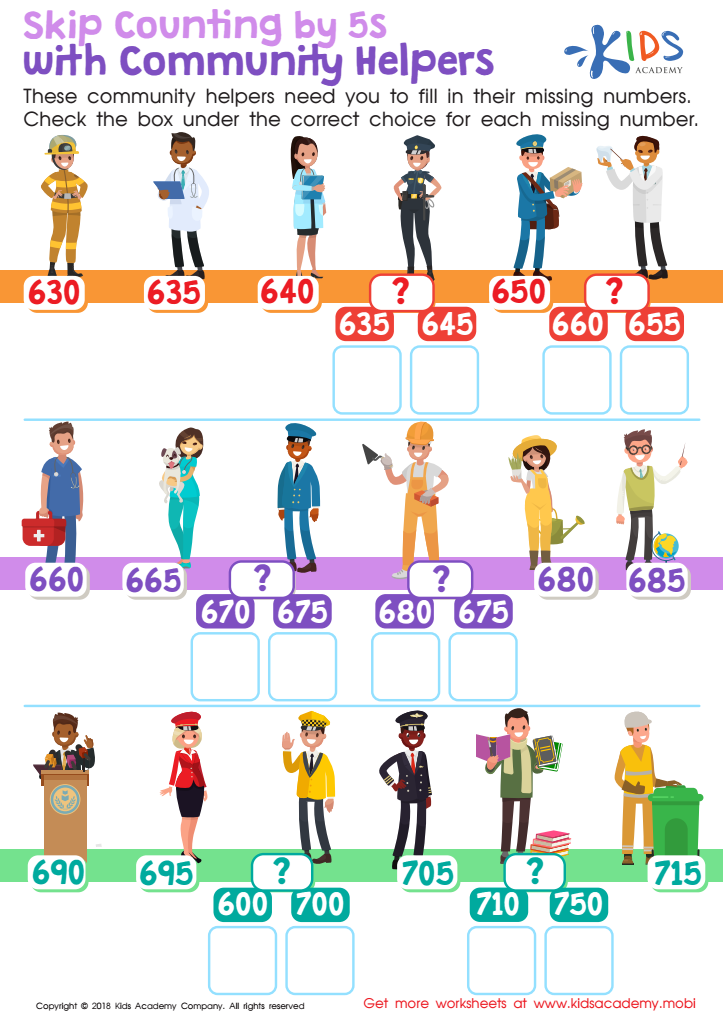
Skip Counting by 5s With Community Helpers Worksheet
This free worksheet combines social studies with math! Kids will practice counting by 5s, rounding numbers and honing their computation skills while also familiarizing themselves with community helpers. Develop your child's number sense and strengthen their math skills - all through a fun and interactive activity.
 Assign to My Students
Skip Counting by 5s With Community Helpers Worksheet
Worksheet
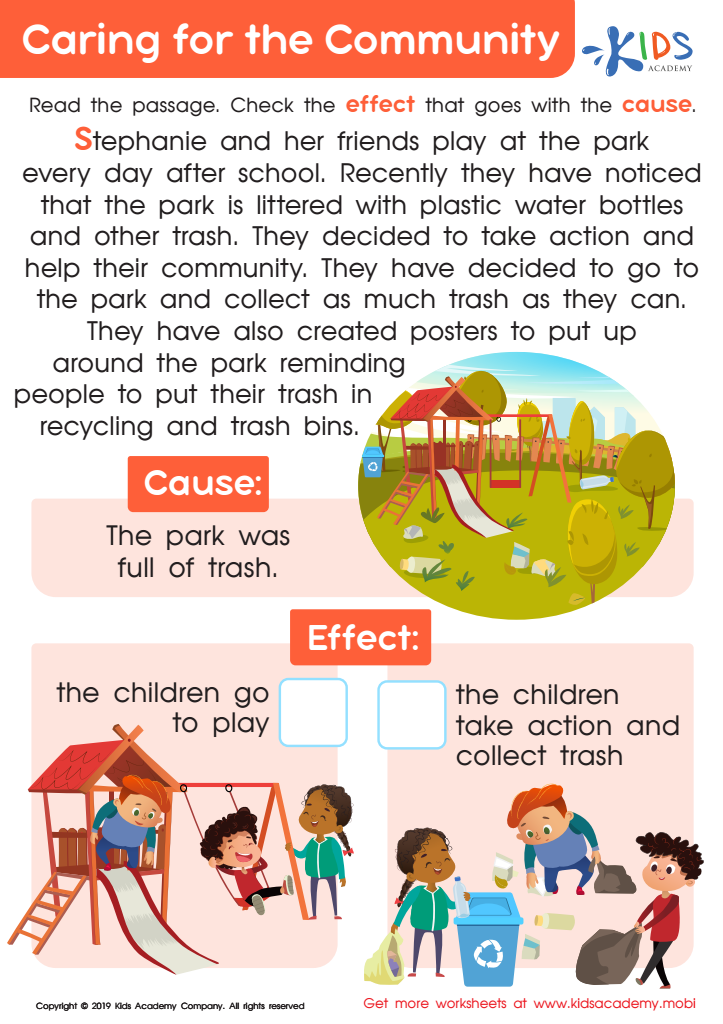
Caring for the Community Worksheet
Before beginning, get your kids in the right mind-set by having them name ways to care for their community. Read the passage with them, pointing at pictures, then ask them to match the ‘cause’ with the ‘effect’ on the worksheet. This will help them learn more about how to care for their community.
Caring for the Community Worksheet
Worksheet
Join Kids Academy for Free
Who is primarily going to use this learning content?






Understanding community roles is crucial for children aged 4-7 as it lays the foundation for essential social skills and civic responsibility. At this age, children are naturally curious and begin to explore their surroundings, making it an ideal time for them to learn about different roles within their community – from firefighters and teachers to grocery store owners and healthcare workers.
For parents and teachers, fostering this understanding nurtures children's empathy, respect, and appreciation for diversity. When children recognize that every role contributes to a well-functioning society, they develop a sense of belonging and teamwork. This awareness can drive positive interactions and collaborative skills as they engage with peers and adults.
Moreover, these early lessons about community roles can spark interests and aspirations in different fields, promoting career exploration from a young age. Engaging children in discussions about various jobs and the importance of each fosters critical thinking and helps them envision themselves as active, contributing members of society in the future.
In summary, by emphasizing community roles, parents and teachers help children develop important social values, pave the way for informed future citizens, and cultivate a learning environment where respect and cooperation flourish.








