Understanding light sources Worksheets for Ages 4-7
4 filtered results
-
From - To
Discover our engaging "Understanding Light Sources" worksheets designed for children ages 4-7! These interactive and educational resources help young learners explore the different types of light sources in our world, from the sun to electric lights. Each worksheet encourages critical thinking and creativity through fun activities such as matching images, filling in blanks, and identifying sources of light. Perfect for in-class activities or at-home learning, these worksheets promote early science skills while enhancing vocabulary and comprehension. Join us in making learning about light fun and exciting for your little ones! Download the worksheets today and illuminate their understanding of light sources!
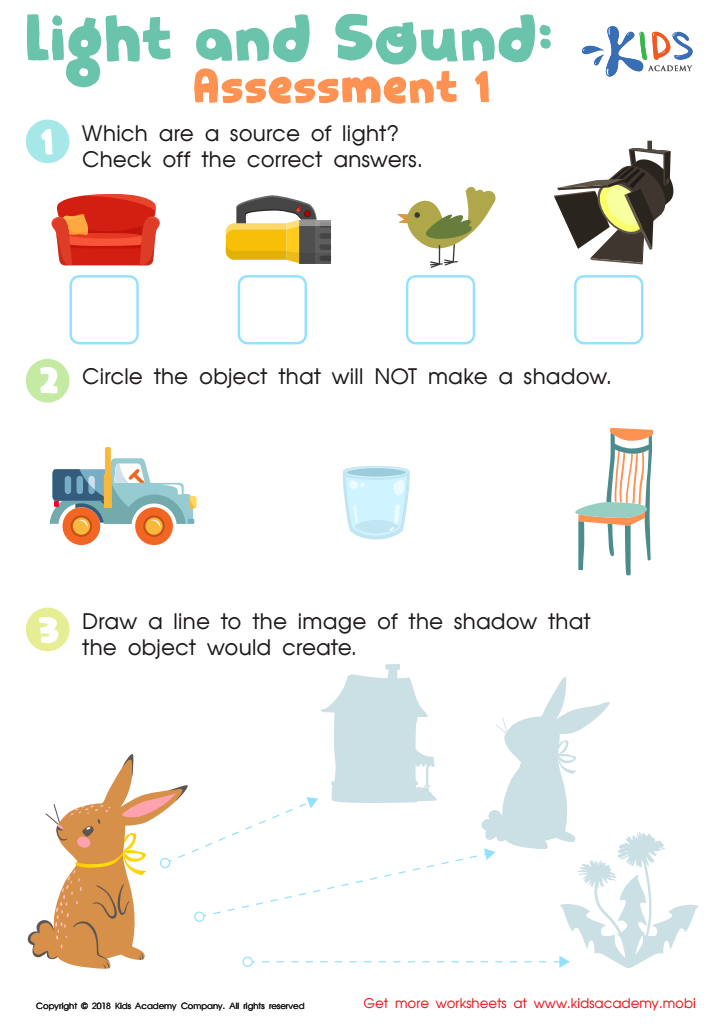
Light and Sound: Assessment 1 Worksheet
 Assign to My Students
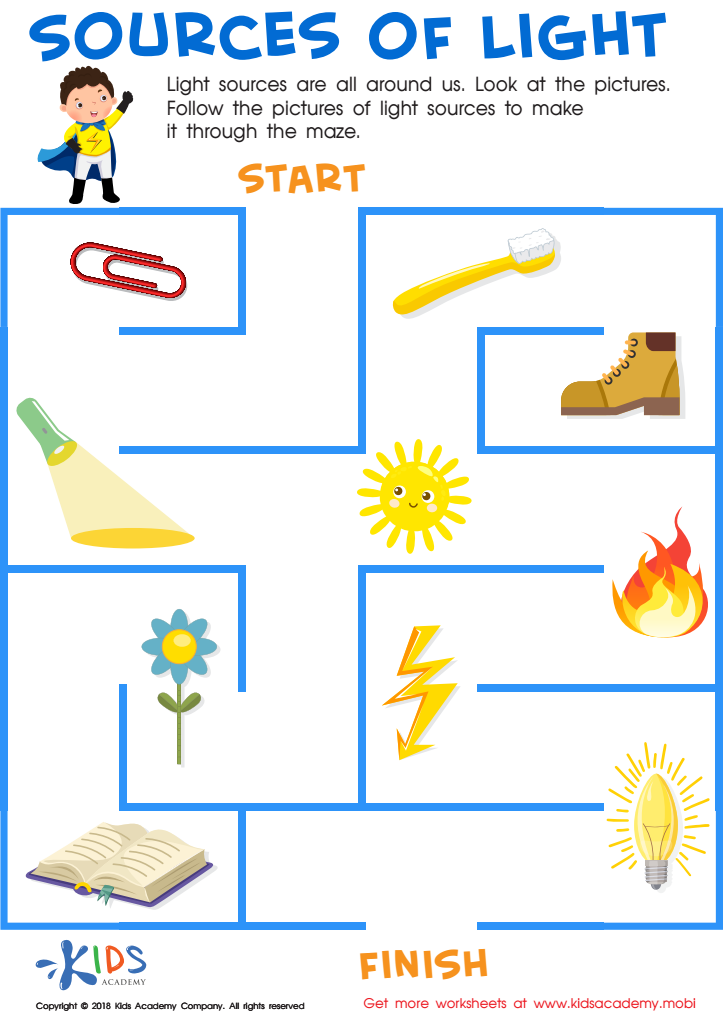
Sources of Light Worksheet
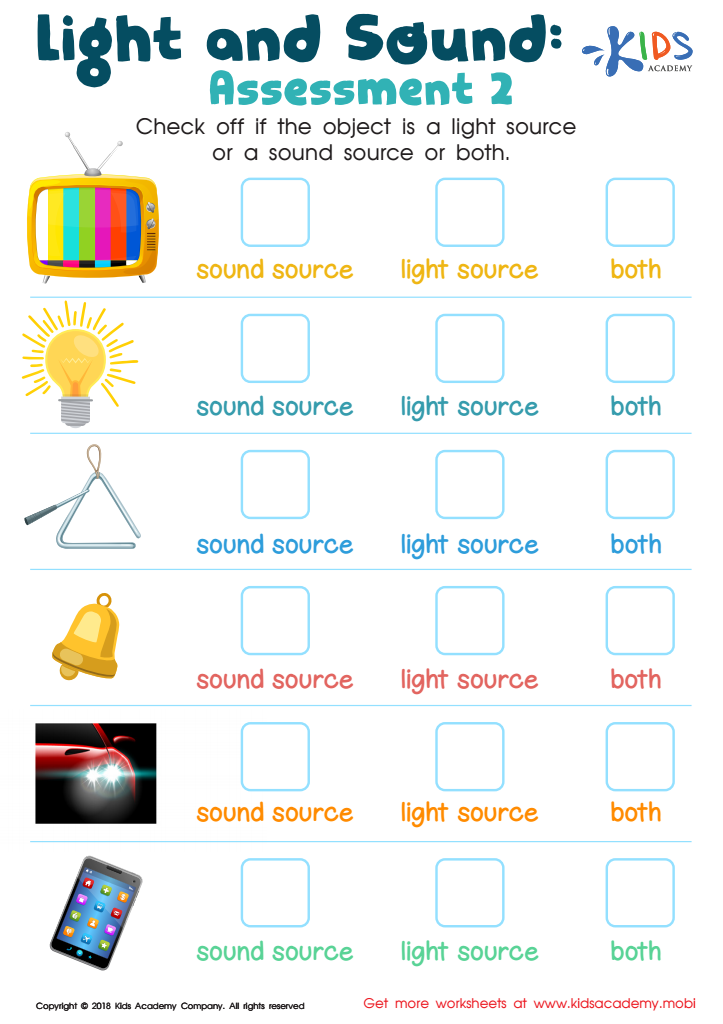
Light and Sound: Assessment 2 Worksheet
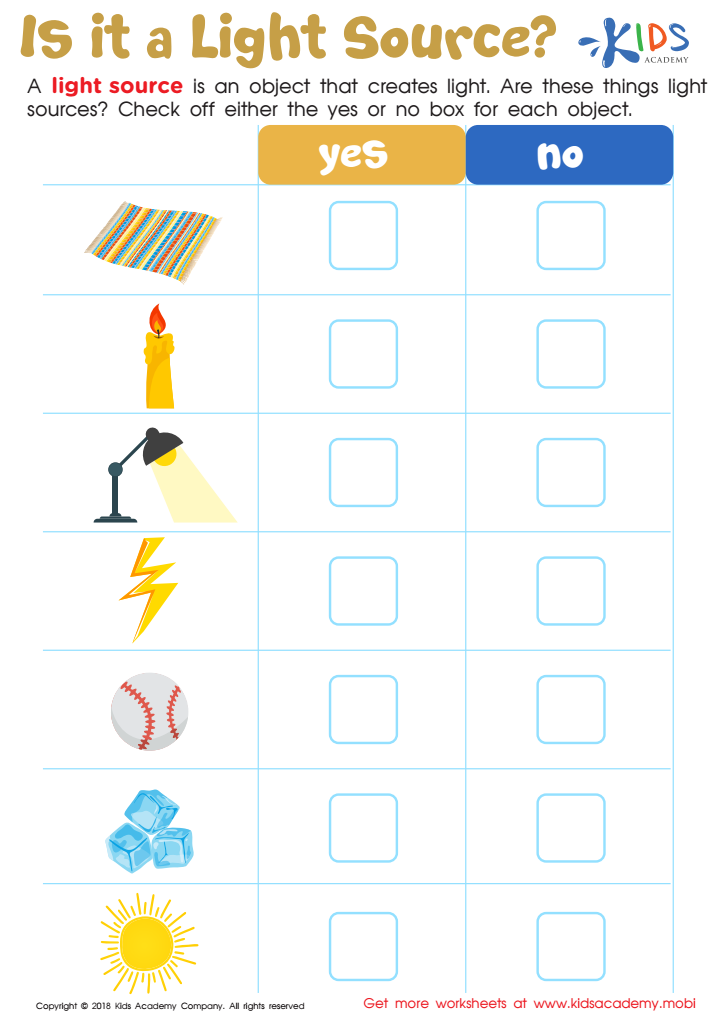
Is It a Light Source? Worksheet







Understanding light sources is crucial for young children, ages 4-7, as it lays the foundation for their scientific knowledge and sparks curiosity about the world around them. At this age, children are naturally inquisitive, seeking to comprehend the causes and effects of everyday phenomena. By exploring light sources, they learn to differentiate between natural light (like the sun) and artificial light (such as lamps and bulbs), which helps them grasp the concept of varying sources and their importance in daily life.
Furthermore, light plays a key role in shaping children's visual experiences. Understanding how light interacts with objects can enhance their comprehension of colors, shadows, and reflections, contributing to their cognitive development. Activities centered around light, like art projects or simple experiments, are not only educational but also boost creativity and critical thinking skills.
Parents and teachers should recognize that early exposure to concepts like light not only fosters scientific thinking but also integrates seamlessly with other learning areas, such as art and storytelling. Engaging children in discussions about light sources supports their overall development, encouraging them to become inquisitive learners who appreciate the wonders of their environment and the principles of science that govern it.








